Why Do Companies Like HUL, Airtel, and Leading Startups Invest Time in Business Schools?

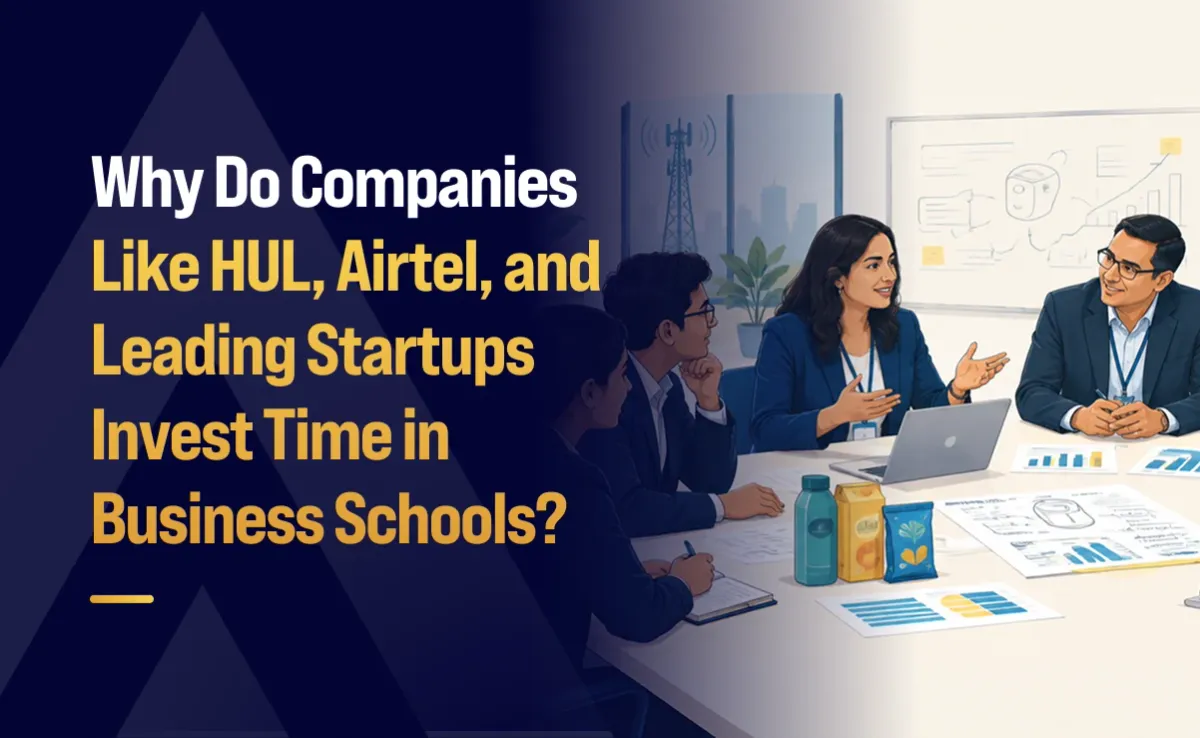
Industry partnerships are slowly becoming a norm in management education. But why would senior leaders from established companies and startups invest their time in business schools?
Well, the answer is quite straightforward. AI is changing how businesses work, and skill cycles are becoming shorter than ever. What companies need from young professionals today may look very different a few years from now. This makes it important for businesses to stay close to the people they may eventually hire while also helping shape skills their workforce may need tomorrow.
That is why companies are no longer engaging with business schools only during placement season. They are becoming part of classrooms, live projects, industry sessions, and real business challenges.
Modern B-schools like Altera Institute are taking this a step further by building talent ecosystems rather than simply creating talent marketplaces. As businesses adapt to constant shifts in technology and consumer behavior, staying connected with these ecosystems helps them find, assess, and shape talent that is ready for the real world.
Why Companies Invest in Business Schools
Business schools are increasingly becoming long-term talent ecosystems rather than places companies visit only when they need to hire. Earlier, most corporate interaction happened around placement season. Today, companies are involved throughout the year.
For companies, engaging with business schools is an investment in the workforce they will need tomorrow. It gives these potential recruiters a chance to understand emerging talent, close employability gaps, and bring real business expectations into the learning process. Guest lectures, live projects, mentorship, curriculum feedback, and case studies are all different paths to achieve the same goal, i.e., to build a stronger connection between how students learn and how businesses actually operate.
Building a Stronger Talent Pipeline
Companies that engage with business schools early get more than access to a pool of candidates. They get an opportunity to understand how students think, what skills they are developing, and what they expect from their future workplaces.
This early access can help companies identify promising talent from the right institute before the hiring cycle begins. It also gives them a clearer view of where the gap lies between academic learning and workplace expectations. For example, a company may find that students understand marketing concepts but need more exposure to performance metrics, AI tools, or real customer data.
By contributing to projects, mentorship, and curriculum discussions, organizations can help close these gaps. The result is a stronger talent pipeline with graduates who are better prepared to contribute from the start.
Strengthening Employer Brand and Recruiter Engagement
A company does not become an employer simply by appearing on a campus placement list. Students form stronger impressions of employers when they interact with working professionals and understand what the organization actually does.
Regular recruiter engagement gives companies visibility among high-potential students long before they apply for a role. Guest sessions can showcase how teams work. Mentorship can give students a more realistic view of different career paths. Workshops and simulation projects can allow companies to see how students approach business problems.
This creates more authentic recruiter engagement because the relationship is built around learning and interaction, not just hiring. Over time, these interactions can help companies build familiarity and trust with the talent they want to attract.
Bringing Real Business Challenges into the Classroom
One of the biggest advantages for companies is the ability to take real business problems into the classroom. Instead of learning through hypothetical examples alone, students can work on real challenges that a company is facing. Working on these problems can create a win-win situation where students get to build their skill portfolio and companies get a resolution for a real business challenge.
Young professionals may also bring fresh perspectives to problems that internal teams may have been working on for a long time.
Leadership Development and Industry Ecosystem Building
When senior leaders participate in business education, the value extends beyond individual hiring outcomes. Leaders can share how strategies are developed, how teams respond to uncertainty, and what skills will matter as industries evolve.
This knowledge exchange helps businesses contribute to the development of future industry capability. It also strengthens the connection between academia and the workplace, making management education more relevant to current business realities.
CSR can be one part of this involvement, particularly when companies support broader education or skill-development initiatives. But for most organizations, the larger opportunity is strategic: building stronger connections with the talent and capabilities they will need in the future.
This is why companies increasingly see business schools as strategic talent partners rather than simply hiring venues. By investing in the learning journey earlier, organizations can help shape the skills, exposure, and mindset that future professionals bring to the workplace.
Altera Institute’s industry partnerships reflect this approach. Through regular recruiter engagement, business leaders contribute to practical learning and live projects. This helps students understand what businesses actually need. It also gives companies a closer view of emerging talent. The relationship goes beyond placement season, making industry participation a regular part of the learning experience.
How Students Benefit from Strong Industry Partnerships
Industry exposure becomes more valuable when it is part of the learning experience rather than a one-time interaction. For students, the value of industry partnership lies in seeing how business decisions play out beyond a classroom case. They get to hear different perspectives, question experienced professionals, and understand the factors that shape real decisions.
Learning From Current Business Leaders
A business leader can bring context that a textbook cannot. Students get to hear how leaders have handled market shifts, customer problems, failed strategies, and difficult decisions. They also gain exposure to different industries and understand that there is rarely one right way to solve a business problem.
These conversations help students think beyond frameworks. They learn to consider business constraints, trade-offs, and outcomes when evaluating a decision.
Better Career Readiness
Industry interaction can also prepare students for the expectations of a professional environment. Presenting ideas to practitioners, working on live briefs, and receiving feedback can improve communication, problem-solving, and professional confidence.
Students also build connections with people working in different roles and industries. These networks can help them explore career paths and understand what different roles involve. The aim is not to promise a job but to help students enter the workplace with a more informed view of where their skills can add value.
Through sustained industry partnerships, Altera Institute gives students opportunities to interact with experienced business leaders through classroom sessions, practical projects, and ongoing engagement. This creates a stronger link between management education and professional practice.
Why Altera Institute's Industry Collaboration Model Stands Out
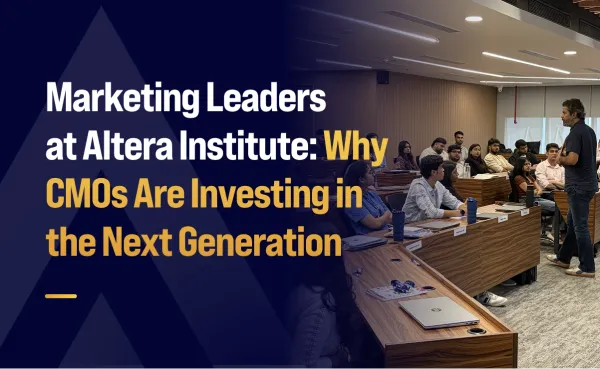
Altera Institute’s approach to industry partnerships goes beyond bringing industry leaders to campus for occasional talks. Practitioners are built into the learning experience through classes, live projects, case sprints, simulations, mentoring, and market immersions. This gives students regular opportunities to test what they learn against real business situations.
The depth of this engagement is also reflected in the leaders who interact with students. Shashwat Sharma, MD & CEO of Airtel, recently addressed the PGP Class of ’27 during orientation, drawing on his experience across Hindustan Unilever and Airtel. Varun Alagh, co-founder of Honasa Consumer, has also been associated with Altera Institute as an early backer and has shared his experience with students.
Who Benefits Most From This Approach?
This model can be particularly useful for fresh graduates who need practical context, career switchers looking to understand a new function, aspiring marketers, and students who want to build business skills through application. For future business leaders, the bigger advantage is learning to approach problems with the context, constraints, and expectations of a real organization.
That is what makes Altera Institute’s model more than a collection of industry partnerships. Industry input shapes the curriculum, learning experiences, and career preparation, creating a more connected ecosystem between business education and professional practice.
Conclusion
Companies invest in business schools not only to build future talent but also to contribute to the wider business ecosystem and give back to society. Strong industry partnerships create value for organizations, institutions, and students by bringing current business needs into the learning experience.
Continuous recruiter engagement makes this connection even stronger. At Altera Institute, this connection goes beyond placement season. Industry leaders contribute to the way students learn, solve problems, and understand business, helping them build practical skills and sound judgment. It is this sustained collaboration that makes Altera Institute a strong example of how business schools and industry can grow together.
Frequently Asked Questions (FAQs)
Q1. Why do companies partner with business schools beyond campus placements?
Ans. Companies partner with business schools beyond campus placements to build long-term talent pipelines, understand emerging skills, and contribute to developing future professionals. Ongoing engagement also gives companies opportunities to bring real business challenges into the learning environment.
Q2. What is the role of recruiter engagement in management education?
Ans. Recruiter engagement helps business schools understand changing employer expectations and gives students greater exposure to how organizations operate. It also creates stronger connections between classroom learning and the skills students will need in their careers.
Q3. How do industry partnerships improve MBA learning?
Ans. Industry partnerships make MBA learning more practical by bringing business leaders, live projects, real-world cases, and current industry challenges into the classroom. Students can apply management concepts to situations that reflect how businesses actually operate.
Q4. Do startups benefit from collaborating with business schools?
Ans. Startups can benefit from business-school collaborations by accessing emerging talent, fresh ideas, and new perspectives on business challenges. These partnerships can also help startups build visibility among students and develop relationships with potential future employees.
Q5. How can students evaluate the quality of a business school's industry partnerships?
Ans. Students should look beyond the number of companies associated with a business school. They should check how often industry leaders interact with students, whether practitioners teach courses, whether students work on live projects, and whether companies contribute to curriculum development and mentoring.
Q6. Can industry collaboration influence curriculum design?
Ans. Industry collaboration can influence curriculum design by helping business schools identify the skills, tools, and capabilities employers currently need. Regular feedback from practitioners can help institutions keep their curriculum relevant as industries, technologies, and job requirements change.