Marketing Leaders at Altera Institute: Why CMOs Are Investing in the Next Generation
Today’s CMOs are responsible for far more than advertising. They are expected to drive growth, shape customer experience, adopt AI, understand data, and contribute to wider business strategy.
So why would leaders with demanding roles choose to spend their time with students?
It’s not just about industry-led learning but about bridging the skill gap between industry needs and management education.
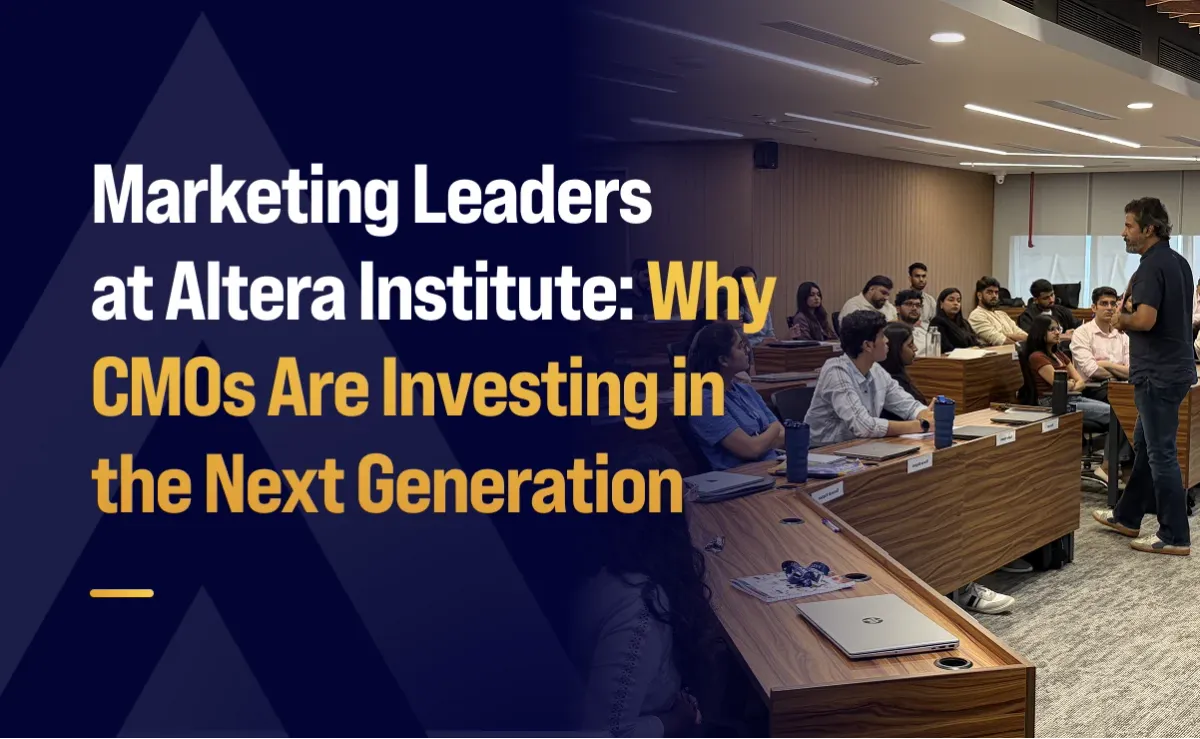
At Altera Institute, industry leaders contribute through classroom sessions, workshops, guest lectures, live projects, and even student orientation, bringing real business decisions and experiences into the learning environment. This reflects Altera Institute’s core philosophy of industry-led learning. Marketing leaders do not simply recruit graduates when they are job-ready. They actively help shape the talent businesses will need next.
The result is a learning model that connects what students learn with how businesses actually operate. This article explores why that matters for students, marketing leaders, and the industry itself.
Why CMOs Are Choosing to Associate With the Altera Institute
For senior marketing leaders, staying involved in education is not simply about giving back. It is also about helping build the kind of talent the industry needs. Marketing teams are changing quickly, and the gap between what students learn and what businesses expect can become a problem for both sides.
Building the Talent They Want to Hire
Marketing leaders see this gap from the hiring side. They know that strong academic knowledge does not always translate into the ability to solve a real business problem, understand a customer, or make decisions with commercial impact.
By engaging with students, CMOs can help bridge that gap. They can share how marketing decisions are made inside businesses, what employers actually look for, and how market realities influence strategy. These interactions can also help students understand the expectations of modern marketing roles before they enter the workforce. More importantly, industry leaders get an opportunity to contribute to the development of future marketing leaders.
Keeping Marketing Education Relevant
Marketing itself is changing too quickly for education to remain static.
- AI and automation are changing how teams work.
- Consumer behavior is shifting across digital channels.
- Businesses are using data more deeply to understand customers and make decisions.
- Marketing is also becoming increasingly connected to revenue, growth, and wider business strategy.
This makes practitioner involvement more valuable. A CMO can bring current examples, recent challenges, and market lessons into conversations that textbooks cannot always capture.
This is also changing the role of marketing leaders in education. CMOs are no longer just consumers of talent. They are becoming co-creators of talent. Rather than waiting for graduates to become industry-ready, they can actively influence what and how future marketers learn.
How Students Benefit from Learning with Marketing Leaders

Learning from marketing leaders is different from simply learning marketing concepts. Students get to see how experienced professionals think through a problem, decide what matters, and make choices when there is no obvious answer. That changes learning from knowing a framework to understanding when and how to use it.
Learning Through Live Projects and Business Challenges
A marketing concept becomes easier to understand when you have to apply it to a real problem. Live projects give students that opportunity.
Instead of discussing customer segmentation in isolation, for example, students may have to analyze a real customer group and decide which segment a business should prioritize. A campaign analysis may require them to look beyond creative execution and ask whether the campaign reached the right audience, delivered the intended message, and supported a business goal.
Students may therefore have to work through:
- Real business problems instead of hypothetical classroom scenarios
- Campaigns and customer data to identify what is working and what is not
- Different possible solutions before deciding which one makes the most business sense
- Practitioner feedback to understand where their recommendations can improve
The value comes from having to make these decisions and defend them. Practitioner feedback can then show students where their thinking works and where it needs to go further.
This kind of learning also makes mistakes useful. A weak recommendation is no longer just an incorrect answer in an assignment. It becomes a chance to understand why a particular approach may not work in a business setting.
Exposure to Multiple Industries Builds Better Marketers
Marketing does not operate the same way across every industry.
An FMCG brand may compete for attention on a crowded shelf, while a technology company may need to explain a complex product. A healthcare business has different customer considerations from a retail brand, while a financial services company must build trust alongside demand. Startups may have to make marketing decisions with smaller teams and tighter resources.
Exposure to these different environments helps students see what changes and what stays the same.
Over time, they begin to recognize patterns. They learn to ask better questions about the customer, the business model, the competitive landscape, and the goal behind a marketing decision. They also become more comfortable adapting an idea rather than copying a tactic from one industry to another.
This exposure helps develop:
- Pattern Recognition: spotting similarities in customer or business problems across sectors
- Commercial Thinking: understanding how marketing decisions connect to business outcomes
- Adaptability: adjusting strategies to fit different markets, customers, and business models
- Customer Understanding: recognizing how needs and buying behavior change across categories
This matters even more as AI changes marketing careers. Tools can make industry-specific execution faster, but marketers still need to understand the problem they are solving and decide which approach makes sense. The ability to transfer ideas across sectors can therefore be more valuable than memorising a set of industry-specific tactics.
Understanding What Recruiters Actually Look For
Students often hear that recruiters value problem-solving, communication, curiosity, collaboration, and business acumen. But hearing a list of skills does not always explain what those qualities look like in practice.
Direct interaction with marketing leaders makes that expectation clearer. A student who presents a project to an experienced practitioner learns quickly that a good idea is not enough. They may need to explain the reasoning behind it, respond to questions, work with others, and show that they understand the business impact.
These interactions also encourage learning agility. Students get used to receiving feedback, questioning their own assumptions and adapting their thinking when new information comes in.
Through industry-led learning, live projects, and direct engagement with experienced marketing leaders, Altera Institute helps students build the commercial mindset increasingly valued by recruiters across industries.
A Glimpse Into Altera Institute’s Industry-Led Faculty
What makes industry-led learning meaningful is not just experienced professionals on a faculty list. It is access to people who have actually made the decisions they are learning about.
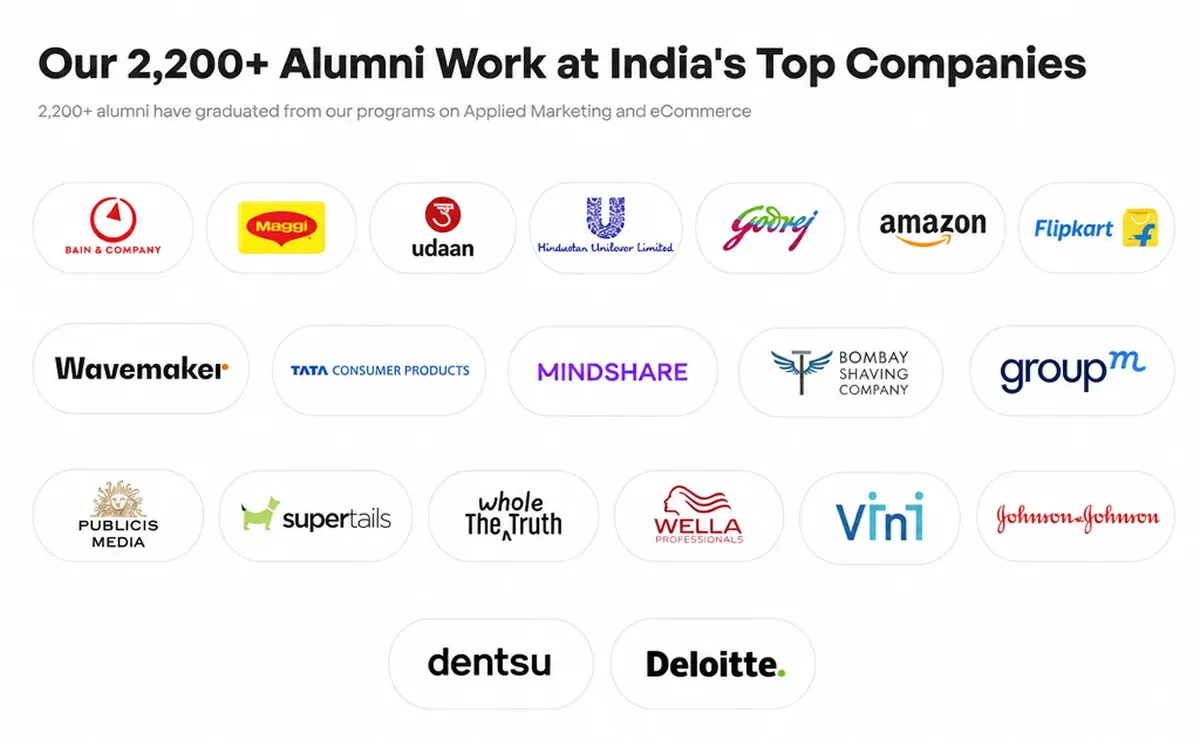
At Altera Institute, students learn from professionals who have held prestigious positions in reputed companies. From the marketing head of Maggi to the former head of eCommerce at HUL to the AVP of brand strategy at Dentsu, they have all been on the ground themselves. They don’t just bring in marketing frameworks but also their years of experience, learnings, failures, and successes to the classroom.
This creates a different learning experience from a conventional B-school model. Students are not only learning what a marketing framework says. They are seeing how marketers use that framework when facing real customers, competition, budgets, and business constraints.
The difference becomes even clearer through Altera Institute’s sprints and industry immersions, where students work through business challenges alongside industry professionals.
The result is a more grounded understanding of marketing. They learn how to question assumptions, connect ideas to business outcomes, and make decisions when the answer is not available in a textbook. That is ultimately what direct mentorship from marketers can add to management education.
Frequently Asked Questions
1. How is learning from CMOs different from attending guest lectures?
Ans. Learning from CMOs involves more than listening to a one-time talk. Students can learn directly from their experiences, decisions, and approach to solving real marketing problems through workshops, projects, and ongoing interactions.
2. Why do live projects improve marketing learning outcomes?
Ans. Live projects allow students to apply marketing concepts to real business problems. This helps them understand how to use frameworks, make decisions, and respond to practical challenges instead of only memorizing concepts.
3. How does exposure to multiple industries help marketing students?
Ans. Exposure to different industries helps students understand how customer behavior, competition, and business goals can vary. It also helps them become more adaptable and recognize marketing patterns that can apply across sectors.
4. What kinds of skills do recruiters expect from modern marketing graduates?
Ans. Recruiters typically look for skills such as problem-solving, communication, curiosity, collaboration, and business understanding. They also value candidates who can learn quickly and adapt to changing market needs.
5. Can industry-led learning benefit students without prior work experience?
Ans. Yes, industry-led learning can be especially useful for students without prior work experience. It gives them exposure to real business situations and helps them understand how marketing works beyond textbooks and classroom exercises.
6. How often should marketing curricula be updated to stay industry-relevant?
Ans. Marketing curricula should be reviewed and updated regularly because customer behavior, technology, and marketing tools change quickly. Regular input from industry professionals can help ensure that what students learn remains relevant to current business needs.