Guest Lectures vs. Practitioner-Led Learning: What's the Difference?


Industry exposure is now an important part of how business schools prepare students for the workplace. This can take different forms, from a guest session with a senior business leader to a curriculum that involves working professionals in teaching.
While both approaches bring industry experience into the classroom, they are not the same learning model. Guest lectures are typically built around occasional, individual sessions where students interact with professionals and gain insights into a specific topic, role, or industry. Practitioner-led learning involves professionals more deeply in the learning process, connecting classroom concepts with how businesses actually work.
This difference is worth understanding when you are choosing a business school. Looking at the number of guest lectures alone may not tell you how much industry experience is built into your overall learning.
That is why institutions like the Altera Institute have moved beyond occasional industry interactions by embedding practitioner-led learning into the overall educational experience.
The Impact of Practitioner-Led Learning in MBA Studies
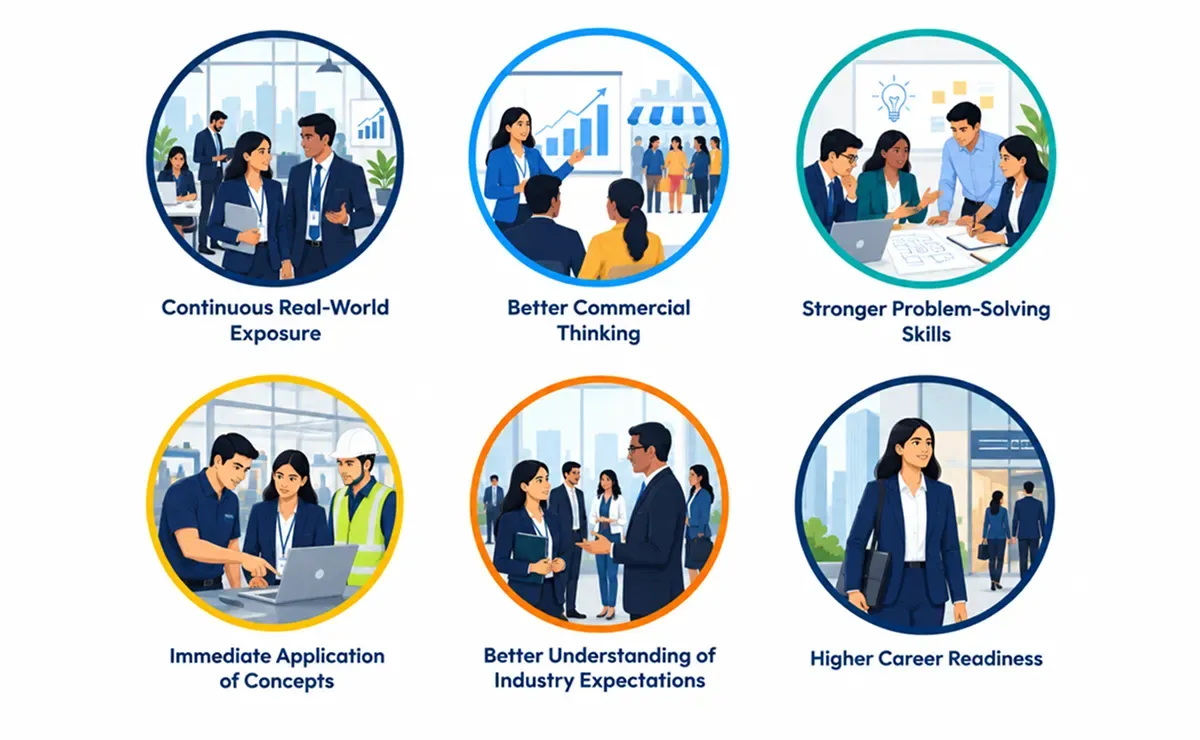
Practitioner-led learning adds a layer of business context that students may not get from academic teaching alone. It helps you understand what happens when concepts have to be applied to real decisions with commercial constraints and a lot at stake.
The impact can be seen across several areas:
Continuous Real-World Exposure
Instead of treating industry interaction as an occasional event, practitioner-led learning keeps real business perspectives present throughout the program.
- Students regularly hear how professionals approach decisions, challenges, and changing market conditions.
- Classroom discussions can draw on current business situations rather than only established examples.
- Students get greater exposure to how different roles and functions operate.
For example, Swapnil Kumar, ex-Head of Marketing at Pernod Ricard, brings real brand-management experience to his teaching at Altera Institute. Similarly, Aalekh Tripathi, ex-Marketing Manager from HUL, teaches eCommerce Growth Levers. These mentors at Altera Institute don’t just teach concepts but also discuss their own challenges, learnings, and findings that a textbook can never cover.
Better Commercial Thinking
Practitioner-led learning encourages students to look beyond whether an idea sounds good and consider whether it makes business sense.
Students start asking questions such as:
- What will this decision cost?
- How will it affect revenue, margins, or growth?
- Which customer or business metric should matter most?
- What trade-offs will the organization have to make?
This helps them connect concepts across marketing, finance, strategy, and operations instead of treating them as separate subjects. It also builds their muscle to make better decisions on shorter timelines and under higher pressure.
Stronger Problem-Solving Skills
Real business problems rarely come with complete information or one correct answer. Practitioners can challenge students to think through ambiguity and defend their recommendations.
This can help students:
- Break complex problems into smaller parts.
- Identify the information that actually matters.
- Compare different approaches.
- Question their assumptions.
- Adapt their thinking when constraints change.
Immediate Application of Concepts
The value of a concept becomes clearer when you have to use it.
A lesson on brand positioning can lead to a brand exercise. A discussion on go-to-market strategy can become a market-entry problem. This creates a direct link between learning a concept and making a decision with it.
Live projects, cases, and practical assignments can reinforce this further by giving students opportunities to apply classroom learning to business situations.
Better Understanding of Industry Expectations
Practitioners can also help students understand what employers expect beyond academic knowledge.
Students get a clearer sense of:
- How business recommendations are presented.
- Which metrics different teams care about.
- How decisions are communicated to stakeholders.
- What skills are expected in specific roles.
- How work is evaluated in a professional setting.
Higher Career Readiness
All of these experiences can make the transition from classroom to workplace more familiar. Students have more opportunities to practice analyzing problems, making recommendations, handling feedback, and applying frameworks before they encounter these situations in their first job.
Practitioner-led learning, therefore, does not replace academic teaching. Academic learning builds the foundation; practitioner experience helps students understand how to use that foundation when there is no textbook answer. The combination can create a more complete and career-relevant MBA experience.
What Do Guest Lectures Offer To MBA Students?
Guest lectures give MBA students the opportunity to learn directly from people with experience in academics, business, or specialized professional fields. Depending on the session, a guest speaker can bring research expertise, industry experience, or a perspective from a specific function or sector.
Learn From Experienced Professionals
Guest speakers can give students a closer look at the decisions, challenges, and experiences that shape real careers.
- Hear how successful leaders have navigated career decisions and business challenges.
- Understand what different roles and industries actually look like.
- Gain career inspiration from professionals with varied backgrounds.
- Ask questions and interact directly with people working in areas students may want to pursue.
- Build professional connections that can become useful as students explore internships, jobs, or career opportunities.
These interactions can make career paths feel more tangible. Instead of only reading about a role, students can hear how someone actually built a career in it.
Bring Industry Trends And Fresh Perspectives Into The Classroom
Guest speakers can also bring perspectives that complement what students learn through their regular coursework.
An industry practitioner can discuss:
- Changes in customer behavior and market expectations.
- New technologies, tools, and business models.
- Challenges companies are currently dealing with.
- How established business concepts are being interpreted differently across industries.
- Different approaches to solving the same business problem.
Academic speakers can bring research, specialized knowledge, and new ideas, while practitioners can add their experience of applying these ideas in professional settings. Hearing both perspectives can encourage students to question assumptions and look at familiar business problems differently.
Guest lectures are therefore valuable as focused opportunities for students to step outside their usual classroom environment. They allow you to interact with experienced professionals and gain perspectives that complement your core learning.
How Does Altera Institute Approach Guest Lectures and Practitioner-Led Learning?
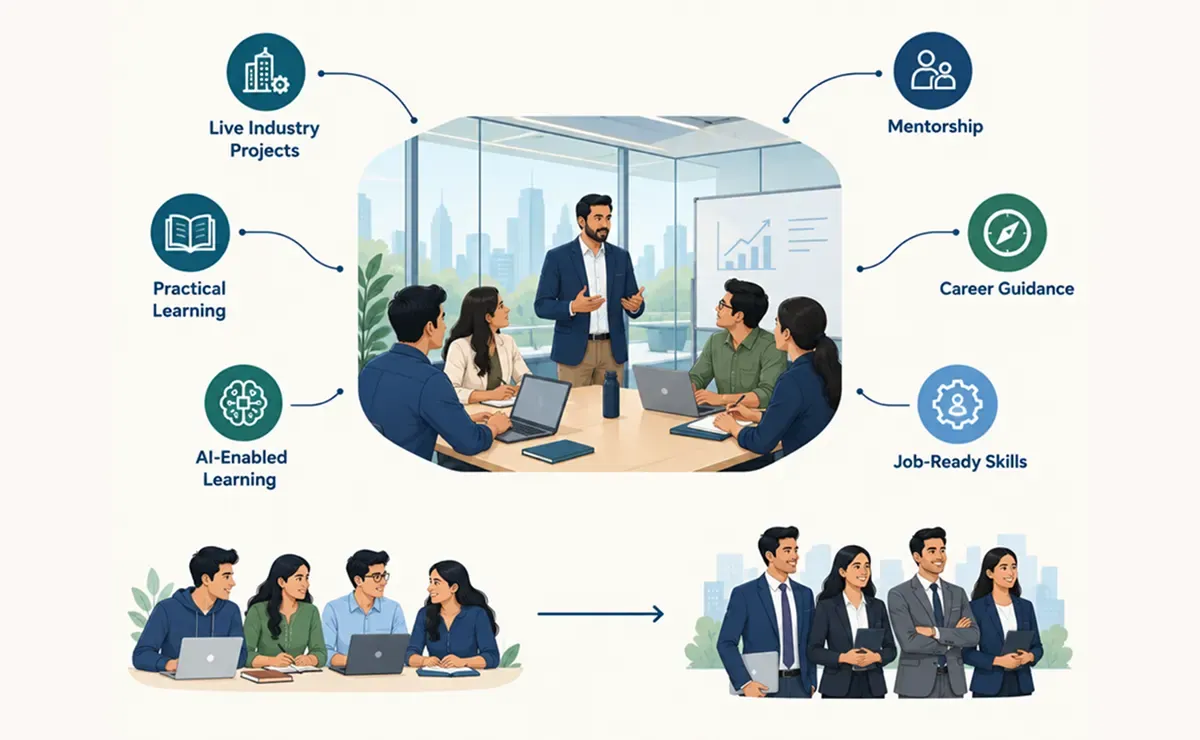
Altera Institute brings industry exposure into the classroom through both guest interactions and practitioners who teach as part of the program. The two serve different purposes.
During its orientation week, students interacted with leaders from different parts of the business world. The guest speakers included Shashwat Sharma (Airtel), Gaurav Bhatnagar (Hindustan Unilever), Nilesh Kotalwar (Honasa Consumer), Kiranbir Nag (Saama Capital), Akriti Gupta (Udaan), and many others. Their experiences span consumer businesses, venture capital, eCommerce, entrepreneurship, and business leadership.
The range of backgrounds gives students access to perspectives from consumer businesses, venture capital, eCommerce, technology, consulting, and entrepreneurship. Instead of relying on one type of industry experience, students get to hear how business decisions look from different sides of the table.
Altera Institute's practitioner-led faculty then brings this industry experience into regular coursework. Some of its instructors include:
- Karan Bhagi from Flipkart, who teaches eCommerce strategies.
- Vishal Ranjan from Hindustan Unilever, who also teaches Applications of AI in Marketing & eCommerce.
- Kaumudi Mahajan from Jio, teaching The Art of Selling at Altera Institute, among many others.
This also means industry exposure is not limited to a few high-profile guest sessions. At Altera Institute, practitioners are involved across courses, sprints, case discussions, and mentoring, making their experience part of the wider learning environment.
Why Management Education Needs More Than One Way of Learning?
An MBA cannot rely on one way of learning alone. Academic teaching gives you the concepts and frameworks to understand business, while practitioner involvement, projects, and industry interactions help you see how those ideas work in real situations. This is also where newer MBA models differ from traditional approaches. Instead of separating classroom learning from industry exposure, they bring the two closer together.
Altera Institute follows this approach through its combination of academic learning and continuous practitioner involvement across its PGP journey. Students interact with leaders not just through guest lectures but also, while learning from practitioners as part of their regular coursework.
The value of these experiences goes beyond individual sessions. As students move through the PGP, they encounter industry perspectives across classes, projects, sprints, and mentorship. Each experience builds on the previous one, helping them become more comfortable applying what they learn to real business situations. For students preparing for modern business careers, that combination can make the learning experience more relevant from the classroom to the workplace.
Frequently Asked Questions
1. Can guest lectures replace practitioner-led learning?
Ans. Guest lectures cannot fully replace practitioner-led learning because they usually provide focused exposure to a professional for a specific topic or session. Practitioner-led learning involves industry professionals more consistently across courses, projects, and other parts of the learning experience.
2. Why is continuous industry interaction important during an MBA?
Ans. Continuous industry interaction helps students connect what they learn in the classroom with how businesses actually operate. It also keeps their understanding of industry practices, expectations, and emerging challenges current throughout the MBA.
3. How do live projects strengthen practitioner-led learning?
Ans. Live projects allow students to apply classroom concepts to actual business problems with guidance from industry professionals. This helps them understand how to work with real constraints, evaluate different solutions, and turn their recommendations into practical outcomes.
4. Which learning model is better for career changers?
Ans. A learning model that combines academic foundations with practitioner involvement can be particularly useful for career changers. It allows them to build management knowledge while gaining practical exposure to the functions, industries, and types of work they want to move into.
5. Do practitioner-led programs still teach management fundamentals?
Ans. Practitioner-led programs still teach core management fundamentals as basics while also helping students understand how these concepts are applied when they face real business decisions and situations.
6. How can students identify genuine practitioner-led business schools?
Ans. Students can look at who actually teaches the program rather than relying only on claims about industry exposure. A genuine practitioner-led school should have instructors with relevant industry experience, regular practitioner involvement, live projects, and evidence that industry professionals contribute throughout the program rather than only through occasional guest sessions.