Which MBA Colleges in Delhi NCR Accept Fresh Graduates Without Work Experience?

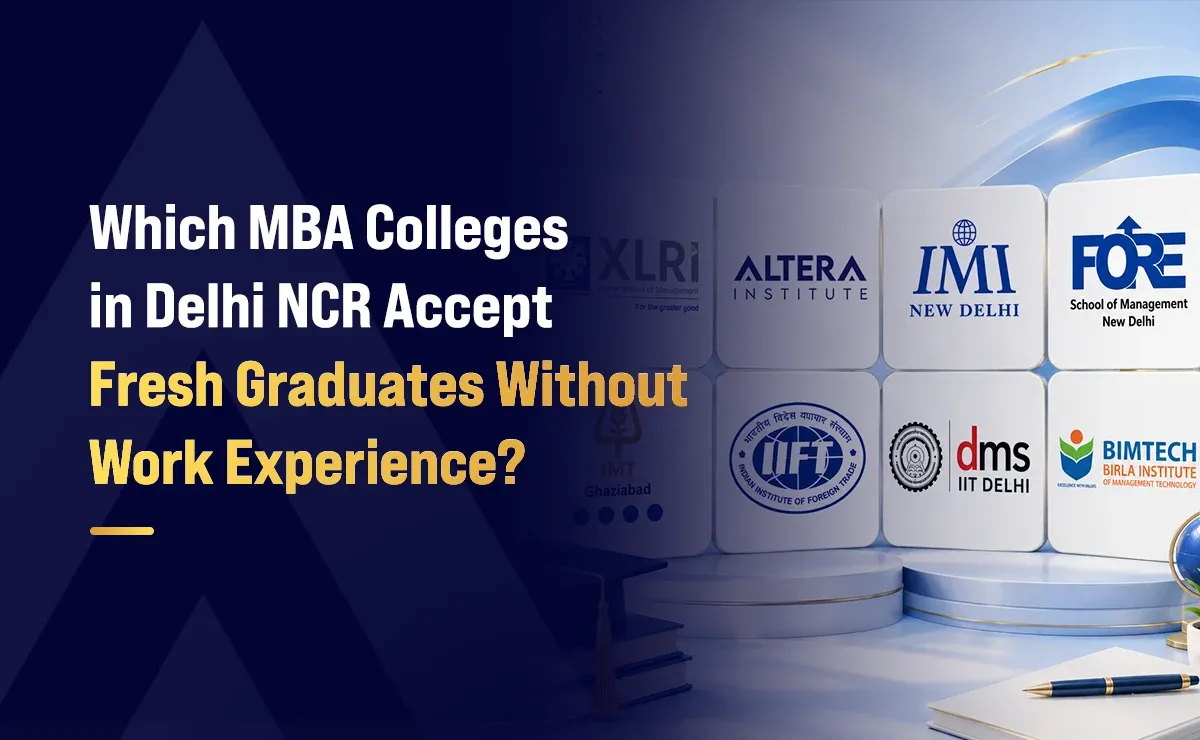
Several top MBA and PGDM colleges in Delhi-NCR admit fresh graduates without requiring work experience as a mandatory eligibility criterion. Although top programs like ISB and IIMs do prefer applicants with a professional background, the majority of flagship 2-year MBA and PGDM programs in India remain fully accessible to freshers straight out of undergraduate studies.
Having said that, considering only eligibility is not the best approach to program selection. Factors such as tuition fees, specializations, placement outcomes, and program relevance vary widely across institutions, which is why finding a program that is the right fit is important for applicants.
So, while they might have similar titles, not all academic paths will lead to the same destination. And it is the clarity of these factors that separates a strategic decision from a default one. Let's explore the top considerations you need to make when deciding the next steps in your career.
Can Fresh Graduates Apply? What the Eligibility Criteria Actually Look Like
The short answer is yes. In most MBA and PGDM programs in India, work experience is not a prerequisite for standard two-year full-time programs. Here is what you will typically need to qualify:
- A bachelor's Degree from any recognized university in any discipline
- A minimum aggregate of 50% (45% for candidates from reserved categories)
- A valid score from CAT, XAT, GMAT, CMAT, NMAT, or an institute-specific entrance test
- Satisfactory performance in Group Discussion, Written Ability Test, or Personal Interview rounds
Do note that while not mandatory, work experience does carry weight in shortlisting rounds at selective institutions. MDI Gurgaon, for instance, assigns 10% of its selection weightage to prior professional experience. But for the purpose of meeting basic eligibility across the programs covered in the article, freshers are on equal footing with experienced applicants.
How B-Schools Evaluate You Without a Professional Track Record

If you do not have full-time work experience, the admissions panel shifts its focus to other indicators of your potential. Understanding what those are helps you prepare for the right things from the very start of your application journey.
1) Entrance Exam Scores
For a fresher student, a good CAT, XAT, GMAT, or NMAT score is the primary determining factor in shortlisting for subsequent rounds. For instance, top institutions such as FMS Delhi (CAT percentile 99.5) and IIT Delhi DMS (CAT percentile 98) have extremely high cutoffs with very little margin of error. In contrast, new-age institutes such as Altera (90+ percentile) accept CAT, XAT, NMAT, and GMAT scores and also conduct their own aptitude test (known as ALNAT) for candidates who have not appeared for any of the regular national exams.
2) Academic Record and Internships
If you don't have full-time professional experience on your resume, your academic grades (10th, 12th, and graduation) and internships become the next most scrutinized aspects of your profile. Good grades indicate intellectual commitment, and internships, whether short-term or long-term, indicate real-world commitment and initiative. Certifications, real-world academic projects, and extracurricular leadership are all important pieces of the career story that you must tell through your profile.
3) Clarity of purpose
In the MBA admissions process, some of the most important stages include the SOP and interview rounds. Applicants who can articulate why they are applying for an MBA, what they expect from it, and where they plan to take their careers during these stages consistently stand out. Although being a fresher does not automatically disqualify you, lacking clear career goals and interests muddies your overall profile, thereby hampering your chances of a final conversion.
Top MBA and PGDM Colleges in Delhi NCR for Fresh Graduates: A Quick Comparison
The table below covers ten of the most prominent institutions in the Delhi-NCR region, with key figures a fresh graduate should compare before making a shortlist.
How to Choose the Right Program as a Fresher
Brand names and rankings are a useful starting filter but rarely tell the complete story of a program, especially for freshers making a significant financial commitment. Hence, these three factors warrant careful evaluation when shortlisting colleges.
1) Program Outcomes
When looking at placement numbers, go beyond just the headline salary figures colleges claim. Numbers like average and highest placements are often easy to manipulate because they are sensitive to outliers—a handful of exceptional offers at the top—and are vulnerable to selective reporting that has little bearing on where 90% of the batch ends up. And since most colleges in India publish self-audited placement reports without any external supervision, the headline numbers should always be taken with scrutiny.
The true verdict on a program's outcomes depends on the quality of roles students secured, the industries hiring from the program year-on-year, and whether students were prepared well enough to contribute meaningfully in their roles right from the outset. Additionally, compared to average and highest placements, median salary figures are a better indicator of the typical salaries graduates earn and are harder to manipulate.
2) Curriculum Relevance
Make sure the program you choose aligns with how modern businesses operate. A curriculum designed for the realities of the past cannot lead to long-term career growth because the industry today is increasingly moving towards AI integration and digital-first business models. These are precisely where hiring demand is the strongest and constantly growing. Hence, a program built around current industry demands is far more likely to produce employment-ready graduates.
An industry-relevant curriculum integrates:
- Industry collaboration with real companies and practitioners that shapes both what is taught and how it is delivered
- Projects built around real business problems, not hypothetical simulations
- Exposure to relevant tools and skills as an active part of the learning model, rather than an add-on
3) Program Fit
Not every MBA program is built for freshers. Some assume real-world experience, making it harder for freshers to connect with classroom discussions. Hence, the B-school you choose should be based on its value offering and academic style, and it must align with your own career goals, learning style, and overall readiness. This is what is known as cultural and program fit.
The right B-school isn't necessarily the one that has the best placements; it's the one that's right for you and your future. Therefore, while evaluating B-schools, consider questions like:
- Does it have a collaborative or a competitive atmosphere?
- Is the mentorship structured or unstructured?
- Do leadership development opportunities exist outside the classroom?
Programs that incorporate live industry projects, case-based learning from the first semester, and curriculum delivered by practitioners tend to serve freshers more effectively than those that rely primarily on theory.
Should You Pursue an MBA Right After Graduation? The Real Trade-offs

Pursuing an MBA without work experience in India is entirely viable, but whether the timing is right depends on your level of career clarity. Here is an honest look at both sides of the decision.
When You Should Go Immediately:
- Placements across most institutions in the list above begin significantly above entry-level compensation, enabling a meaningful salary reset right out of B-school.
- The alumni network, recruiter access, and professional frameworks you gain through an MBA can take years to develop independently through a conventional career path.
- For students with financial aid or scholarship support, the post-MBA compensation jump can strongly justify the investment, even without prior work history.
When You Should Wait:
- Students who are still exploring roles or the sector they want to work in will find the MBA experience less focused, which will affect elective choices, internship performance, and interview outcomes.
- Recruiters for specialized roles in consulting and investment banking often prefer candidates with some real-world organizational context. A year or two of experience can strengthen both your application and your classroom learning.
The decision ultimately depends on clarity of direction, not age or timing. If you know where you want to go, an MBA right after graduation can take you there meaningfully faster.
Making the Right MBA Decision as a Fresh Graduate
An MBA in India is well within reach for fresh graduates without work experience. There are several good institutes in Delhi-NCR with a wide range of fees, entrance exams, and models, and they actively recruit fresh graduates.
A strong MBA choice is not just about selecting the most prestigious college but also a program whose curriculum, placements, and values align with your current stage and long-term goals. It could be the brand power and placement network of FMS Delhi or XLRI for some students. For others, it may be selecting an applied/industry-based program that focuses on career readiness from the outset.
Don't just consider rankings; check placement reports, talk to alumni, and evaluate each program's offerings. For a new graduate, the most successful MBA can be the one that is not necessarily the most expensive or the best known but the one that is of most value to who you are today and will help you become who you want to be tomorrow.