The Future of Marketing Education
Marketing has moved well beyond traditional brand building. Today, marketers are expected to work with data, technology, paid media, AI, and customer platforms while still understanding what makes people choose a brand. As digital advertising grows and businesses rely more on measurable customer acquisition, hiring is also shifting towards marketers who can connect strategy with execution.
This is creating a clear gap in management education. A student may graduate with a strong understanding of marketing theory but still lack experience with campaign platforms, analytics, or performance metrics. The result is a mismatch between what many MBA programs teach and what modern marketing roles actually demand.
So, the real question is not whether marketing is changing. It is whether business schools are changing with it. The future of marketing education, therefore, will depend on how well business schools keep pace with the changing role of the marketer.
Why Traditional Marketing Education Is Becoming Outdated?
Marketing fundamentals are still important. The problem is that knowing the 4Ps, segmentation, or branding theory does not automatically make you job-ready. Modern marketing roles require you to turn those concepts into measurable outcomes.
A student may understand how to build a brand but still graduate without knowing how to:
- Set up or evaluate a Meta or Google Ads campaign
- Read an analytics dashboard
- Track customer acquisition and conversion
- Measure ROI and optimize campaign performance
Employers now need marketers who can understand data, work with digital platforms, and connect marketing activity to business results. A broad understanding of marketing is useful, but companies also need people who can execute within specific functions.
The Gaps in Marketing
The biggest gaps often come from three areas:
- Theory-heavy curriculum: Strong on concepts, but limited exposure to the tools marketers use every day.
- No campaign exposure: Students learn how campaigns should work without actually planning, launching, or analyzing one.
- Outdated case studies: Examples may explain established marketing principles but fail to reflect AI, creator platforms, performance media, or rapidly changing customer journeys.
What the Future of Marketing Actually Looks Like (2026 and Beyond)?
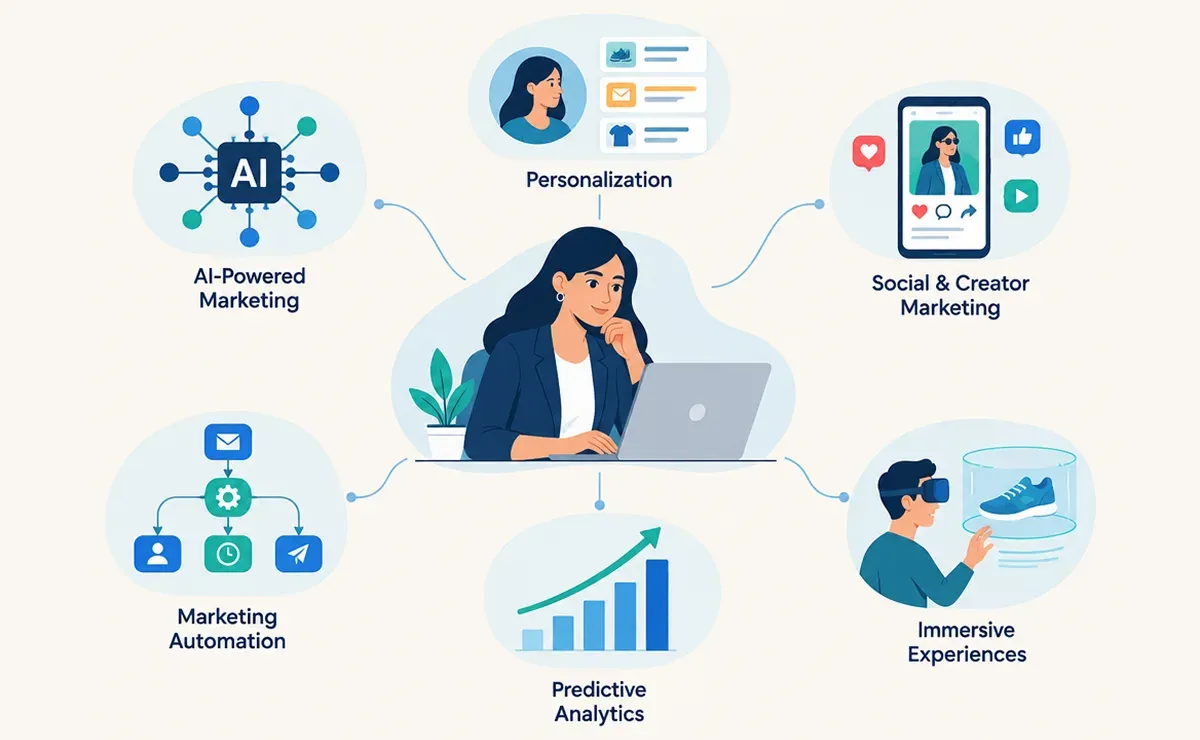
The future of marketing is not about replacing traditional marketing with digital tools. It is about combining marketing thinking with technology, measurable performance, and a deeper understanding of customers. Three shifts are shaping how marketing teams will operate in the years ahead:
These capabilities increasingly work together rather than operating as separate functions. Future marketers will need to understand how technology, performance, and customer strategy connect to drive business growth.
The Skills That Will Define Future Marketers
The future of marketing is not creating one marketer who knows a little about everything. As marketing teams are becoming more specialized, employers are hiring for specific capabilities tied to specific business outcomes. At the same time, the strongest candidates will be able to connect their specialist skills with a broader marketing strategy for higher value.
Performance Marketing: Ads, ROI, and CAC
Performance marketers are hired to drive customer acquisition and measurable growth. They need to understand paid advertising, campaign optimization, CAC, ROAS, and conversion rates. The ability to identify which campaigns are generating profitable customers makes this role directly valuable to revenue-focused teams.
Marketing Analytics and Dashboards
Analytics skills matter because marketing decisions increasingly depend on evidence rather than assumptions. Marketing analysts and growth teams use dashboards to track customer behavior, campaign performance, and conversion trends. They need to turn data into recommendations that help teams decide where to invest or what to change.
Content and Storytelling for Digital Platforms
Content roles are also becoming more specialized. SEO, social, video, and creator marketing require different approaches to reaching audiences. Strong digital storytellers need to understand platform behavior, search intent, and audience attention while creating content that supports brand or business goals.
AI Tools and Automation
AI and automation skills are becoming useful across marketing roles, from campaign creation to customer communication. Marketing operations and growth professionals can use automation to streamline workflows, segment audiences, and scale personalized campaigns. Knowing how to use these tools effectively can improve both speed and efficiency.
Consumer Psychology in Digital Journeys
Understanding why customers click, hesitate, compare, or convert will always be central to marketing. Growth, UX, and customer experience roles use behavioral insights to reduce friction and improve digital journeys. This makes consumer psychology valuable even as more marketing work becomes technology-driven.
The result is a growing demand for hybrid marketers who combine specialist expertise with strategic thinking, data literacy, and commercial awareness.
The Real Problem: Marketing Degrees vs. Marketing Jobs
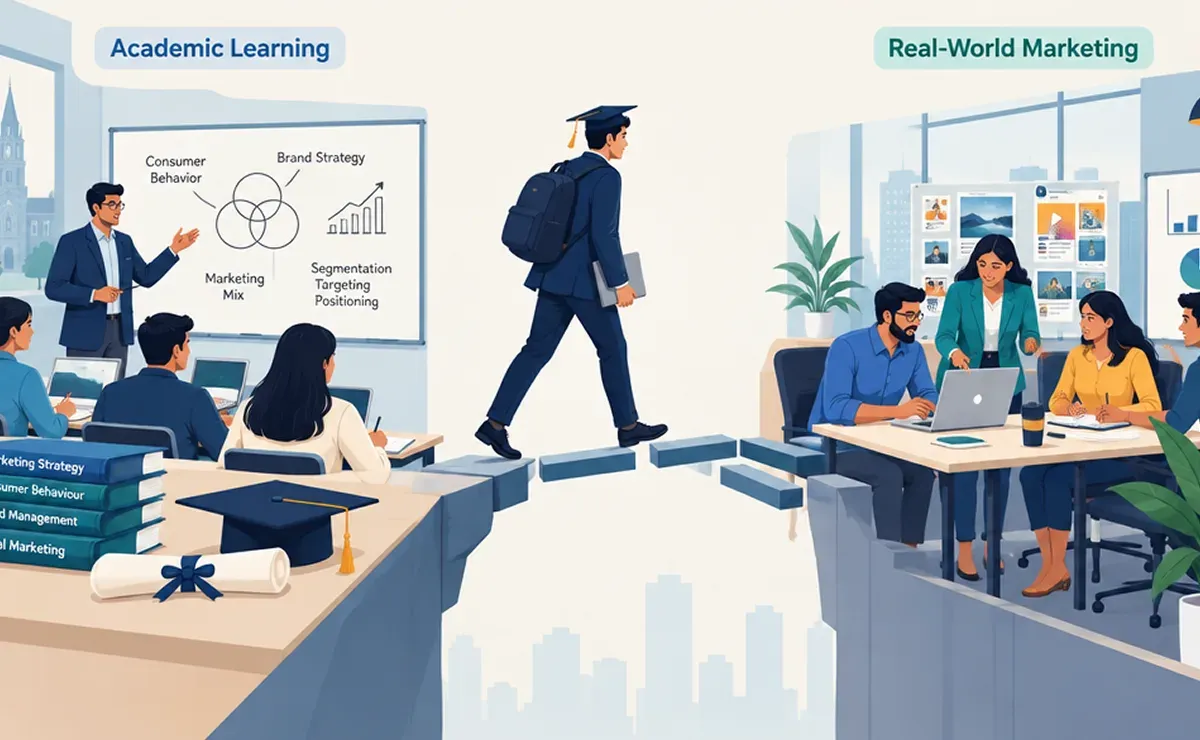
The gap between marketing education and marketing jobs is becoming harder to ignore. A marketing degree can teach you the fundamentals, but employers increasingly want people who can apply those concepts from day one.
That is why many graduates still need to build practical experience through:
- Certifications to demonstrate tool-specific knowledge.
- Internships to understand how marketing teams operate.
- Agency experience to work on real campaigns and clients.
The hiring reality is also changing. A degree can get you considered, but your skills show what you can actually do. A portfolio can demonstrate campaign thinking, analysis, and execution in ways a CGPA cannot.
Skills matter more than the degree alone. And a strong portfolio can matter more than a strong CGPA.
How Altera Institute Prepares Students for Future Marketing Careers
Altera Institute’s approach is built around the idea that marketing education should reflect how marketing teams actually work today.
- Industry-first curriculum: The curriculum combines marketing fundamentals with areas such as digital business, performance marketing, analytics, AI, growth, and eCommerce. This helps students build skills relevant to modern marketing roles.
- Hands-on campaign experience: Students work on live projects, case sprints, and practical assignments where they apply marketing concepts to real business problems instead of relying only on classroom cases.
- Small cohorts and personalized learning: Smaller cohorts allow students to receive closer feedback and interact more directly with faculty and industry practitioners during the learning process.
- Exposure to hiring expectations: Regular interaction with practitioners helps students understand what employers look for beyond a marketing degree. They can see how marketing decisions are made and which skills matter in different roles.
The result is a learning experience that connects marketing strategy, technology, data, and execution rather than treating them as separate skills, making it one of the best MBA programs for digital marketing in India.
What Students Should Look for in a Future-Ready Marketing Program
If you are comparing the best MBA programs for digital marketing in India, look beyond the specialization name. Check whether the program gives you:
- Live projects: Opportunities to solve real business problems, not just study cases.
- Tool training: Practical exposure to ads, analytics, CRM, and other marketing platforms.
- Industry mentors: Regular access to professionals who understand current hiring needs.
- Portfolio opportunities: Projects that demonstrate what you can actually do.
- Hiring alignment: A curriculum designed around the skills and roles companies are hiring for today.
Conclusion
Marketing is no longer driven by ideas alone. It now combines execution, data, technology, and customer understanding. As the role of the marketer changes, marketing education needs to move at the same pace. Students who learn how to use new tools, interpret data, and apply marketing thinking to real business problems will be better prepared for what comes next.
This is the approach Altera Institute takes with its PGP in Applied Marketing. By combining marketing fundamentals with AI, analytics, digital business, growth, and practical projects, Altera Institute helps students build skills for the marketing roles of tomorrow. The future will favor marketers who keep learning, adapting, and applying.