Learning about the MBA Advantage in the Creator Economy: Building Personal Brands with Altera Institute
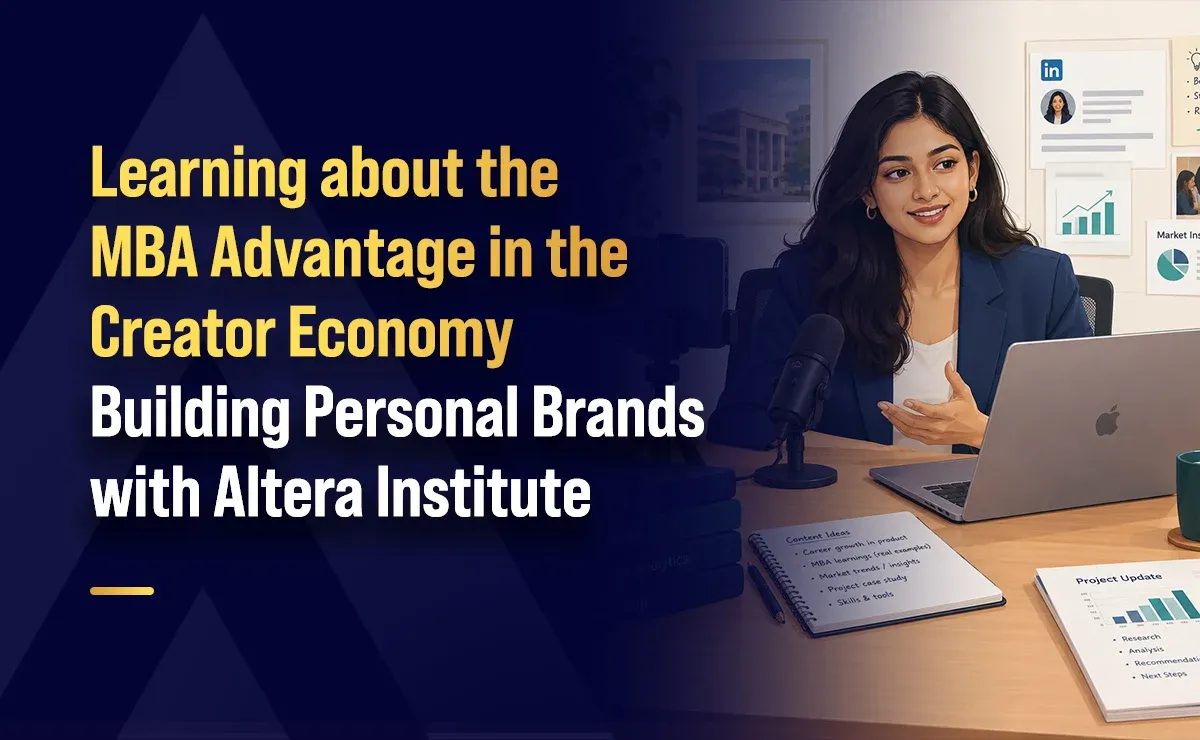
Career growth for management graduates has moved beyond academic transcripts, grades, and final placements. In today’s competitive job market, recruiters require candidates to be good at what they do and not just have a degree to show for it.
You need more than a degree and a good academic record to get the job. Hiring managers want to see how you apply your knowledge in real time. Platforms like LinkedIn, YouTube, Instagram, and X have become essential tools to build professional credibility and demonstrate domain authority.
For students comparing top marketing MBAs, this matters because marketing careers need you to have communication, positioning, and audience-understanding skills. Altera Institute, with its PGP model, enables students to graduate with both practical and industry-demanded skills and a strong professional presence.
Why the Creator Economy Matters for MBA Careers
The creator economy is no longer restricted to only social media influencers. Today, marketers, strategists, growth managers, product leads, and founders are actively building resilient careers by sharing their expertise online.
This ecosystem has changed over time following a clear path. It started with the gig economy, where professionals sold their services. Then it moved to the influencer era, when content became about specific niches while also working with brands. Now it has become the creator economy, where high-value professionals operate as domain experts who build authority with original insights.
This shift has changed how careers grow. Employers increasingly evaluate talent on a “proof-of-work-first” model. The Wheebox India Skills 2025 report confirms this; while MBA graduates lead the national baseline employability at 78%, employers are prioritizing soft and practical skills over transcripts.
Professional success requires functional skills, visibility, and credibility. Recognizing this change, Altera Institute has built its programs to encourage students to build a distinct professional identity while completing their academic curriculum.
Why Personal Branding Gives MBA Graduates a Career Advantage

Personal branding is not about becoming an influencer. It is about systematically demonstrating functional expertise. For MBA students, this can create a genuine career advantage.
A strong personal brand can improve visibility. Recruiters actively source through LinkedIn based on published works. Moreover, visible expertise attracts access to projects, internships, professional mentorship, and consulting projects, along with high-level networking opportunities and speaking engagements. It can also support faster career progression because documented proof of work enables a faster transition into specialized roles like brand management, growth marketing, product management, etc.
Recruiters want objective proof, not unsubstantiated claims and transcripts. Documenting the outcomes of live projects will serve as verifiable proof of execution capacity. For instance, analyzing marketing campaigns by breaking down brand strategy failures and successes with data. Also, publishing real-world workflows that leverage AI to optimize marketing tasks demonstrates analytical skills. Additionally, breaking down business case studies of emerging market trends and sharing industry developments on LinkedIn will stand out to potential employers.
Altera Institute facilitates this brand-building process through its practitioner-led curriculum and live client projects. By having students work on real-world business projects with industry experts, Altera Institute helps them create a body of work that can serve as professional proof of execution.
How MBA Students Can Build a Personal Brand While Studying
MBA students do not need to wait until graduation to start building a personal brand. The most effective approach is to document learning consistently while developing a clear area of focus.
What to Share Online
Students can share learnings from case studies, analysis of industry trends, AI workflows, marketing frameworks, reflections on their internships, capstone project insights, and mentors’ teachings. These posts do not need to be polished essays; they need to be useful, specific, and grounded in real experience.
A short post on how a pricing framework worked in a class discussion or what was learned from a marketing brief is more valuable than generic motivational content. The key is to show the development of thinking over time.
Focus on Consistency, Not Virality
Visibility comes from repetition and not luck. One LinkedIn post each week is enough to build momentum if the shared content is useful and relevant. Sharing projects you worked on, instead of listing them on your resume, and engaging in discussions with industry experts will help you develop a niche around a chosen area of expertise.
For instance, a student interested in brand strategy can share observations on consumer behavior, campaigns, and their performance or the use of AI in marketing. Over time, this will help in creating an identity in the industry.
How Altera Institute Helps Students Build Both Skills and Visibility
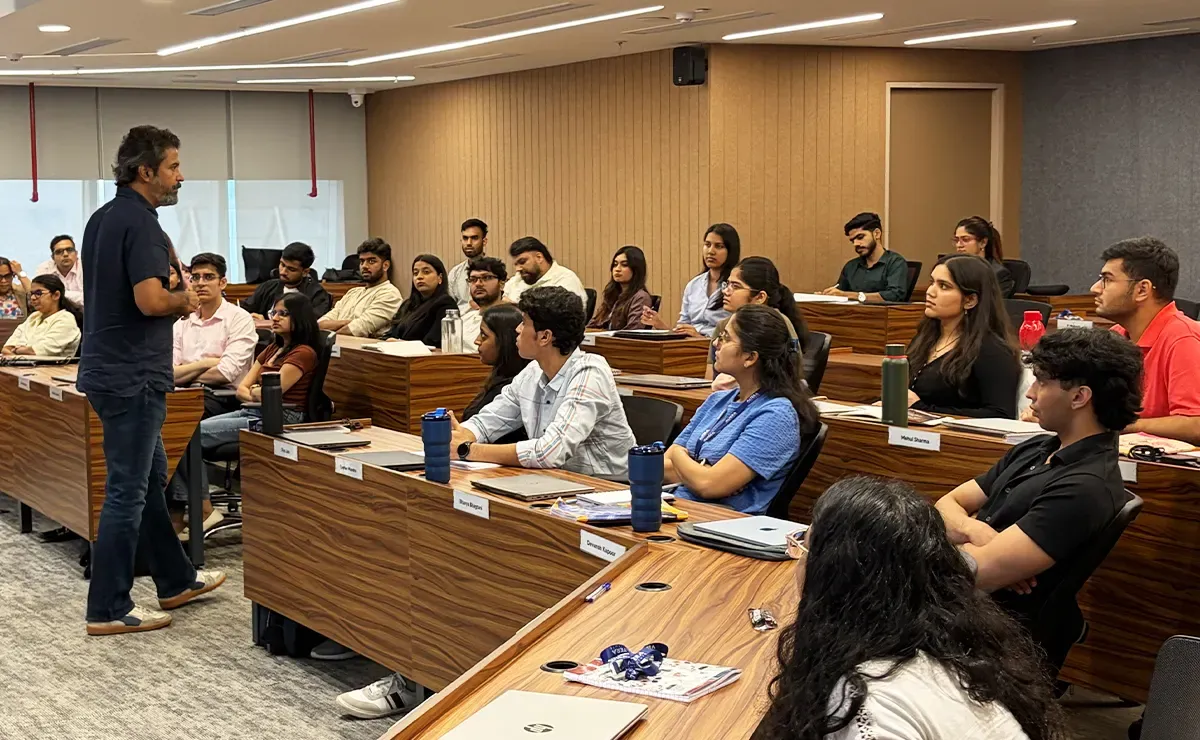
Altera Institute bridges the gap between academic learning, skill building, and industry visibility through an educational model that has been built specifically for the modern digital economy. Operating in Gurugram, the institute’s PGP in Applied Marketing places emphasis on real-world execution of classroom curriculum.
Altera Institute’s team of practitioner-led faculty ensures the students learn from people who are actively working in the field. Working on live client projects gives students material to build their portfolios to use in career progression. While its AI-first curriculum provides the tools used in business practice, industry mentorship adds a framework for accessing feedback from corporate practitioners that helps with career direction.
The numerous career coaching and networking opportunities students get access to at Altera Institute matter immensely as personal branding becomes more effective when it is supported by real experience and strong professional relationships. Students are not simply asked to post online; they are taught how to do so and provided with the material to share.
In a creator-led economy, these elements provided by Altera Institute ensure that its students not only study business concepts but also know how to execute them, building confidence and credibility at the same time.
The MBA Advantage Today Is Being Both Skilled and Visible
Technical subject knowledge alone is no longer enough to stand out in today’s job market. Personal branding allows management graduates to demonstrate credibility and execution capability in the industry before they sit for interviews. By combining live projects, networking, industry mentorships, continuous learning, and thought leadership, students can create long-term advantages that extend beyond entry-level job placements at year-end.
For MBA students, the goal is not to earn a degree but to graduate with proof of work and a thriving professional identity. Altera Institute equips students to graduate with practical experience, deep industry exposure, and a distinct professional identity that sets them apart from other graduates.
Frequently Asked Questions (FAQs)
Q1. Which platform is best for MBA students to build a professional brand?
Ans: LinkedIn is usually the most effective starting point to build a personal brand. It is professionally focused and widely used by recruiters, founders, industry experts, and hiring managers. Platforms like X can be used for real-time market commentary, and Medium is perfect for long-form strategic analyses.
Q2. Do I need thousands of followers to benefit from personal branding?
Ans: No. A small audience can create value if the content shared is credible, consistent, and useful. Personal branding is also about audience relevance and not mass reach. A focused network of a handful of industry practitioners and senior leaders who view your work as enough to yield higher career returns than thousands of casual followers.
Q3. Can personal branding benefit students who don't want to become content creators?
Ans: Yes. You do not need to become a full-time content creator to build a strong personal brand. Documenting the outcomes of your live projects, summaries of business cases, and industry developments will function as a dynamic portfolio that validates your resume to prospective employers.
Q4. How early should MBA students start building a personal brand?
Ans: It is a good idea to start building your personal brand as early as possible. Documenting your learning journey, insights gained from industry experts, and ongoing live projects will create a record of your professional growth for placements.
Q5. Can AI help MBA students build a personal brand?
Ans: Yes. AI tools can help you research, draft, edit, and plan your content. However, the ideas, opinions, perspectives, and examples should come from your experience. This will help you maintain authenticity and credibility.