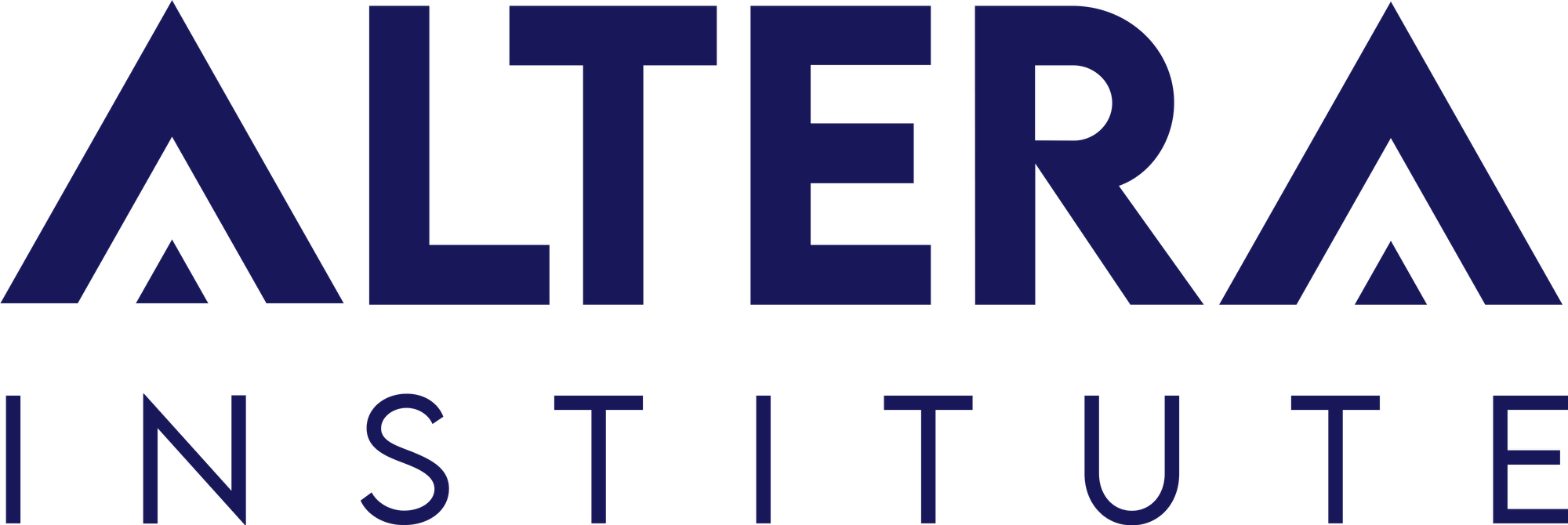
What is Applied Marketing?
India produces thousands of marketing graduates through MBA, PGP, and PGDM programs every year. Yet it is common to hear in hiring conversations that recruiters can’t find people with relevant skills ready to contribute from day one.
In fact, only 42.6% of Indian graduates are employable, according to the Mercer-Mettl India Graduate Skill Index 2025, and in digital marketing, the figure is even lower at 41%. Meanwhile, the sector is expanding at a 25-30% CAGR. Demand is not the limiting factor. There aren't enough professionals who are considered job-ready, because the skills they are taught in management programs don't align with the skills the industry requires of its employees.
This article explains what applied marketing is, why it matters in education, how to identify programs that genuinely teach it, and what it looks like in practice.
What is Applied Marketing Theory?
Applied marketing theory is the practical use of established marketing frameworks to solve real business problems and drive measurable outcomes. Frameworks like STP (Segmentation, Targeting, and Positioning), the marketing mix, consumer behavior models, and growth funnels are taught as concepts. But when learned through practical application, they become tools applied against real challenges, with results measured against real outcomes.
This distinction matters a lot. Theory-based learning explains what concepts such as STP (segmentation, targeting, and positioning) are and how they work. But applied marketing teaches you to use STP to enter a new market segment with a real product, execute the strategy, and then measure the results.
According to NASSCOM's 2024 AI Adoption Index, 87% of businesses have started integrating AI into their operations. Employers today are actively seeking candidates with AI skills across industries, not just conceptual fluency with AI. A student's ability to recall concepts is no longer a differentiator. It is about whether they can use them meaningfully to derive measurable results and add value in line with desired expectations.
What Does Applied Marketing Mean in Management Education?

For a long time, management education has been largely theory-oriented, with textbook learning, case studies, and final examinations to check recall. Applied marketing in a pedagogical context flips this entirely. Frameworks are explained and learned by doing rather than merely being learned. Students are not only taught basic marketing concepts. They are actively taught to apply them, such as creating actual marketing products, a working brand strategy, or a go-to-market plan for a real product.
The opportunity this approach presents is significant. TeamLease found that 75% of higher education institutions in India are still not industry-ready, and only 9.68% employ live industry projects in their curricula. A marketing program that is truly taught in an application-first approach does not wait for the internship to broaden student exposure to real decisions. It integrates that exposure into each term through live projects, practitioner faculty, and outcomes-linked assessments.
What is the Importance of Applied Marketing for Students?
There is a gap between understanding a concept and applying it in an environment where it will benefit the business. Students from theory-heavy programs generally spend 3-4 months after graduating learning what should have been taught in their courses. This is a blunt job-advancement block during the most critical months of their career.
In applied learning, experiential learning is integrated right from the outset. Students who have already created their own D2C brand, developed a media plan on Google and Meta, or reviewed a P&L for a category are ready for the ambiguity and speed that employers are testing for. This is particularly important for high-growth, digital-first roles such as growth, eCommerce, category management, brand strategy, and the founder's office.
Applied programs give students the opportunity to build a portfolio of real, demonstrated work experience, which is far more valuable to a recruiter today than credentials alone.
Characteristics of Applied Marketing as a Learning Approach
Not all programs that claim to be industry-relevant actually teach marketing through an application-first approach. Here’s what genuine applied learning looks like in practice:
- Industry-designed curriculum: Courses are built backwards to reflect and teach the skills the job roles will actually require. Program designers ask what growth managers, eCommerce leads, and product marketing professionals do in their roles, then teach those competencies directly.
- Learning by doing: Core assessments involve building or launching something real, whether that’s a brand, a product MVP, or a live campaign. Case study summaries and theory exams don’t qualify.
- Practitioner faculty: Sessions are led by people currently in relevant roles in marketing, product, or growth. The practical judgment they bring cannot be replicated from a textbook or an academic’s case note.
- Cross-functional exposure: Applied programs integrate marketing with product, analytics, and commercial strategy, as they do in the D2C and eCommerce world.
- Real stakeholder feedback: When a CEO or other senior industry professional is involved and assigns you a go-to-market plan to execute as part of a live project, it is a whole new experience compared to standard exams, making the feedback and the learnings you receive highly contextual and authentic.
How Is Applied Marketing as a Learning Approach Beneficial for Professionals in Marketing?
Applied marketing education isn’t only relevant to fresh graduates. It’s equally valuable for early and mid-career professionals who’ve hit a ceiling in their current career trajectory.
Professionals with less than 3 years of experience, looking to transition to growth marketing, eCommerce, or brand roles but stuck in sales, IT, or traditional marketing with no clear path, are clear profiles who can benefit from an applied marketing program. Here are four tangible benefits of a properly designed applied program.
- It compresses the learning curve. Rather than spending years working in adjacent roles, students can develop the skills and experience recruiters seek through an applied curriculum. As students learn by doing, they reduce the learning curve they would otherwise have required in on-the-job training.
- It produces a portfolio, not just a certificate. Employers today seek real work samples from candidates when hiring for digital-first roles. As part of an applied marketing program, students actively build a portfolio of real work, giving them something tangible to show during their job interviews.
- It builds cross-functional thinking. Professionals learn to think simultaneously across marketing, data, product, and commercial strategy, which is exactly the skill profile that D2C and eCommerce companies pay a premium for.
- It delivers better ROI on time out of the workforce. A specialist 1-year program that incorporates applied learning and is directly aligned with high-growth outcomes is a lower-risk, quicker-return-on-investment program than a two-year generalist MBA.
The demand for high-growth digital-first roles is already growing every year. The only constraint that remains is the availability of execution-ready talent. And that is exactly the gap Altera Institute’s PGP in applied marketing was designed to solve.
How to Assess If a B-School Teaches Marketing Through Applied Learning
Not every program that claims to be practical genuinely delivers on it. If you are looking to enroll, apply this 5-point program assessment to evaluate programs critically.
- Who delivers the sessions? Check whether the program's faculty consists of industry professionals or only pure academics. Senior leaders and specialists who have been there and done that are more equipped to produce industry-ready talent.
- What do capstone projects actually involve? Real business problems with real stakeholder evaluation are fundamentally different from hypothetical case studies. Find out what last year’s students built and who assessed the work.
- Is placement data verified and role-specific? Don't just look at headline CTC figures like average and highest. Take into account the types of roles students were placed in, the companies that recruited them, and whether the placement report is self-audited or follows a national standard like IPRS. A self-audited report, even at top B-schools, often obscures what students actually earn in a year.
- Are live projects embedded across the curriculum? A single optional internship is not the same as live projects integrated across multiple terms. Ask how many students completed one and with which companies.
- Who designs and updates the curriculum? Programs tied to active practitioner advisory boards adapt faster to changing industry needs than academic committees operating on multi-year revision cycles.
This framework makes clear what genuine applied learning looks like in practice, which is precisely where Altera Institute stands apart from the rest.
Altera Institute and How It Teaches Applied Marketing

The PGP in Applied Marketing offered by Altera Institute is a 15-month full-time residential program grounded in applied learning principles. The curriculum is designed by industry professionals from companies such as HUL, Goldman Sachs, Haleon, and EY Parthenon, helping the program integrate the right marketing skills and competencies that students are preparing for.
The program consists of 4 terms, each culminating in a capstone, with each term becoming increasingly realistic in scope.
- During Term 1, students develop a D2C brand from the ground up, including product, marketing mix, go-to-market strategy, and communication plan.
- In Term 2, students begin an MVP by conducting market research, creating a commercial plan, and presenting to industry leaders.
- In Term 3, students are working directly with a founder/CXO on a real business issue, receiving feedback from a real stakeholder rather than from an academic rubric.
- Term 4 asks students to publish an original research report based on their rigorous analysis, rather than a summary of existing frameworks.
Across all four terms, students also complete more than 20 expert sprints, each with a 4- to 8-hour intensive session led by practitioners from Netflix, HUL, EY Parthenon, Microsoft, Pernod Ricard, Bain and Company, and Whiteboard Capital. Every teaching session is delivered by industry professionals with faculty credentials, including former Nestle marketing heads, eCommerce directors, Bain consultants, and Goldman Sachs analysts, all with 9 to 20-plus years of experience.
Conclusion
An applied marketing approach is a systematic response to solving a modern learning problem. It fills the long-standing divide between classroom theory and real-world marketing practice today. The best indicator of this approach's success is the career outcomes such applied programs produce. The graduates of truly applied programs find themselves in positions of growth earlier, are paid more from the get-go, and have portfolios that can withstand scrutiny.
When evaluating a program, the question isn’t whether the institution is well known. It’s whether the program teaches you to do the job or just understand it. Students who close this gap early, through the right applied program, are the ones who will own the fastest-growing roles in India’s digital economy.