
The Network Effect: Why Your MBA Peer Group Can Shape Your Career More Than Your First Job

When choosing a one-year MBA, most students compare rankings, fees, curriculum, and placement records. These factors are important, but there is another question that often gets overlooked: Who will you spend the next 12 to 18 months learning with?
Your classmates can become future founders, marketers, consultants, hiring managers, and business leaders. The relationships you build during your MBA often continue long after graduation, opening doors to new opportunities, collaborations, and career growth.
This is why peer learning matters as much as classroom learning. At Altera Institute, students learn alongside a diverse cohort of professionals from different backgrounds and industries. The program is designed to encourage collaboration, helping students build meaningful relationships that support them throughout their careers.
Why Your Peer Group Is One of the Biggest ROI Drivers of an MBA
When people think about the return on investment of a one-year MBA, they usually focus on salary growth or placements. However, one of the biggest long-term benefits is the network they build during the program.
Careers rarely grow in isolation. Referrals, introductions, and professional relationships often influence which opportunities come your way. A strong peer group can become a valuable source of advice, collaboration, and support throughout your career.
As your classmates move into different organizations and industries, your network grows with them. Over time, these relationships can lead to:
- Referrals for new roles and career opportunities.
- Business partnerships and entrepreneurial ventures.
- Introductions to clients, investors, and industry leaders.
- Knowledge sharing on new trends, tools, and business challenges.
- Collaborations on side projects, consulting assignments, and startups.
This idea is closely linked to the concept of "weak ties," introduced by sociologist Mark Granovetter. In simple terms, it explains that professional acquaintances often expose us to opportunities beyond our immediate circle, making them an important source of career growth.
Even with its nascent existence, its graduates have already moved into high-growth roles across brand, product, growth, strategy, and eCommerce at leading organizations. Some of its prominent recruiters include Bain and Company, ITC Limited, Flipkart, Godrej, Hero Electronics, Nivea, Nykaa, and more.
At Altera Institute, this network extends beyond the student cohort. Since students learn directly from industry practitioners who bring years of experience and established professional networks, they also become part of those networks.
Through one-to-one mentorship, live projects, and regular industry interactions, they gain access to insights and connections that are difficult to build through classroom learning alone. Rather than waiting until graduation to start networking, students begin building meaningful professional relationships from the first day of the program.
Why Your MBA Network Can Matter More Than Your First Job

Your first job is an important milestone, but it is only the beginning of your career. The people you meet during your MBA can influence your professional journey for years to come.
Your first employer helps you build experience and develop workplace skills. Your professional network, however, continues to create opportunities long after you switch jobs. It can lead to referrals, leadership roles, consulting projects, entrepreneurial partnerships, and introductions to new industries.
This is why many professionals say that careers grow through relationships as much as they do through experience. A strong MBA network does not just help you secure your first role. It continues to support your career as your goals evolve and your responsibilities grow.
What Makes an MBA Peer Network Truly Valuable?
The Focus is Quality—Not Alumni Size
A large alumni network may look impressive, but size alone does not guarantee meaningful connections. In reality, you are unlikely to build relationships with thousands of alumni. What matters more is knowing your peers well enough to learn from them, collaborate with them, and stay connected throughout your career.
This is where a smaller cohort can make a difference. At Altera Institute, each batch has around 150 students. The smaller class size allows students to interact more closely, work together on projects, and build stronger professional relationships.
In comparison, batches of 600 or 800 students can make it difficult to know more than a small part of the cohort.
Why Do Specialized Programs Create Stronger Professional Communities?
Students with similar career goals often continue to support each other long after graduation. Those pursuing careers in brand management, growth marketing, product, digital strategy, and eCommerce are more likely to exchange ideas, share opportunities, and collaborate as their careers progress.
As a specialized business school, Altera Institute brings together students who are preparing for digital-first careers. This creates a focused peer community where students build relationships with people who are likely to become future colleagues, collaborators, and industry leaders in the same space.
How Does Altera Institute Build Career Networks Beyond the Classroom?
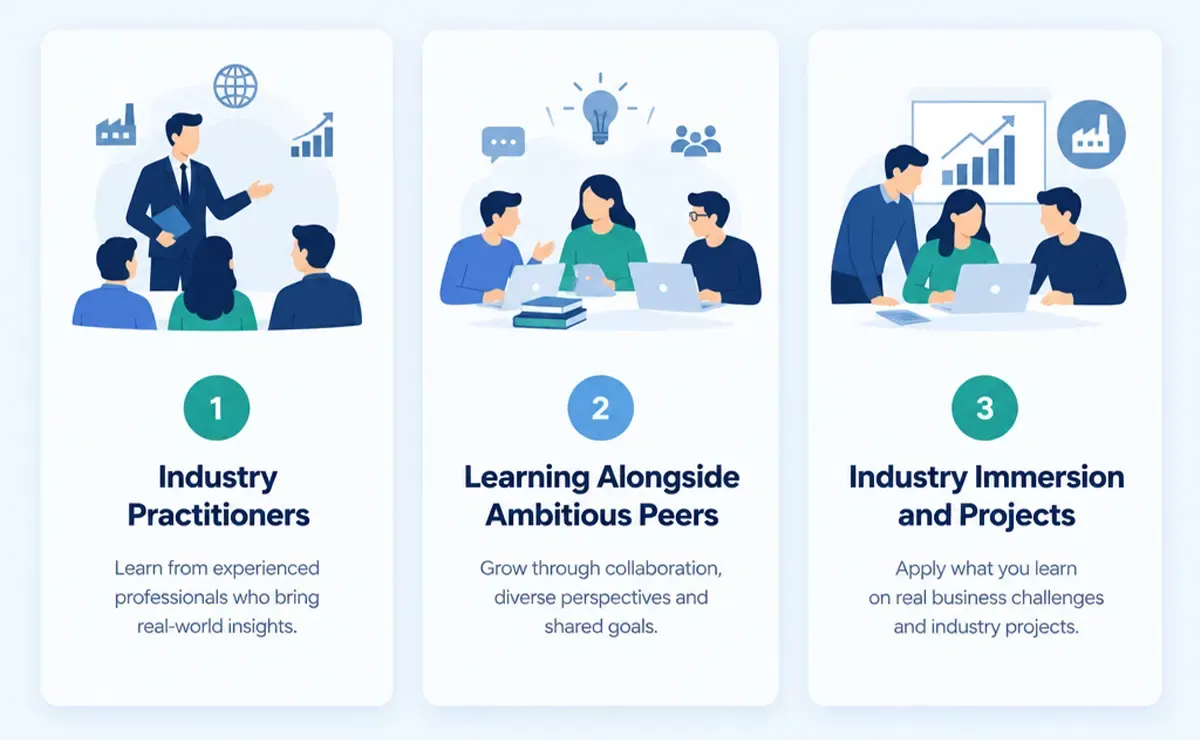
A strong MBA network is built through everyday interactions, not just alumni events. The people students learn from, work with, and meet during the program often become valuable professional connections. At Altera Institute, networking is woven into the learning experience, giving students multiple opportunities to build relationships that can support their careers long after graduation.
Industry Practitioners Become Part of Your Network
Instead of learning only from academic faculty, students regularly interact with industry practitioners, CXOs, and business leaders. Through practitioner-led sessions and mentorship, they gain practical insights while building relationships with professionals who can offer guidance, industry perspectives, and career advice. Here is a video of the students interacting with Sundeep Singh, the Managing Director at Accenture, explaining core values of leadership through his personal life experiences. This type of insight is not something a student can find in any MBA textbook or case study lectures.
Learning Alongside Ambitious Peers
Altera Institute’s carefully curated cohort brings together students with similar ambitions and an interest in digital-first careers. Working together on projects, discussions, and assignments encourages collaboration, knowledge sharing, and lasting professional relationships that often continue well beyond the program.
Industry Immersion and Projects Expand Your Professional Circle
Networking extends beyond the classroom through live industry projects, company interactions, and industry immersion. Students work with professionals, receive feedback from industry experts, and engage with the alumni community throughout the program. These experiences help them build a wider professional network while gaining practical exposure to the business world.
How to Evaluate the Peer Network Before Choosing an MBA
A strong peer network does not happen by chance. Before choosing an MBA program, take a closer look at the people you will learn with and the opportunities the program provides to build meaningful professional relationships.
Asking these questions can help you find the right program with a strong peer network.
- Who is likely to be in my cohort? Look at the diversity of backgrounds, industries, and work experience.
- Do students come from industries I want to work in? A relevant peer group can lead to future referrals, collaborations, and career opportunities.
- How active is the alumni community? Check whether alumni regularly mentor students, participate in events, or stay engaged with the institute.
- Will I have access to industry mentors? Learning directly from experienced professionals can expand your network beyond your classmates.
- Does the program encourage collaboration? Group projects, live assignments, and peer learning often create stronger relationships than a highly competitive environment.
- Will these connections still matter in five or ten years? The best MBA networks continue to create opportunities long after graduation.
The answers to these questions can tell you as much about an MBA program as its curriculum or placement record.
Frequently Asked Questions (FAQs)
Q1. Why is networking considered one of the biggest benefits of an MBA?
Ans. A strong professional network can lead to referrals, career opportunities, business partnerships, and mentorship throughout your career, making it valuable long after graduation.
Q2. Does peer quality matter more than college rankings?
Ans. Both are important, but a motivated and industry-relevant peer group can have a lasting impact on your career through collaboration, knowledge sharing, and professional connections.
Q3. How can MBA classmates help with future career opportunities?
Ans. As classmates grow into different roles and organizations, they can open doors to new jobs, referrals, partnerships, and industry introductions.
Q4. How does Altera Institute help students build professional networks?
Ans. Altera Institute helps students build professional networks through practitioner-led learning, live industry projects, mentorship, industry interactions, and a collaborative cohort focused on digital-first careers.