The Employability Crisis: Why Are Only 70% of India's MBA Graduates Job-Ready?

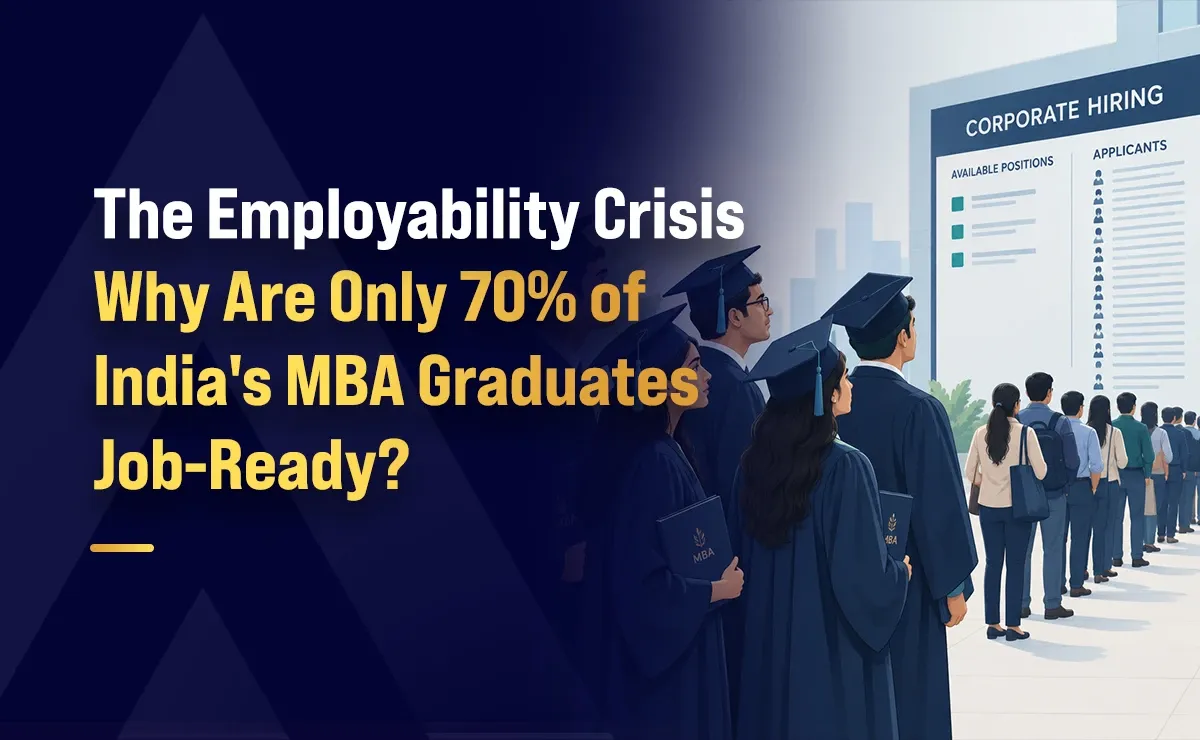
Every year, India produces thousands of MBA graduates, yet employers continue to struggle to find candidates who are truly job-ready. The problem is not a lack of management degrees but a widening gap between what many business schools teach and the practical skills today's workplaces demand. As industries evolve with AI, digital transformation, and changing business models, employability has become more important than academic credentials alone.
This article explores the key reasons behind India's MBA employability crisis and examines practical solutions that can bridge the gap. B-schools like Altera Institute are already leading this shift through their 1-year MBA degree by prioritizing employability-focused learning over traditional degree-centric education.
The Employability Crisis in Numbers
There are 5500+ B-schools in India, but according to the India Skills Report 2026, only about 73% of them are considered employable, down from nearly 78% in 2025. However, employability is not just about getting shortlisted for an interview. It means having the practical skills, business understanding, and workplace readiness that employers expect from day one.
Another ASSOCHAM report pointed out this issue long ago. It stated that if some of the top B-school graduates are excluded, only 7% of the remaining graduates are employable.
These numbers point to a larger issue. Many MBA programs still focus heavily on classroom learning, while employers increasingly look for practical experience, problem-solving skills, and the ability to adapt to modern business environments.
Why the Gap Exists: Business Schools vs. Modern Business

The gap between MBA education and employer expectations did not appear overnight. Business has changed rapidly over the last few years. Many MBA programs, however, have been slower to adapt. As a result, graduates often leave with strong theoretical knowledge but limited experience in applying it to real business situations.
Traditional MBA Learning Focuses on Knowledge
Many MBA programs still follow a classroom-first approach. Students spend most of their time attending lectures, preparing for exams, and analyzing case studies. While these build a strong academic foundation, they do not always prepare students for the pace and complexity of today's workplace.
Live projects, industry interactions, and hands-on problem-solving are often limited. This means students may understand business concepts but struggle to apply them when faced with real business challenges. Employers, however, expect graduates to contribute from the beginning rather than spend months learning on the job.
Employers Hire for Execution
Today's organizations look beyond academic scores. They want candidates who can solve problems, communicate clearly, and make informed decisions. As AI becomes part of everyday work, employers also value graduates who understand how to use AI tools responsibly to improve productivity.
Skills such as digital marketing, data analytics, stakeholder management, and business communication are now essential across many management roles. Companies also look for people who can collaborate with teams, adapt to change, and turn ideas into measurable results.
This is where newer business schools are taking a different approach. Instead of focusing only on classroom learning, institutions like Altera Institute combine industry projects, AI-enabled learning, and practical assignments into their 1-year MBA degree. The aim is to help students develop skills they can apply in real business environments, making them better prepared for the workplace after graduation.
Framework: What Employers Actually Hire For
This difference may seem small, but it has a major impact on employability.
Recruiters often find that graduates understand business frameworks but struggle to apply them to real situations. They may know the theory behind a marketing strategy or business model but find it difficult to recommend practical solutions when faced with a real problem.
Communication is another common challenge. Good communication is not just about speaking confidently. It means presenting ideas with clarity, supporting recommendations with data, and adapting the message for different stakeholders.
Many graduates also have limited exposure to live projects. As a result, they leave business school with strong academic scores but few examples of work they can discuss during interviews. A weak portfolio makes it harder for employers to assess how a candidate thinks, solves problems, and delivers results.
This is why many organizations now value practical capability alongside academic performance. Business knowledge provides the foundation, but the ability to execute is what helps graduates stand out in today's job market.
Becoming Job-Ready: What MBA Students Should Do
Becoming employable does not happen in the final semester. It is something you build throughout your MBA. Small, consistent steps can make a significant difference by the time placement season begins.
Choose Outcome-Based Internships
Look for roles with real responsibility, where you can solve problems, make decisions, and contribute to projects. Avoid internships where your role is limited to just observing and following others.
Build a Portfolio of Live Projects
Keep a record of campaigns, case competitions, research, presentations, or consulting projects you have worked on. A strong portfolio gives recruiters clear evidence of your skills.
Develop AI Literacy
Learn how to use AI tools to research, analyze data, create reports, and improve productivity. It can help you fast-track and automate many menial and repetitive tasks to save time and improve efficiency. AI should complement your business knowledge, not replace it.
Strengthen Your Business Communication
Practise presenting ideas clearly and explaining complex concepts in simple language. It can help you establish communication not just within your team but also across cross-functional departments, enabling you to lead others. Good communication helps you stand out during interviews and at work.
Learn New Tools
Learn the right tools for your specialization. Whether you are interested in marketing, finance, HR, or operations, build practical skills with the analytics and digital tools commonly used in your field.
Strong Networking
Start networking early. Connect with alumni, mentors, and industry professionals throughout your MBA. These conversations can provide valuable insights, referrals, and career opportunities before placements even begin.
Many modern business schools are making these experiences part of the curriculum. For example, programs like Altera Institute combine live industry assignments, mentorship, and practical learning to help students develop workplace-ready skills alongside academic knowledge.
How Altera Institute Bridges the Employability Gap
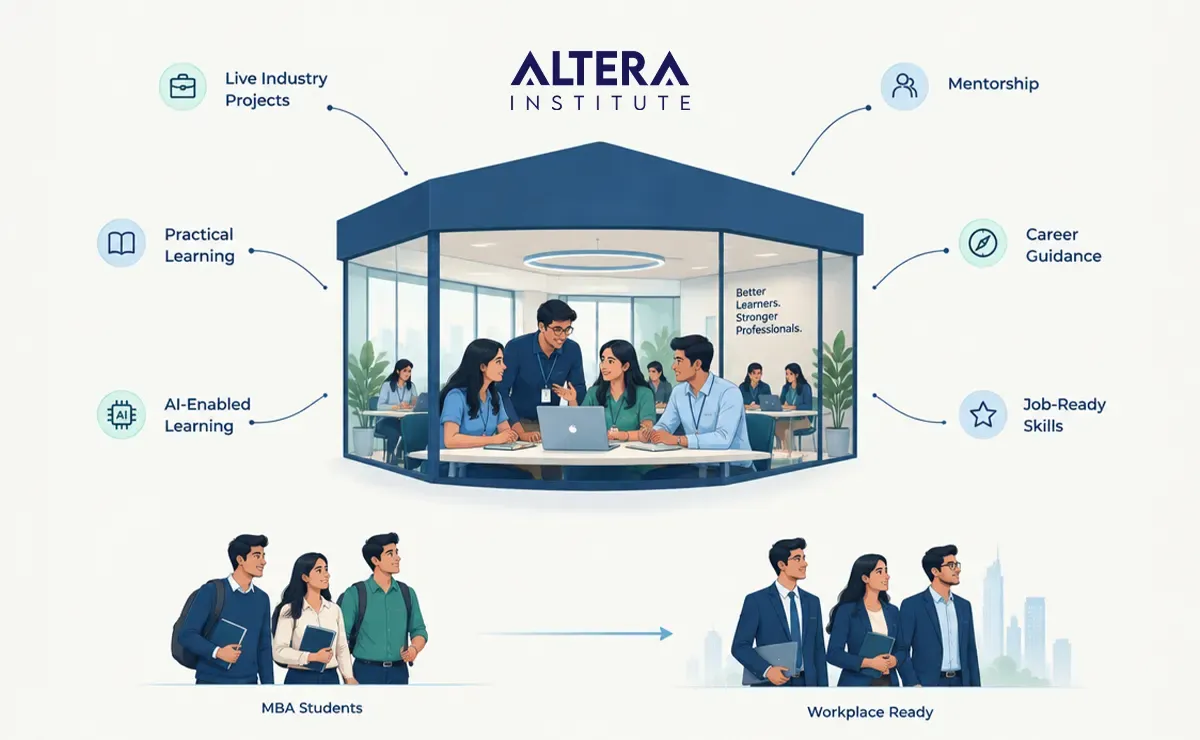
A one-year MBA degree should prepare students to succeed in the workplace, not just earn a qualification. In Altera Institute’s curriculum, the focus is on building practical skills that employers value through industry-led learning.
This approach is also reflected in its career outcomes, with graduates securing a median placement package of ₹18.14 LPA and ₹22.14 LPA for the top 25% of the batch.
- Through an industry-aligned curriculum, students learn from content shaped by experienced business leaders.
- Live industry projects give them the opportunity to apply classroom concepts to real business challenges.
- Regular industry assignments help them build a portfolio that showcases practical execution and problem-solving skills.
- AI is integrated into the curriculum, so students develop AI literacy alongside core business and management skills.
- Dedicated mentorship, career guidance, and placement support help them build confidence before entering the job market.
Conclusion
India's MBA employability challenge is not about producing more graduates. It is about preparing them with the skills today's employers expect. Whether students choose a traditional program or a one-year MBA degree, they should look beyond rankings and evaluate how well it prepares them for real business roles.
Factors such as industry relevance, live projects, mentorship, and placement outcomes matter just as much as academic learning. Institutions like Altera Institute reflect this shift by focusing on employability, helping students build the practical skills needed to succeed in today's workplace.
Frequently Asked Questions (FAQs)
Q1. Which MBA specializations have the highest demand among employers?
Ans. Specializations such as marketing, business analytics, finance, operations, and HR are often in high demand. However, you also need specialized skills in your chosen specialization to increase your value.
Q2. How important are internships during an MBA?
Ans. Internships are one of the most valuable parts of an MBA. They give students practical experience, help them apply classroom learning, and improve their chances of securing a full-time role after graduation.
Q3. How can I evaluate whether an MBA program is industry-oriented?
Ans. Look for programs that offer live projects, industry mentorship, internships, an updated curriculum, strong placement outcomes, and opportunities to build a professional portfolio. These are good indicators of industry relevance.
Q4. What skills should MBA students develop alongside their coursework?
Ans. MBA students should focus on business communication, AI literacy, data analytics, problem-solving, stakeholder management, and digital tools relevant to their specialization. These skills improve employability and prepare them for modern business roles.