The Death of the Classroom: What Comes After Lectures?
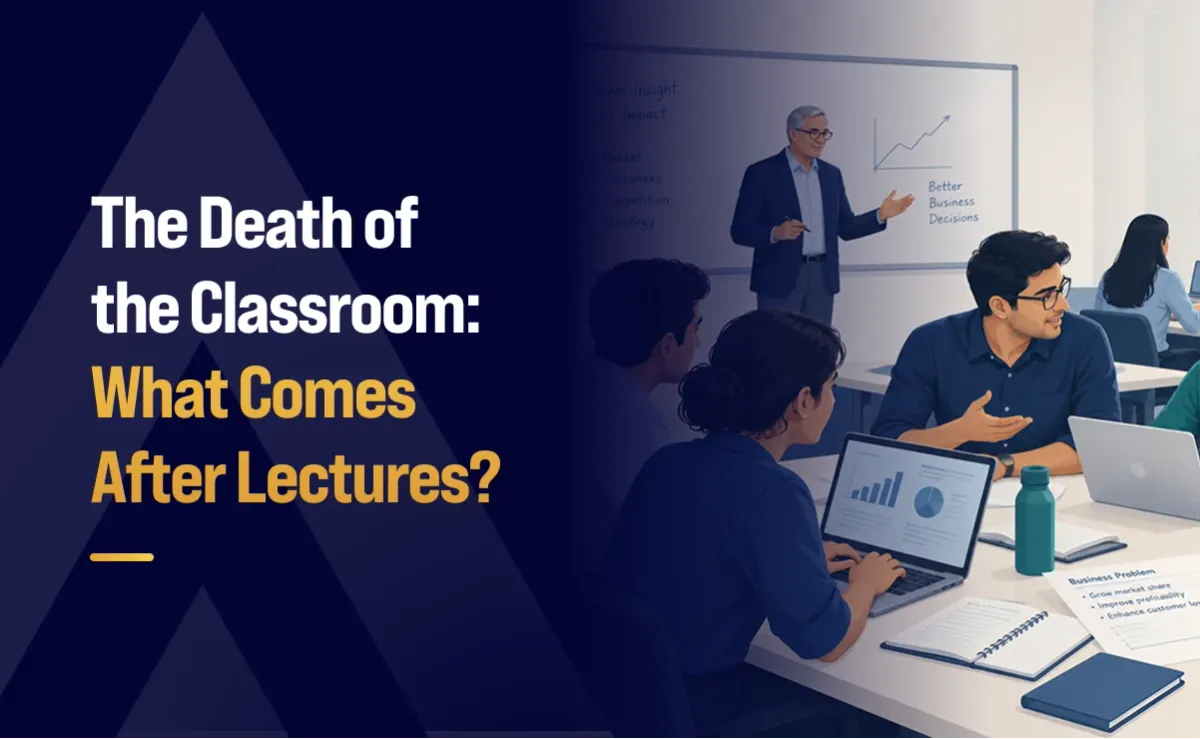
For decades, management education followed a familiar formula. The professors delivered lectures, students took notes, and exams tested how much they could remember. While classrooms remain an important part of learning, they are no longer the only place where future managers develop business skills.
Today's management education extends far beyond lectures. Students work on live industry projects, tackle real business challenges, participate in simulations, collaborate with peers, and use AI to explore concepts, analyze data, and test ideas. The focus is shifting from simply learning theories to applying them in practical situations.
Recognizing this shift, institutions like Altera Institute are reimagining the learning experience. The institution is combining classroom teaching with AI-powered learning, practitioner-led sessions, industry projects, and hands-on problem solving, helping students build the skills needed for modern business careers.
Why Traditional MBA Teachings Are No Longer Enough
MBA programs have always been known to produce graduates who could not only become smart employees but also lead teams, manage businesses, and leave an impact on their respective industries. So when these industries changed, the expectations from management graduates also evolved with them. To keep up with that pace, MBA lectures had to change as well.
Today, information is no longer limited to classrooms or textbooks. AI tools can explain concepts, answer questions, and simplify complex topics within seconds. It has made knowledge more accessible than ever before.
As a result, employers are placing greater value on graduates who can analyze problems, adapt to changing situations, collaborate with diverse teams, and apply what they know to real business challenges. Simply understanding a concept is no longer enough; students must also gain experience using it to make decisions and deliver results.
From Information Delivery to Skill Development
Here is a glimpse of how modern business schools like Altera Institute are spearheading this change.
With this emerging method of business teaching, it is evident that traditional classrooms or their lectures haven’t become obsolete. Instead, they have become just one part of a more dynamic and broader experiential learning ecosystem.
What Comes After Lectures?
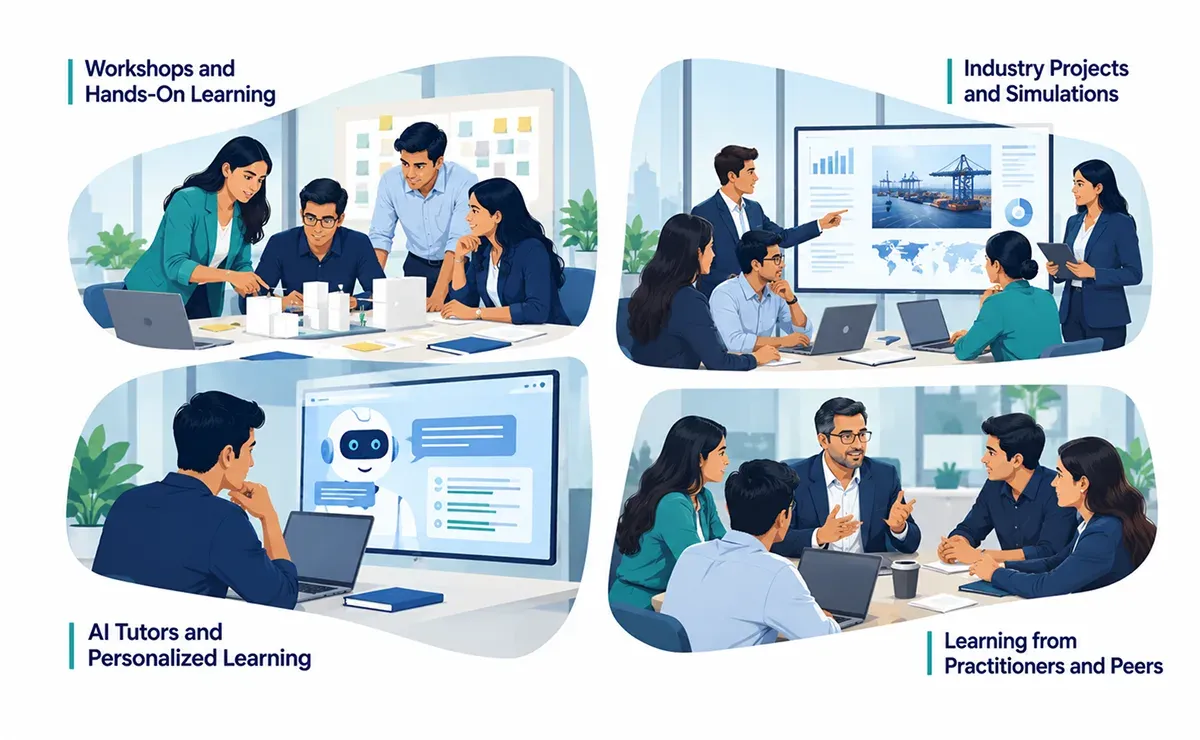
The future of management education is not about replacing lectures with a single new teaching method. Instead, it combines multiple learning formats, each designed to build a different set of skills. While many business schools still continue to provide conceptual learning through classroom lectures, newer, modern management schools are going a step beyond. They have included workshops, live projects, simulations, AI-powered learning, and industry interactions to help students apply those concepts in practical situations. Together, they create a learning experience that is more aligned with how modern businesses operate.
Workshops and Hands-On Learning
Workshops are designed around participation rather than observation. Instead of explaining a concept for an hour, faculty present a business problem and ask students to work through it. Teams analyze the situation, debate possible solutions, justify their decisions, and defend them in front of the class. The learning happens through discussion, experimentation, and feedback rather than passive note-taking.
Because these sessions are interactive, students experience the trade-offs that managers face every day. There is rarely a single correct answer, which encourages them to think. critically communicate their reasoning, and adapt when new information is introduced. Immediate feedback from faculty and peers further helps them refine both their approach and their decision-making process.
Industry Projects and Simulations
Business concepts become far more meaningful when students apply them outside the classroom. This is why many management programs now include consulting projects, startup challenges, and live business assignments where students work with organizations to solve real problems. Instead of analyzing a completed case study, they engage with challenges that are still unfolding and where the outcome is uncertain.
Simulations complement these projects by recreating business environments in which students must respond to changing customer behavior, market conditions, or competitive actions. Every decision has consequences, allowing students to understand how different business functions influence one another. These experiences build confidence in making decisions despite limited information—an essential skill for future managers.
AI Tutors and Personalized Learning
AI is changing the way students learn outside the classroom rather than replacing what happens inside it. It can explain difficult concepts, generate practice questions, provide instant feedback, and help students revisit topics at their own pace. This allows learners to spend more time strengthening concepts they find challenging instead of following the same pace as the entire class.
As AI handles repetitive explanations and foundational learning, classroom sessions can focus on activities that benefit most from human interaction. Faculty can spend more time facilitating discussions, coaching students through complex business problems, and encouraging different perspectives—areas where experience, judgment, and context matter far more than information alone.
Learning from Practitioners and Peers
Business education is no longer shaped only by academic faculty. Increasingly, students learn directly from CXOs, founders, and industry practitioners who bring current business challenges into the classroom. Their experiences help bridge the gap between management theory and its practical application, exposing students to the decisions, constraints, and uncertainties that leaders navigate every day.
Equally valuable is learning from peers with different educational and professional backgrounds. Team discussions often bring together diverse viewpoints, encouraging students to question assumptions, negotiate ideas, and work through disagreements. Since modern organizations rely on cross-functional collaboration, developing these interpersonal skills is just as important as understanding business frameworks.
This shift towards blended, application-focused learning is reflected in Altera Institute's PGP in Applied Marketing, where classroom teaching is complemented by industry practitioners, AI-enabled workflows, live business projects, and collaborative problem-solving to prepare students for modern marketing careers.
What Students Should Look for in a Future-Ready Management Program?
Choosing a management program today involves looking beyond the curriculum. While subjects like marketing, finance, and strategy are important, you should also evaluate how those subjects are taught. A future-ready program should combine:
- an industry-led curriculum
- AI-enabled learning
- live projects
- experiential learning
- continuous feedback
- opportunities to work on the field.
Such programs can help you build practical skills that improve your employability and help you stand apart from every other management graduate applying for the same job as you.
Do Learning Models Matter as Much as Curriculum?
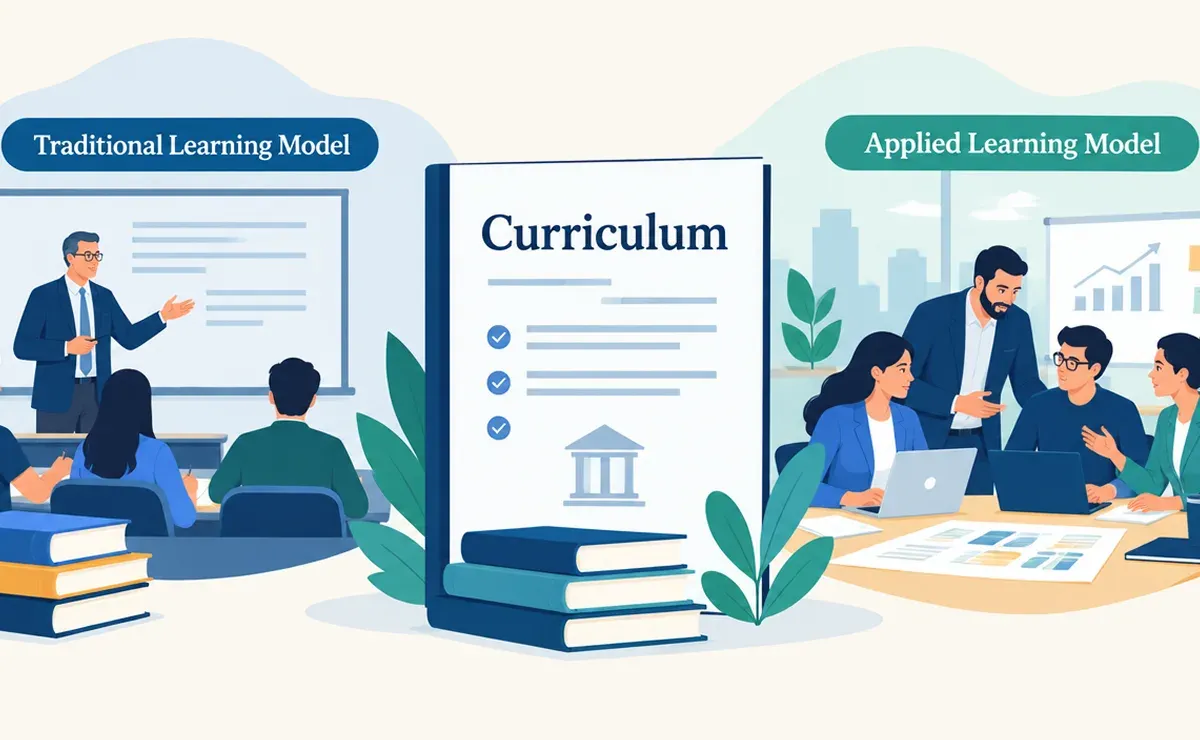
Many institutions teach similar management concepts, but the learning experience can shape very different career outcomes. Programs that encourage students to solve real business problems, collaborate with diverse teams, and apply concepts in practical settings often prepare students for the challenges of the real business world.
Instead of just teaching students theory, they provide practical experience under a guided environment, where they can take risks, challenge themselves, and grow through feedback and practitioner mentorship.
Altera Institute reflects this approach through its AI-first PGP in Applied Marketing, combining practitioner-led teaching, industry projects, and experiential learning to prepare students for modern marketing and business careers.
Conclusion
The future of management education is on making classrooms more relevant. Lectures should be complemented by industry projects, AI-enabled learning, simulations, and collaborative problem-solving that prepare students for real business challenges. As workplaces continue to evolve, students should look for programs that build practical skills.
Institutions that continually evolve with the needs of industry will be better placed to prepare the next generation of business leaders. Altera Institute is one such example, rethinking management education around how students learn, not just what they learn.
Frequently Asked Questions (FAQs)
Q1. Will AI completely replace professors in business schools?
Ans. No, AI will not replace professors in business schools. However, it may assist them in adding depth to the learning experience. It will also support learning by explaining concepts and providing practice. But faculty will remain essential for mentoring, facilitating discussions, and developing critical thinking.
Q2. Are online and hybrid learning models becoming more valuable than traditional classroom formats?
Ans. Online and hybrid learning models become more valuable when combined with hands-on learning. They offer greater flexibility while complementing workshops, projects, and in-person collaboration.
Q3. How do employers evaluate graduates from experiential learning programs?
Ans. Employers increasingly look for evidence of problem-solving, teamwork, decision-making, and real project experience along with academic qualifications.
Q4. What role do business simulations play in management education?
Ans. Business simulations allow students to practice making decisions in realistic scenarios. This helps them build strategic thinking and confidence before entering the workplace.
Q5. Can practical learning improve placement outcomes compared to lecture-heavy programs?
Ans. Practical learning can make graduates more job-ready. It helps them develop skills and experience that employers often value during recruitment.
Q6. How can students adapt to AI-powered learning environments?
Ans. Students should use AI to strengthen their understanding, practice concepts, and seek feedback. They should do this while continuing to develop critical thinking, collaboration, and independent decision-making.