
Practitioner-Led Institutes vs. Academician-Led Institutes: What Should You Pick in 2026?


A business school with even the most impressive curriculum can fall short if the faculty cannot teach you its real-world application.
The people you learn from can shape more than your understanding of business concepts. Their experience can influence how you approach problems, evaluate decisions, and understand what happens beyond the classroom.
Broadly, business education follows two approaches. Academician-led institutes tend to place greater emphasis on theory, research, frameworks, and rigorous analysis. Practitioner-led institutes, on the other hand, focus more on application, current industry realities, decision-making, and execution.
The right choice depends on what you want from your business education. But as employers increasingly look for graduates who can apply knowledge to real business situations, the connection between learning and industry has become more important.
Altera Institute represents one example of the practitioner-led model, with a focus on applied learning and exposure to professionals working on real business problems.
But what does each model actually offer, and which one makes more sense for you in 2026?
Practitioner-Led vs. Academician-Led: What Actually Changes for the Student?
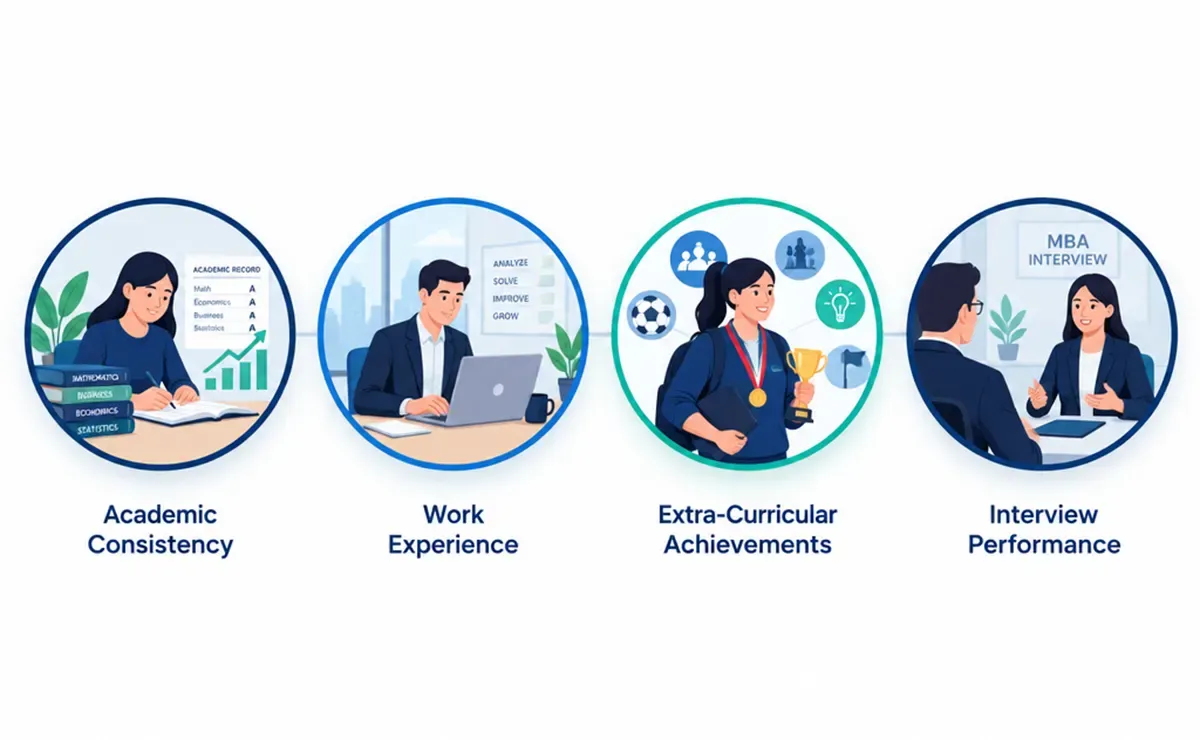
The difference between these two models becomes clearer when you look at what happens when a student is asked to solve a business problem. An academically oriented approach may first build the knowledge needed to understand the problem. A practitioner-led approach is more likely to begin with the problem itself and use relevant concepts, tools, and industry experience to work towards a solution.
Neither approach is inherently better. They develop different strengths, and understanding that difference can help you decide what kind of learning experience fits your career goals.
The Academician-Led Model
The academician-led model is built around understanding before application and is taught by academics. Students are introduced to theories, research, frameworks, and established principles before being asked to use them.
It can help you:
- Build a strong foundation in business theories, concepts, and frameworks.
- Understand the underlying causes behind business problems instead of focusing only on immediate solutions.
- Analyze evidence, question assumptions, and assess different explanations before reaching a conclusion.
- Develop structured and methodical approaches to complex problems.
- Understand why certain business models and strategies work, rather than simply learning current industry practices.
The strength of this approach lies in depth of understanding. That foundation can be particularly valuable when you encounter unfamiliar problems where there is no established solution to follow.
The Practitioner-Led Model
The practitioner-led model tends to reverse the sequence. Instead of beginning with a framework, the learning experience can begin with a business problem that needs to be solved.
It can help you:
- Apply concepts and frameworks to situations where the answer is not already defined.
- Make decisions with incomplete information, competing priorities, and practical constraints.
- Understand how business decisions change when factors such as budgets, timelines, customers, and stakeholders come into play.
- Use current business tools, including AI and data-driven technologies, as part of the problem-solving process.
- Learn from the professional experience of people who have dealt with similar challenges in their careers.
There is also a significant networking advantage. Regular interaction with industry leaders through classes, workshops, projects, and mentorship can help you build professional relationships while you study. For some students, this practitioner network can be as valuable as the alumni network they would consider when evaluating established B-schools.
Altera Institute is an example of a practitioner-led model, with industry professionals, applied learning, and real-world business exposure forming part of its approach. This does not mean academically oriented institutions lack practical exposure; rather, the emphasis and learning sequence can be different.
What Do They Look Like in Practice?
The easiest way to understand this distinction is to look at the starting point.
In an academician-led classroom, you usually start with a concept or framework. You then learn how to apply it to a business problem.
In a practitioner-led setting, you may start with the business problem itself. You then identify what you need to learn, which tools can help, and how to arrive at a practical solution.
Consider a brand struggling with declining customer retention. The two approaches could look like this:
The difference is not that one approach teaches theory while the other ignores it. Both require knowledge. The difference is how that knowledge is introduced and applied. In one, you learn the concept first and then use it. On the other hand, the problem can lead you to the knowledge you need.
What Kind of Business Professional Does Each Model Develop?
The difference between the two models is not just what you study. It can also shape how you learn to think and respond to business problems.
An academically oriented environment may strengthen:
- Research ability: Finding, evaluating, and interpreting evidence before reaching a conclusion.
- Structured thinking: Breaking complex problems into smaller, logical parts.
- Theoretical depth: Understanding the principles and frameworks behind business decisions.
- Evidence-based analysis: Using data and research to question assumptions and support decisions.
- Root-cause analysis: Looking beyond the immediate problem to understand what is actually driving it.
A practitioner-oriented environment may help you build:
- Execution: Turning an idea or strategy into an actionable plan.
- Commercial judgement: Balancing customer needs with business goals, resources, and profitability.
- Decision-making: Making informed choices even when information is incomplete.
- Adaptability: Adjusting your approach when market conditions, customer behavior, or business priorities change.
- Practical problem-solving: Finding workable solutions within real constraints such as budgets, timelines, and competing priorities.
Neither mindset is enough on its own. Most business careers require you to analyze before you act and adapt after you act. Altera Institute’s learning framework reflects this progression through four stages:
- Know
- Apply
- Execute
- Reflect
You first build a strong understanding of the concept, then apply it to an unfamiliar problem. From there, you work towards executing a solution and finally reflect on the outcome to understand what worked, what did not, and what could be improved. That cycle helps connect classroom knowledge with the kind of continuous learning that modern business roles demand.
Why Practitioner-Led Learning Is Gaining Relevance in 2026
Business is changing faster than many formal learning environments can adapt. New AI tools, digital platforms, and changing customer behavior are altering how teams work and make decisions. This makes it increasingly important for business education to connect what you learn with how businesses actually operate.
The shift is also visible in what employers say they want. GMAC’s 2026 Corporate Recruiters Survey, based on more than 620 recruiters and hiring managers, found that AI, technology, and data analysis skills saw the biggest increase in importance over the previous year. Communication and adaptability also ranked among the most valued skills, while employers expect AI tool skills to become even more important over the next five years.
For students, this makes five capabilities particularly worth evaluating:
- Commercial thinking: Can you understand how decisions affect customers, revenue, costs, and growth?
- Learning agility: Can you quickly understand a new market, tool, or business problem and adapt your approach?
- AI fluency: Can you use AI tools to research, analyze, create, and support business decisions?
- Communication: Can you explain your thinking clearly and work with different stakeholders?
- Execution ability: Can you turn an idea into an actionable plan and work within real constraints?
This is where practitioner-led learning can add value. A framework may explain how a business decision should be made. A practitioner can show you what happens when the deadline is tomorrow, the budget is limited, and three stakeholders want different things.
Altera Institute’s approach is built around shortening that distance between learning about marketing and actually doing marketing. Its curriculum is designed and delivered by industry professionals, including former CXOs and senior business leaders, while students also receive one-to-one mentorship from industry leaders. The program follows a “learn by doing” approach through live projects, business cases, and industry-led learning experiences.
Which Learning Model Should You Choose?
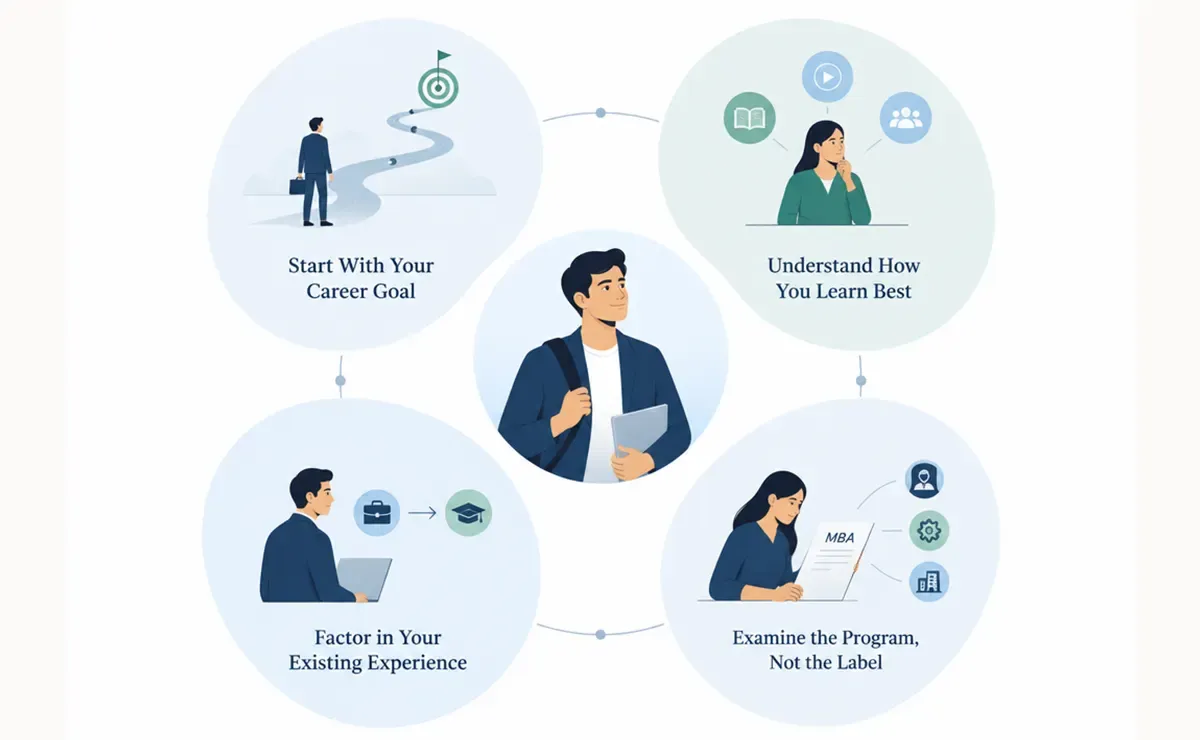
1. Start With Your Career Goal
If you want research, consulting, or analytically intensive roles, an academically oriented program may suit you better. For careers in marketing, growth, product, or business development, a practitioner-led program may offer more relevant exposure.
2. Understand How You Learn Best
Do you prefer learning concepts first and applying them later, or learning through problems and projects? Choose the model that matches how you learn most effectively.
3. Factor in Your Existing Experience
Freshers may benefit from greater structure and strong conceptual foundations. Students with some business exposure may prefer practitioner access, live projects, and workplace-oriented learning.
4. Examine the Program, Not the Label
Look at who teaches the core subjects, their industry experience, the projects students work on, how AI is integrated, and how often students interact with industry professionals. Graduate outcomes should also help your decision.
Frequently Asked Questions (FAQs)
Q1. Can a practitioner be a good teacher without formal academic experience?
Ans. Strong teaching also depends on the ability to explain concepts clearly, engage students, and connect theory with real business situations. So it depends more on the ability of the individual instructor.
Q2. How can I verify whether an institute is genuinely practitioner-led?
Ans. Check who teaches core subjects, their current industry roles, practitioner involvement, live projects, mentorship programs, and how frequently students interact with industry professionals.
Q3. Does practitioner-led education become outdated when industries change?
Ans. It can if practitioners rely only on past experience. The model remains relevant when faculty stay actively connected to evolving technologies, markets, and business practices.
Q4. Should I choose individual professors before choosing a business school?
Ans. Faculty quality matters, but it should be one factor among others such as curriculum, learning model, industry exposure, projects, placements, and overall career fit.
Q5. Can practitioner-led learning help students build a portfolio before graduating?
Ans. Yes. Live projects, business challenges, simulations, and industry assignments can give students tangible work they can showcase to potential employers before graduation.