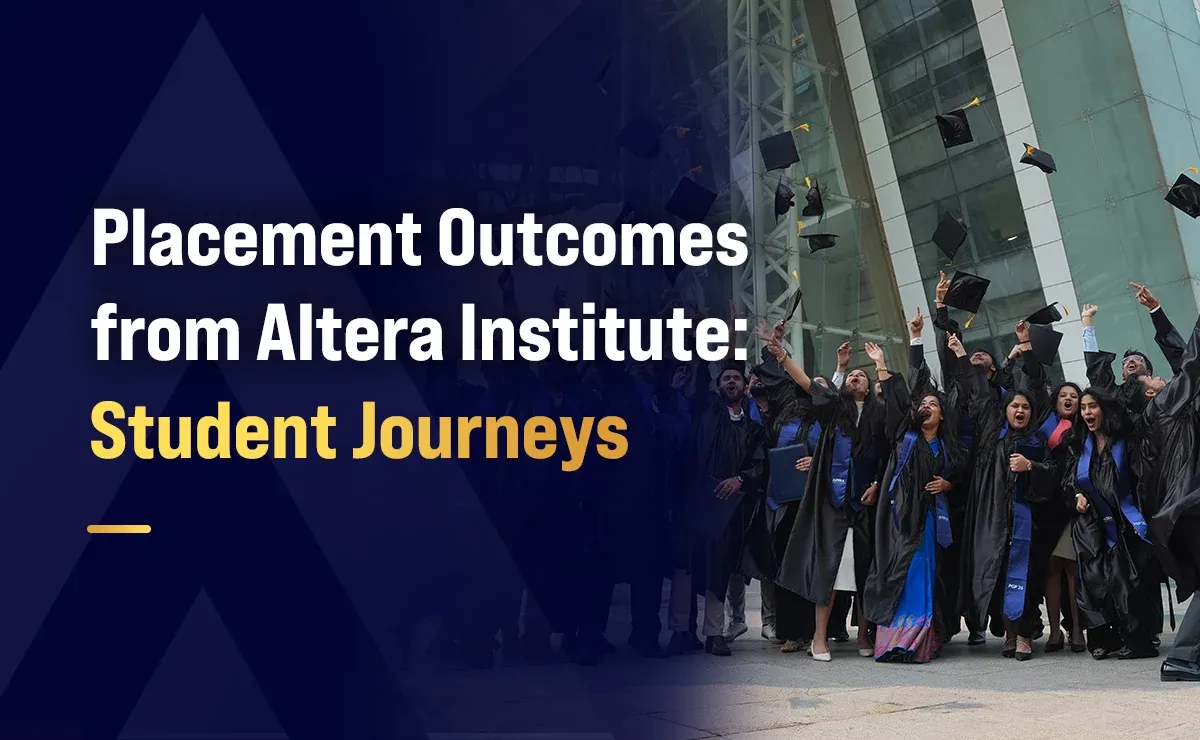
Placement Outcomes from Altera Institute: Student Journeys
Altera Institute's PGP Class of ‘26 has placed 80% of its students by the end of Wave 2. It has therefore published the Interim Placement Report mid-cycle so that aspirants are not left waiting to gauge this year's outcomes until October 2026, when the IPRS-audited final report is expected to be released.
The interim report was verified by B2K Analytics under the Indian Placement Reporting Standard (IPRS), the same framework that IIM Ahmedabad developed and uses to report its own placements.
This article breaks down the report to highlight key outcomes: professionals who pivoted into digital-first careers, freshers who skipped the usual ramp-up period, and alumni who have already made their second move. Every example that follows comes directly from the Interim Placement Report for the Class of ‘26.
What '80%+ Placed' Looks Like in Numbers
Altera Institute offers a 15-month PGP in applied marketing in which students spend the first 12 months on campus, followed by four placement waves starting in month 10. This report covers data through Wave 2, in which more than 80% of the class has found employment.
The Salary Numbers
Among students placed so far, the highest package is ₹32.5 LPA. The median and average both come to ₹17.4 LPA, and when those two figures match, it usually indicates the outcome isn't being pulled upward by a handful of outlier offers.
That consistency holds further up the batch too:
- The top 25% of placed students secured an average salary of ₹23.0 LPA.
- The top 50% of placed students secured an average salary of ₹20.7 LPA.
- The average salary growth for students was 3.7 times their pre-PGP compensation.
Across the placed batch, salary breakdowns are as follows:
- 12% of placed students earned ₹10–12 LPA
- 13% earned ₹12–15 LPA
- 48% earned ₹15–20 LPA
- 21% earned ₹20–25 LPA
- 6% earned ₹25 LPA and above
Combined, 75% of placed students so far have crossed ₹15 LPA, which the report treats as the baseline outcome and is what a typical PGP aspirant can expect.
The Kind of Roles Students Landed
Over 90% of placed students at Altera Institute landed digital or AI-first roles, exactly what the program was designed for. These are not traditional ITES, BFSI, or field-sales jobs that older B-schools still funnel most of their graduates into. Within that pool, the functional split is as follows:
- Growth Marketing: 27%
- Revenue: 26%
- Strategy: 18%
- Brand Management: 11%
- Product & Analytics: 10%
- FMCG Sales: 8%
By sector, more than half of the placed batch is in eCommerce roles across marketplaces, D2C, and category strategy. A further 20% of the applicants went into founder's office positions, EIR positions, or strategy roles, working directly with early-stage leadership on company decisions. The remaining students landed specialist AI roles.
It is also worth noting that the average package comprises 86% guaranteed cash, 13% variable pay, and 1% first-year ESOPs. None of it is stock a student hasn't actually earned, since that is exactly what the IPRS audit behind this report is built to check.
Career Journeys and Outcome
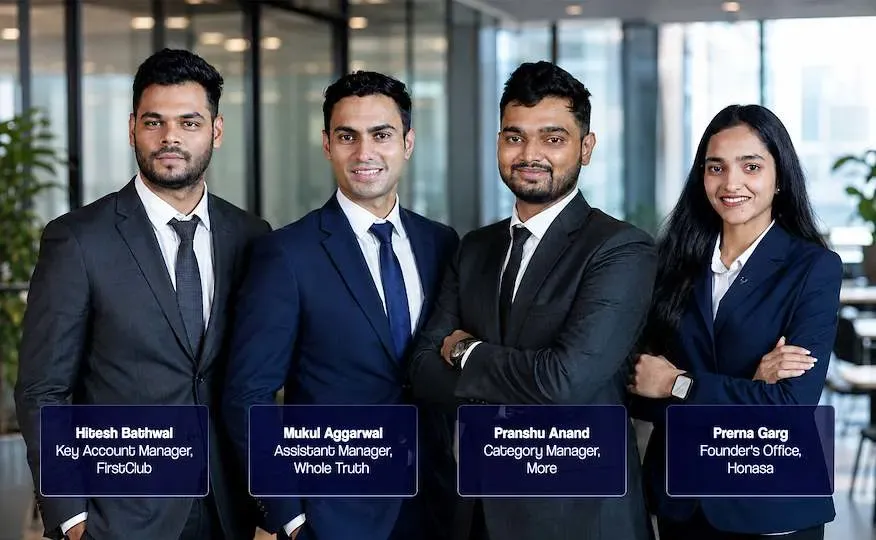
The salary numbers answer the question “What will I earn?” But they don't answer the question like “Will this work for someone with my background?” Altera Institute addresses that, too, by naming the students behind the reported percentages and salaries.
Career-Switchers
On paper, several of the students placed were from fields unrelated to marketing, eCommerce, or brand strategy. In the report, 16 career-transition profiles are described in detail, each paired with a student's pre-PGP role and next career role. Here are a few examples to illustrate the range:
Freshers
Freshers face a different question: can a PGP place someone straight out of undergrad into a role that usually goes to someone with two or three years of experience? Altera Institute's interim report discloses 8 fresher outcomes alongside each student's pre-PGP education.
Including the 16 career-transition profiles and the 8 fresher results, Altera Institute has provided 24 named, verifiable placements. They have backgrounds in architecture, software engineering, process operations, event management, sociology, and commerce, among others.
What connects these 24 vastly different profiles isn't a shared starting point. It's that all of them converged on similar digital-first, revenue-facing roles in marketing by the end of the program, which is the real substance behind the batch's 90%+ figure in digital and AI-first roles cited earlier.
Behind the Outcomes: How Altera Institute's Process Enables Them

Good outcomes need an explanation, or they just look like luck. Altera Institute's report offers one, built around three key factors: how the placement process is structured, what happens before placements even start, and who is actually doing the hiring.
A Four-Wave Structure
The 15-month program runs placements across four waves, starting in Month 10 and, if needed, running through Month 15. Rather than wait for all four waves to close, Altera Institute released this interim update after Wave 2, at the 80%+ mark.
This timing matters for a specific reason. A student comparing programs mid-admissions cycle usually has only last year's final numbers to go on, which say nothing about how quickly the current batch is actually being placed. An interim report closes that gap, even if it means publishing before the story is finished.
A Recruiter Base That Grew with the Batch
Part of why established companies recruit from a B-school that is only five years old traces back to a relationship that predates placements entirely. Over 40 organizations, including Amazon, HUL, ITC, and Nestlé, already use Altera Institute's programs to upskill more than 6,000 of their own employees. Altera Institute itself was founded by former HUL leaders.
For a recruiter, that's a track record that is tangible and entirely verifiable, providing Altera Institute the kind of credibility that otherwise takes time to build for a new B-school.
The recruiter list expanded by more than 40 new companies this year, spanning FMCG majors, D2C challengers, and global agencies: Hindustan Unilever, Mondelez International, Dabur, Nykaa, Swiggy, Honasa, Shiprocket, The Whole Truth, Third Wave Coffee, WPP, and Mars Petcare.
Underneath all of it sits the same audit layer covered at the start of this piece. B2K Analytics, the firm that also audits IIM Ahmedabad's placement numbers, validates every remuneration figure in this report under IPRS. That's what turns “40+ new recruiters” from a claim into something a student can verify.
The Bottom Line
The headline numbers and sectoral or industrial splits are where most B-school reports stop. Altera Institute's report goes further. It names the architect who became a category manager, the sociology graduate who moved straight into brand management, and the alumnus who went from a product role at a consumer app to a technical one at a cloud infrastructure company within a year.
This level of disclosure is still rare. IPRS adoption among non-traditional, industry-backed B-schools is limited enough that Altera Institute and Masters' Union were the only two new signatories to the standard in all of 2025.
Last year, Altera Institute's actual final numbers were higher than its interim report had forecast at the same stage. That's part of why this year's forecast is worth reading as a conservative floor rather than a final word: a median of ₹16.7–17.1 LPA, an average of ₹16.5–16.8 LPA, ₹22.1 LPA for the top 25%, ₹20.0 LPA for the top 50%, and 66%+ of the batch above ₹15 LPA.