
Is 1-Year Work Experience Sufficient to Apply for a Good MBA Program?


The short answer is yes; it can be.
But to elaborate, most traditional 2-year MBA programs in India do not require work experience as a prerequisite, so freshers can and do apply successfully. But if you are targeting executive MBAs, Advanced Management Programs (AMPs), or a specialist 1-year MBA in India, you will need work experience to apply, and the number of years required varies significantly across formats.
Having a year of relevant professional experience actively strengthens your admissions profile. But what matters far more than the number of years you have worked before pursuing an MBA is the clarity of purpose, quality of experience, and the story those years tell about your potential to succeed in the program.
That said, the idea of a “good MBA” is more nuanced than a single ranking list could suggest. The right program depends far more on your career stage, goals, and learning needs than on any universal definition of prestige. This article, therefore, helps you understand why work experience is important during MBA admissions, the eligibility criteria across different formats, and common myths about MBA work experience requirements.
Why Work Experience Matters for MBA Admissions in India
Work experience is more than just a checkbox in your MBA applications. It is an indicator of academic readiness, professional maturity, and contribution to academic experience.
Additionally, candidates can demonstrate their commitment to a particular profession through work experience. It suggests they're taking their career seriously, particularly if their past experience aligns with their future goals. There are multiple ways that work experience will affect admissions.
1) It Improves Your Overall Admissions Profile!
If you don't have exceptional undergraduate grades, quality work experience can help you stand out during the shortlisting and interview process. Most B-schools in the country use a composite scoring matrix that considers all aspects of a candidate's profile, including academic performance, entrance exam results, and extracurricular activities. Therefore, even a single year of quality work experience can help you get selected, especially if it reflects leadership, initiative, or measurable business impact.
2) Peer Learning is Vital in MBA Cohorts
Much of the learning that occurs in an MBA program is accomplished through group projects, problem-solving, and case discussions rather than through lectures alone. Whenever students bring their personal experiences into the classroom, the learning is enhanced for the whole class. Students who have previously worked with clients, navigated challenging team dynamics, or provided valuable service to others bring real-world context to abstract management concepts that others may find difficult to grasp.
3) Recruiters Review Everything
An MBA does not erase your past achievements; it enhances them. Recruiters rate MBA students based on their overall academic and professional profiles, including their performance in the MBA program, prior experience, career paths, and job readiness. An MBA with relevant experience is more immediately seen as applicable to roles involving strategy, consulting, product management, and/or senior operations. This translates to an 83% higher potential salary after an MBA, according to the GMAC Global Graduate Survey, demonstrating how much experience and education compound.
Types of MBA Programs and Their Work Experience Requirements
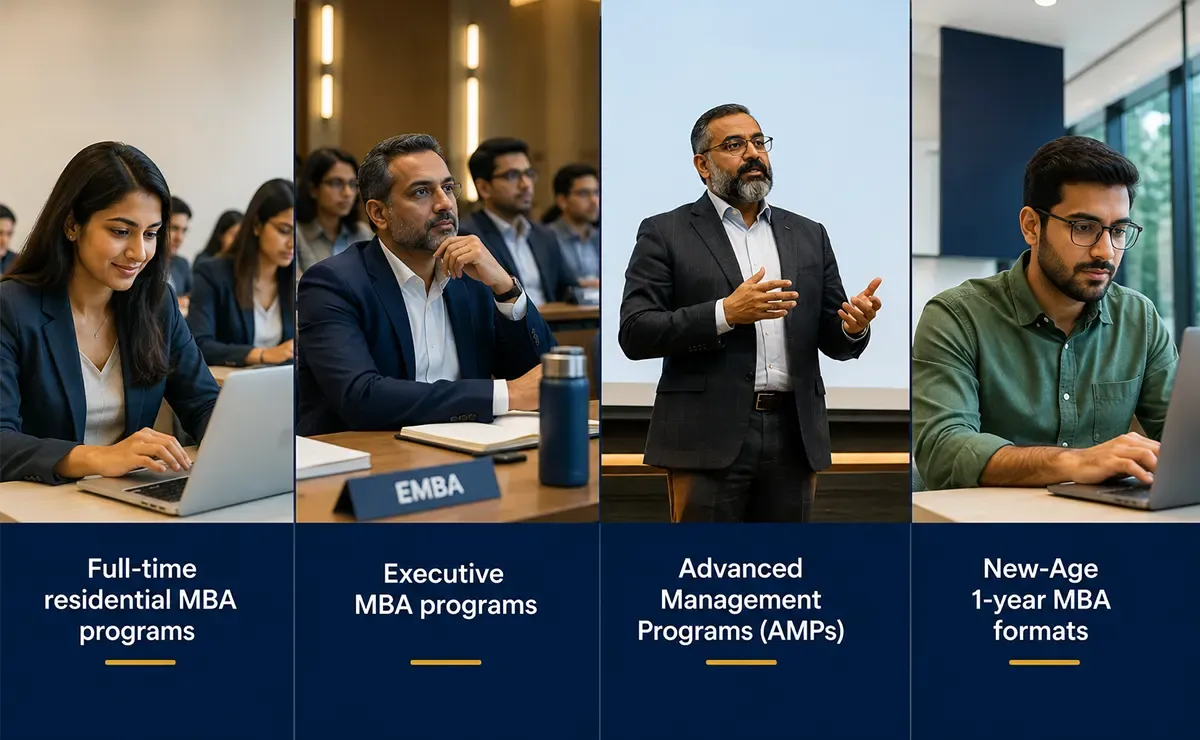
Not all MBA formats are suited to the same kinds of candidates. Matching your experience level to the right program type is one of the most consequential decisions in this process.
- Full-time residential MBA programs are designed for early-career professionals with up to 5 years of work experience. These intensive programs require students to step away from their careers for a comprehensive on-campus learning experience.
- Executive MBA programs are available to mid-level professionals with 5 to 12 years of experience who want to advance their careers or go through career pivots. These programs are designed for working professionals and are generally delivered as weekend, modular, or blended courses.
- Advanced Management Programs (AMPs) prepare senior leaders and executives with 15+ years of experience to take on C-suite roles. These are short, intensive, theme-specific programs that provide specialized knowledge without requiring extended career breaks.
- New-Age 1-year MBA formats cater to early- and mid-career professionals (usually with 1-5 years of experience) seeking specialized expertise in specific domains without the extended commitment of traditional two-year programs.
With a growing need for management education that's more focused and relevant to industry, B-schools like Altera Institutes offer a 1-year PGP in applied marketing for professionals who prefer a more practical approach to learning, especially in fields with high growth potential, such as marketing, AI, and digital business.
Common Myths About MBA Work Experience Requirements
Several persistent misconceptions shape how candidates time and approach their MBA applications. Getting these wrong can lead to poor decisions about when to apply, which format to choose, and what to expect from the degree afterwards.
Myth 1: "More Experience Always Means Better MBA Outcomes"
This is one of the most common misconceptions around MBA outcomes. Work experience, although highly beneficial to a candidate's profile, does not always lead to better career outcomes. It is only beneficial if it showcases a consistent professional story. A candidate must have relevant work experience that demonstrates actionable insights into problems solved, lessons learned, teams managed, and real-world outcomes achieved. If the work experience is superficial and irrelevant, it won't lead to the outcomes you expect after an MBA.
Myth 2: "Freshers Cannot Get Good MBA Placements"
This is incorrect, as traditional full-time MBAs cater to both freshers and working professionals, supporting them equally at every step to secure the roles and placements they desire. Although it is true that working professionals with relevant work experience do enjoy higher starting salaries after an MBA, high-performing freshers who consistently demonstrate clarity of purpose, strong communication skills, and the ability to articulate and present a compelling career narrative during the recruitment process can secure strong placements.
Myth 3: "Executive MBA Is Only for Senior Executives"
Contrary to popular belief, executive MBA degrees are not just for senior professionals. They also cater to early and mid-career candidates, with most EMBA programs requiring 3-5 years of professional experience to be eligible. It is also true that, in most cases, these programs are attended by candidates with extensive higher-level work experience because they are designed to meet the needs of individuals seeking more focused upskilling or wishing to transition into specific domains. Executive MBAs help professionals who cannot dedicate 2 years to full-time study by offering blended formats or weekend classes without compromising program rigor.
How to Choose the Right MBA Based on Your Experience Level
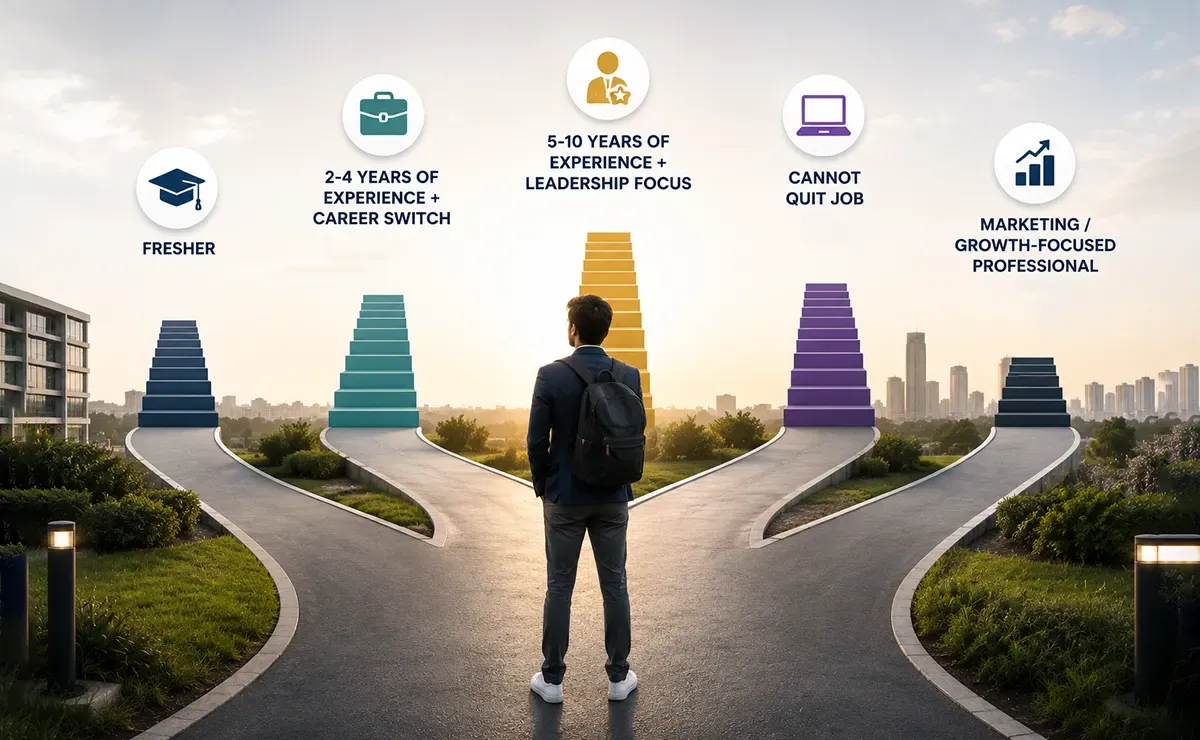
Choosing the right MBA begins with an honest assessment of where you are in your career, what you need from the program, and what you are realistically willing to invest. Use the table below as a starting point, then apply the four filters that follow.
The biggest mistake most MBA students make is selecting programs based on rankings rather than fit. The real question is not ‘Which MBA is best?' but ‘Which MBA can help get me where I want to go next?' A successful career with well-defined goals can benefit from the right 2-year course, whereas a professional with a narrow focus can get a lot more out of the specialized 1-year format. The format you choose should complement the goals and objectives you want to achieve.
No matter the type of program, what admissions committees always want to see is a candidate with a defined, coherent, and purposeful story to tell. In many cases, one year of focused, high-impact experience can be more valuable than several years of experience with limited responsibility or progression.
Should You Apply Now or Wait?
The right timing is not strictly dependent on the MBA designation, but rather on whether your profile already reflects adequate clarity, direction, and readiness to take that next step.
Final Thoughts
One year of work experience is enough to start your MBA journey through various formats, but not all. The real question is not whether you have worked long enough. It is whether you have enough clarity about where you want your career to go next. For some candidates, another two years of work experience will strengthen their profile. For others, waiting may simply delay the transition they are already ready to make.
The MBA industry in India is constantly evolving, and professionals now have more options to pursue targeted educational pathways than ever before. This reality is being achieved by institutions such as Altera, which are increasingly narrowing the gap between business schools and industry, especially for students in marketing, AI, growth, and digital business. The most famous name doesn't always mean the best MBA program. It is the one that's closest to where you've chosen to go with your career.