
How to Use Simon Sinek's Golden Circle to Choose Your MBA College

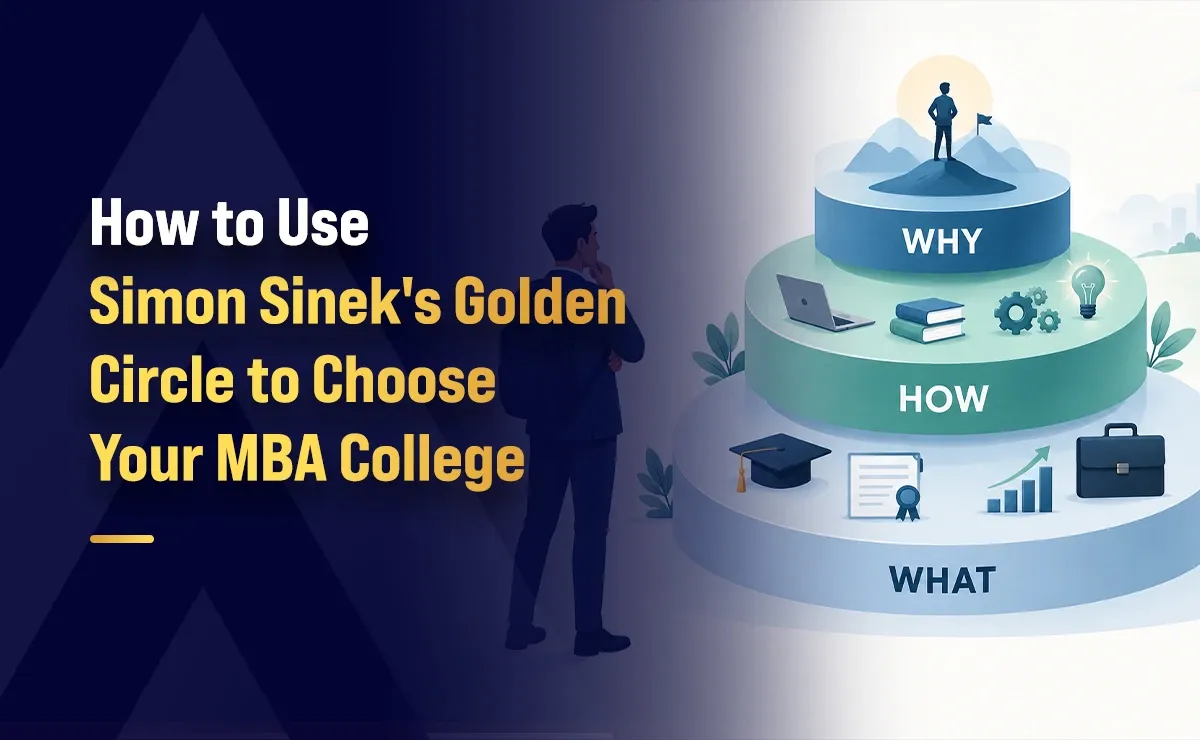
If you are already targeting colleges for your MBA, you must have definitely thought about these questions at least once.
- Which MBA has the highest salary?
- Which college has the best placements?
- Which MBA specialization should I choose?
But are these the right questions to ask?
All these questions have one thing in common. They are trying to answer the "what" without focusing on the "why" behind it.
If you are confused, then it’s the perfect opportunity to introduce you to Simon Sinek’s Golden Circle and how it can help you choose the right MBA program for you.
Remember, it all starts with asking the right question.
What is Simon Sinek's Golden Circle?
The Golden Circle was developed by Simon Sinek. It is a simple framework, divided into three layers of why, how, and what. It explains how the most inspiring people and organizations don't start by talking about what they do. Instead, they begin with why they do it. It’s because once you know your purpose, it becomes much easier to figure out the path.
1) WHY
At the center of the Golden Circle is Why. This is your purpose, your beliefs, and the reason behind your actions. It represents the bigger goal that drives every decision you make. According to Sinek, great leaders inspire people because they are clear about their purpose before anything else.
2) HOW
The second layer is "how." This is the process that helps you turn your purpose into reality. It includes your approach, the methods you follow, and the experiences that shape your journey.
3) WHAT
The outermost layer is "What." It is the outcome of everything that happens in the inner two circles. It answers the question, "What do you do?" or "What have you achieved?" Because it is the most visible layer, it is also the one people tend to focus on first.
For most MBA aspirants, the "what" is the degree, the college, placements, salary, or the career opportunities that follow. Based on the concept of the Golden Circle, these outcomes matter, but they make the most sense only when they are guided by a clear "why" and supported by the right "how."
Simon Sinek's core idea is simple: most people think from the outside in:
Great leaders and organizations think from the inside out:
That is why, at Altera Institute, students are encouraged to first define why they want to transform their careers before choosing the skills and learning path that gets them there.
Most Students Choose an MBA Backwards

Most MBA aspirants begin by comparing rankings, salary packages, fees, campuses, or whether it's a traditional MBA or a one-year MBA school. While these factors matter, they all answer the same question: What?
The more important question is “why?”
Your answer shapes the kind of program that's right for you. Someone planning to build a startup will evaluate colleges differently from someone switching careers or preparing for AI-first roles.
This concept also mirrors how Altera Institute guides applicants during the admissions journey. It encourages reflection on long-term career goals rather than selecting a specialization alone.
Step 1: Define Your WHY Before Choosing Any MBA
Instead of saying, "I want to do an MBA,” ask yourself why you want to do an MBA. You can start by trying to complete this sentence.
"I want an MBA because I want to..."
Choose different answers, then notice how each one changes the purpose. That's because no two career journeys are the same. Once you're clear about your purpose, it becomes much easier to identify the program, learning experience, and opportunities that align with your goals.
Questions to Discover Your WHY
- What kind of work energizes me?
- What problems do I genuinely enjoy solving?
- Where do I want my career to be in five years?
- What skills or experiences am I missing today?
- If money wasn't the deciding factor, what kind of work would I still enjoy?
There are no right or wrong answers. The goal is simply to understand what success looks like for you. Not another alumnus from a legacy B-school, but you!
That's also the thinking behind Altera Institute's career-first philosophy. Instead of encouraging students to chase job titles alone, it helps them identify the kind of professional they want to become and then build the skills, mindset, and experiences needed to get there.
Step 2: Be Curious About "HOW," Not Just “WHAT”
A meaningful difference between programs begins to appear when you know how the college will help you get there.
Most colleges only tell you what they help students achieve. But those outcomes don't happen by chance. They are the result of the learning experience students go through during the program. So, instead of comparing outcomes alone, understand the process behind them by asking the right HOW questions.
Evaluate HOW using these questions
At Altera Institute, this approach begins even before classes start. Rather than positioning learning around lectures alone, Altera Institute emphasizes applied learning, industry projects, mentorship, and continuous career development—elements that directly influence how students grow.
Step 3: Finally Compare the WHAT
This is the step where factors such as the degree, curriculum, rankings, accreditation, placements, campus, and fees become valuable decision-making criteria. They help you compare programs that already align with your goals.
While absolutely important, they shouldn't be your first filter. Following the golden circle sequence helps you choose a program that fits your ambitions rather than simply chasing the most visible outcome.
Why This Mindset Matters More in Today's Career Landscape
The workplace is evolving faster than ever. Employers are no longer hiring based on degrees alone. They are looking for professionals who can adapt, solve problems, communicate effectively, lead teams, embrace AI, and keep learning as industries change.
This is where the Golden Circle becomes especially relevant. When you have a clear why, you're more willing to learn new skills and adapt to changing demands because you understand the bigger purpose behind your career. Instead of preparing only for your first job after an MBA, you prepare for a career that can continue to grow, evolve, and stay relevant over the long term.
A Golden Circle Checklist for Comparing MBA Colleges
Why Does the Altera Institute Fit the Golden Circle Approach?
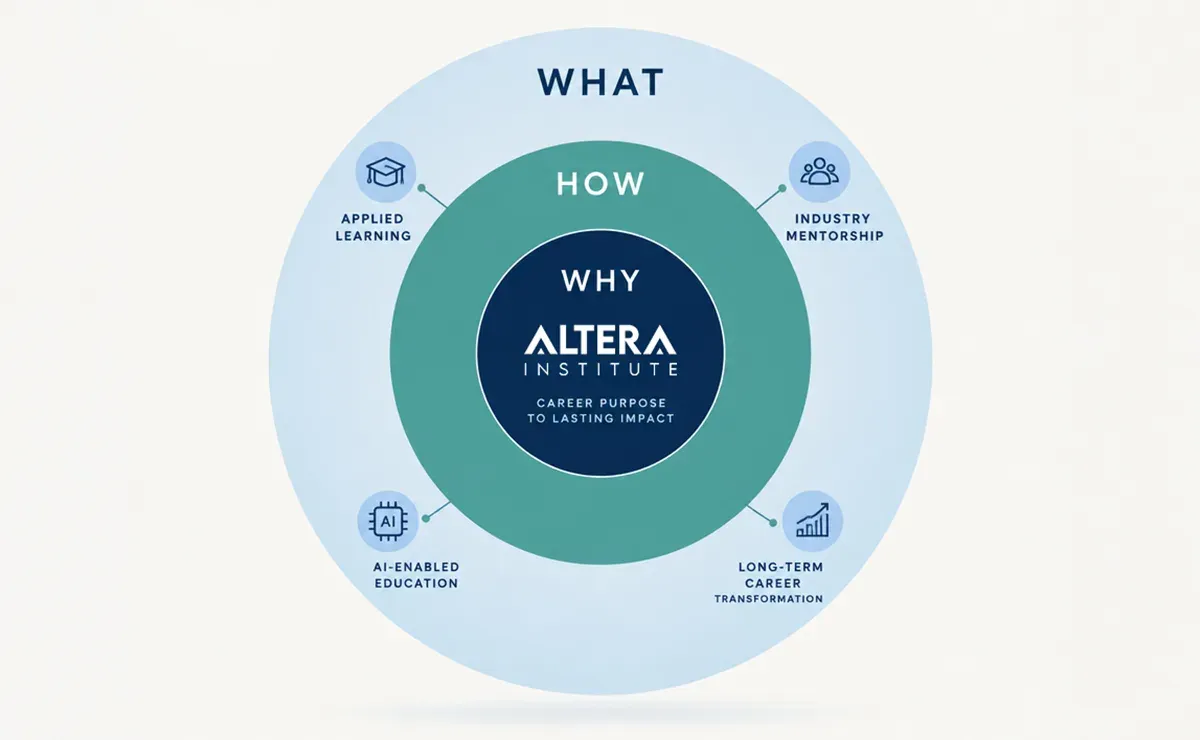
Simon Sinek's Golden Circle reminds us that the best decisions start with "Why," not "What." The MBA you choose will influence much more than the next two years of your education. It can shape the direction of your career for years to come.
That's why institutions like Altera Institute adopt a career-first approach. Rather than focusing only on helping students earn a qualification, the emphasis is on identifying career purpose and building the skills needed to achieve it. Through applied learning, industry mentorship, AI-enabled education, and holistic professional development, the goal is long-term career transformation rather than simply adding another credential to your resume.
As you shortlist MBA colleges, remember the Golden Circle. Start with your “Why,” evaluate the "How," and only then compare the “What.” It's a framework that can help you choose not just the right MBA program but also make more thoughtful career decisions throughout your professional journey.
Frequently Asked Questions (FAQs)
Q1. Can Simon Sinek's Golden Circle be applied to career decisions beyond choosing an MBA?
Ans. Yes, the Golden Circle can guide any career decision by helping you start with your purpose before deciding on the skills, opportunities, or roles to pursue.
Q2. What are the signs that you're choosing an MBA for the wrong reasons?
Ans. You may be choosing an MBA for the wrong reasons if you're focused only on rankings, salary, or social pressure without being clear about how the MBA supports your long-term career goals.
Q3. How often should you revisit your career “why" after completing an MBA?
Ans. You should revisit your career. “Why” whenever you reach a major career milestone or consider a role change, to ensure your goals still align with your aspirations.
Q4. Is there a difference between passion and purpose when choosing an MBA?
Ans. Yes, because passion is what excites you, while purpose is the long-term impact or career direction you want your MBA to help you achieve.
Q5. What questions should you ask MBA alumni before making your final decision?
Ans. Ask about the quality of teaching, industry exposure, mentorship, placements, alumni support, and how well the program prepared them for their careers.
Q6. How do employers evaluate MBA graduates beyond their degree?
Ans. Employers assess practical skills, problem-solving ability, communication, leadership potential, adaptability, and relevant project or internship experience alongside the degree itself.