How does Altera Institute Prepares Students for Emerging Roles?
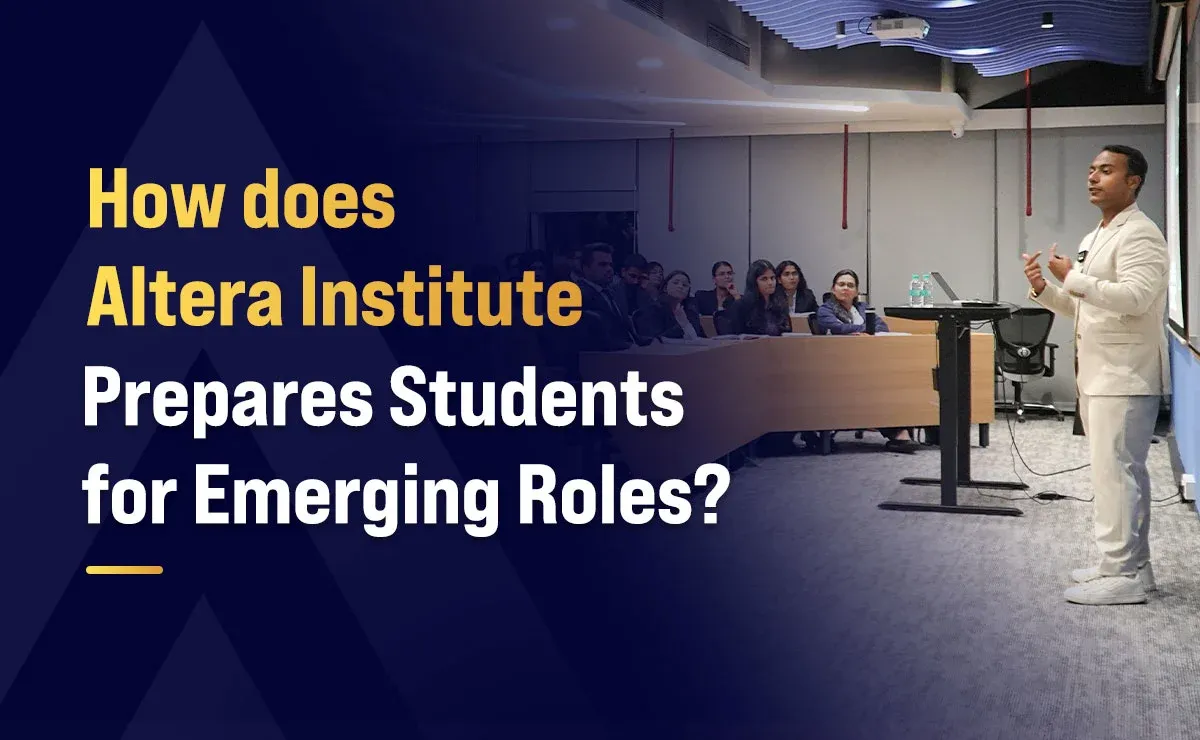
The definition of a promising career has changed more in the post-pandemic era than in the preceding two decades. Before the pandemic and the acceleration of AI-driven business models, MBA graduates were mainly employed in trade marketing, enterprise sales, FMCG field management, and relationship-based banking. These roles were built around process, hierarchy, and scale, and they were the default destination for most management graduates.
This default no longer holds the same pace for career growth as it once did. Companies that once prioritized traditional roles are now investing heavily in Digital and AI-first roles like eCommerce operations, performance marketing, and data-driven brand strategy. As a result, these are also the roles that offer the best pay packages and the fastest career advancement. These are not incremental changes to existing roles. They represent a new generation of high-growth careers in today's business world.
And this is exactly where B-schools such as Altera Institute have carved out a niche for themselves, built specifically to prepare students for this new reality. Its 15-month full-time residential program was developed by senior business leaders and industry professionals from Bain & Company, Hindustan Unilever Limited, Goldman Sachs, Haleon, and EY Parthenon.
If your ambition is to own revenue, lead growth, and build a career in the roles that define today’s digital economy in India, this article explains how Altera Institute is uniquely positioned to get you there.
New-Age B-Schools and the Rise of Specialist MBAs
The traditional two-year generalist MBA program was designed for a different era of business. By providing comprehensive knowledge and exposure across finance, marketing, operations, and strategy, it enables companies to hire managers who can coordinate among departments.
However, as industries have evolved and become more specialized, the need for deep domain expertise and tailored skills has increased. As a result, an entirely new category of MBA programs and models has emerged, focusing on specific skills and functions that are better aligned with modern business demands.
Unlike traditional MBA programs, these programs are not broader in scope. Their focus is on niche and high-growth competencies that employers are actively seeking and have trouble finding. This distinction matters because recruiters today are not looking for general management knowledge. Their goal is to hire professionals who can deliver measurable business results right away without extensive on-the-job training.
Programs like Altera Institute's PGP emphasize industry-relevant curriculum, practical learning-by-doing approaches, and faculty members who are active practitioners rather than career academics. Thus, earning a credential from such a program signal to recruiters that a candidate understands how digital-AI-first businesses operate and is committed to new-age, high-growth careers. And today, this signal is far more valuable than the brand name of an institution or a generalist degree.
The 4-Term Learning Journey at Altera Institute
The Altera Institute's program is structured across four terms, each building on the last, with a capstone project at the end of each term to put students' learning into practice. It is not a program in which theory is taught in isolation and practice is left to the workplace.
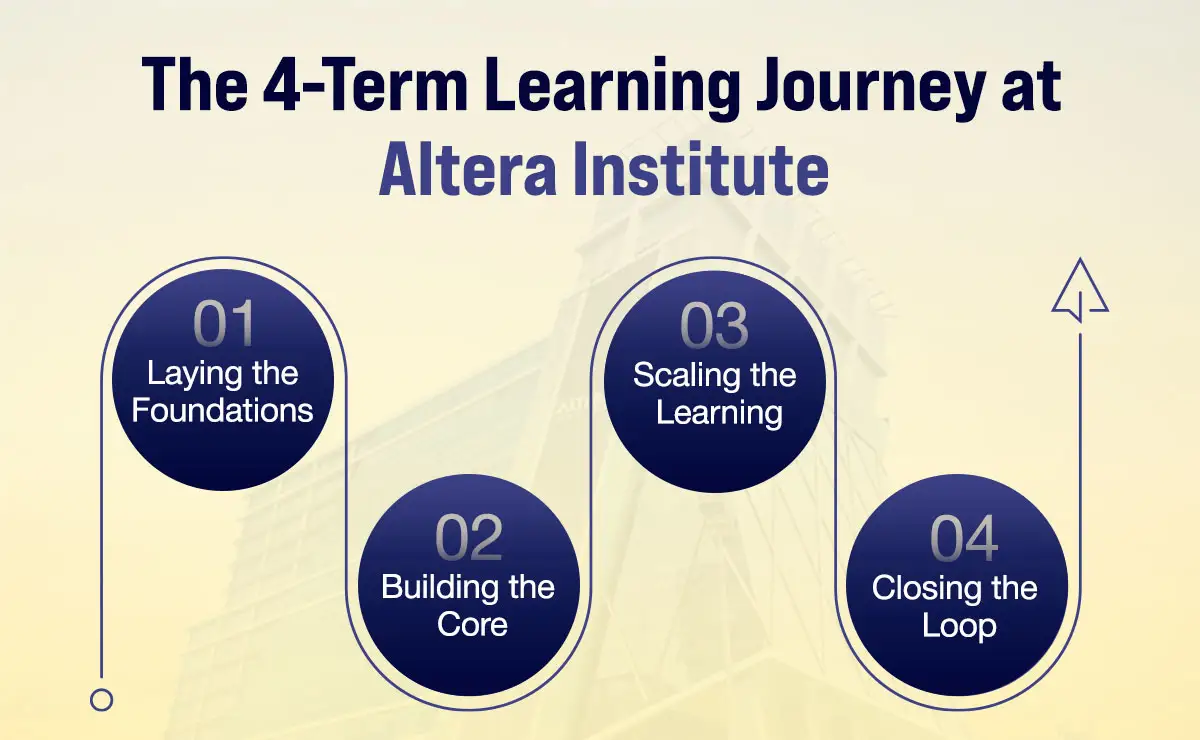
Term 1: Laying the Foundations
In the first term, students are introduced to Marketing Management, Go-to-Market Strategies, Media Basics, First-Principles Problem Solving, Advertising Management, Business Finance, Managerial Economics, and Applied Analytics. These courses are not taught as standalone subjects. They are designed to closely reflect a real brand's operations, from market entry through consumer acquisition to execution.
The final project for Term 1 is to build a D2C brand from scratch. Students define the product, the marketing mix, the go-to-market strategy, and the communication plan, then execute them. This end-to-end experience gives students a practical foundation that most MBA programs spend an entire year working toward theoretically.
Term 2: Building Core Digital Skills
The second term focuses on the functional depth of digital business. Students will learn about Digital Commerce, Brand Building, Macro Economics, Digital Sales, Digital Media Planning, Supply Chain Management, Organized Trade, and Business Communications. The courses are taught by active practitioners who are currently working at a senior level in the fields they teach.
The Term 2 capstone requires students to create and launch a minimum viable product (MVP) with a detailed go-to-market strategy. The students work from concept to market research, product design, and commercial planning, then present their work to industry leaders. By the end of Term 2, students have built two substantial portfolio pieces that demonstrate genuine commercial capability.
Term 3: Specialist Tracks and Live Projects
In Term 3, students will be introduced to the specialist tracks that most closely align with the roles they will be hired for. The courses cover Brand Management, Growth Marketing, eCommerce Media Planning, Category Management, Generative AI in Business, and Content Marketing. Term 3 is also when placements start, meaning students continue to develop their specialist skills while being evaluated by recruiters simultaneously.
The capstone project in Term 3 involves working with a CEO or founder of a real company. They analyzed real-world business problems, presented their analysis to their leader, and received feedback based on actual stakeholder concerns instead of academic assessments. It is this experience that consistently impress recruiters at leading consumer and technology companies.
Term 4: Leadership, Strategy, and Research
The final term focuses on the leadership skills needed to succeed, not just the ability to execute. The courses cover Leadership in Business, Business Strategy, Entrepreneurship, Retention Marketing, B2B Marketing, and Business Innovation. As students prepare for entry into the workforce, they need to think and communicate at a level beyond their role, so the shift from functional learning to behavioral and strategic development is intentional.
Term 4 capstone projects require students to publish a research report on a topic of their choice. Rather than summarizing existing frameworks, students explore a topic of genuine interest, apply rigorous analysis, and create a professional document that adds to business knowledge. Additionally, this term marks the conclusion of the placement process.
20+ Expert Sprints
There are more than 20 sprints across all four terms, which are 4- to 8-hour intensive sessions led by practitioners from companies such as Netflix, Hindustan Unilever Limited, EY Parthenon, Microsoft, Pernod Ricard, Bain & Company, and Whiteboard Capital.
Each sprint focuses on a specific skill, such as business communication, consumer insights, product design thinking, negotiation, root cause analysis, and VC investment frameworks. In addition to formal term courses, these sessions significantly deepen the practical aspects of the curriculum.
Skills Employers Actually Value in Graduates from Altera Institute
Leading consumer and technology companies now look for candidates who can deliver immediate value rather than relying on prestige. There are five major skill clusters incorporated into Altera Institute's curriculum, all of which are directly related to the careers graduates pursue.
- The ability to understand revenues and P&L distinguishes candidates who focus solely on their function from those who understand the overall business. At Altera Institute, students learn to analyze category economics, manage pricing decisions, and take ownership of product and category profitability. Having this skill is essential for eCommerce category management and brand management roles, where commercial accountability is expected from the outset.
- Digital execution entails planning and managing marketing performance across digital platforms. As part of their coursework, students build growth funnels, manage media buying on Amazon and Flipkart, and develop performance campaigns on Google and Meta. This skill set is a core requirement for growth marketing and digital commerce hiring at companies such as Blinkit, Mamaearth, and Publicis.
- Product thinking involves identifying customer problems, designing solutions, building business cases, and taking concepts to market. As part of the D2C brand capstone in Term 1 and the MVP capstone in Term 2, students develop this skill. Graduates with an interest in product management and brand strategy typically provide a portfolio of their actual work to demonstrate this ability.
- Data and AI proficiency are now considered baselines for high-growth positions. The Altera Institute curriculum incorporates Applied Analytics from Term 1 and Generative AI in Business from Terms 2 and 3. This enables students to analyze business data, build analytical arguments, and use AI tools to improve content creation, consumer research, and decision-making. Candidates proficient in data and AI tools excel at interviews for growth, product, and brand roles.
- With leadership and strategic communication skills, graduates can advance beyond entry-level positions quickly. A key component of Term 4 is the development of business strategy, innovation, and volatility management skills, which will prepare students for handling high-stakes situations in their future careers.
Altera Institute Career Outcomes for the Class of 2025
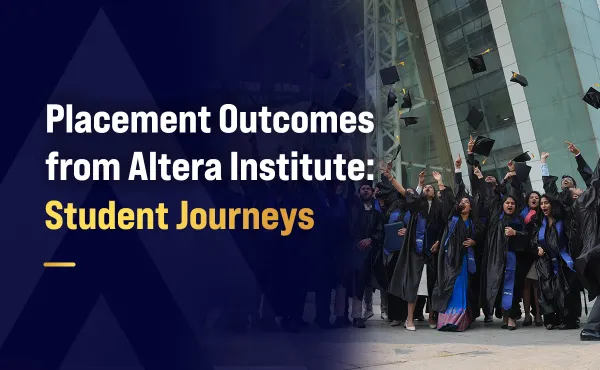
The Class of 2025's placement results demonstrate the program's effectiveness. Graduates reported an average salary of Rs. 16.85 lakh per year, a median salary of Rs. 18.14 lakh, and a maximum salary of Rs. 26.08 lakh. Students in the Class of 2025 accomplished a 3.8x rise in CTC relative to their pre-PGP compensation, one of the highest rates of return among comparable programs in India.
The roles secured by the class are closely aligned with the program's focus. Specifically, 35% entered eCommerce, 24% joined the Founder's Office or EIR positions, 12% moved into Growth and Revenue, 9% entered Product Management, 9% were placed in Brand Management, and 11% joined FMCG Sales and Marketing. These are revenue-generating, decision-making roles in high-growth organizations, which most traditional MBA programs do not consistently offer their graduates.
There was a wide range of recruiters for the Class of 2025, including Hindustan Unilever Limited, Flipkart, Godrej, Mamaearth, Blinkit, Publicis Groupe, and Wella. In many cases, these organizations returned to campus after meeting or exceeding their expectations for previous hires.
Is Altera Institute the Right Choice for Your Digital Career?
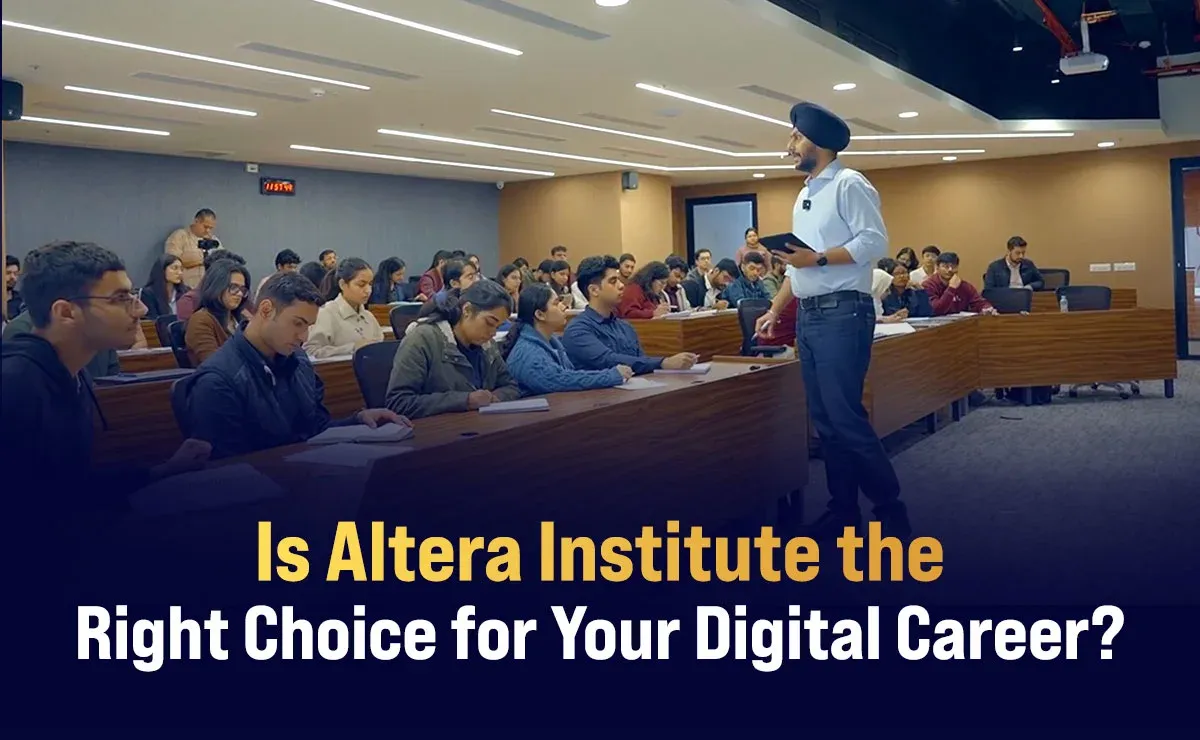
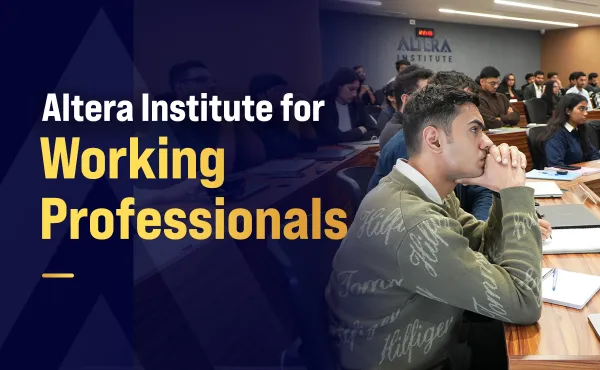
Altera Institute is designed for students interested in building skills and competencies for today's AI-driven, digital-first marketing landscape. Among the Class of 2026, 35% are freshers who desire to build specialist digital skills early and enter the workforce with a competitive advantage that organic career development cannot provide. The remaining 65% are early-career professionals who recognise that their current profiles don't lead to the roles they want, so they aim to bridge that gap through structured education.
Both profiles benefit from three key differences that set Altera Institute apart.
- Rather than focusing on academic frameworks, the curriculum is designed around real job roles.
- Each session is delivered by an active industry practitioner instead of a career academic.
- Placement outcomes are verified and consistent across the last two graduating cohorts.
This program is not a broad credential, but rather a direct path to India's fastest-growing careers.
Altera Institute's PGP in Applied Marketing is designed for anyone who wants to own a growth funnel, manage a brand's digital P&L, lead eCommerce strategy on a major platform, or work as a strategic partner to a start-up founder. The careers that will shape India's next decade are being filled right now. The question is whether or not you are prepared to compete for them.