
How Can Fresh Graduates Build an Industry-Ready Marketing Career?


Marketing is one of the few fields where every company, in every industry, actively hires. But these hires must come with the right skills to meet constantly evolving industry demands. Skills like P&L ownership, consumer understanding, strategy, and business decision-making are no longer baseline expectations. For today's execution-focused marketing roles, they are the standard, without which employability seems difficult.
Hence, rightfully, for fresh graduates, marketing is one of the most confusing fields to enter. The sheer range of roles available, from brand manager and digital marketer to growth marketer and marketing analyst, can seem overwhelming rather than promising. Additionally, most graduates aren't sure where to begin because marketing has changed significantly.
But before you begin, know that companies today no longer just want purely theoretical knowledge or generalist skills from their MBA hires. They now expect "Day 1 job-ready" professionals who can combine strategic frameworks with the ability to directly execute them through data-driven, digital, and AI-powered means—all leading to the most in-demand, high-growth careers in marketing available today.
What Does "Industry-Ready" Really Mean in Marketing?
It is a phrase that is often used in college brochures, but in marketing education, being industry-ready means you can contribute from the moment you walk in the door. Modern marketing teams are lean, fast-moving, and expected to deliver a lot. They run campaigns, measure performance, build brand narratives, track customer behavior, and inform revenue decisions, often simultaneously.
A fresh graduate who can perform even one of these functions competently is a real asset to a company. This is why employers across FMCG, e-commerce, SaaS, and consumer brands don't just screen students to gauge marketing knowledge in theory. They want to see candidates who:
- Can work with data and draw actionable insights from it in real time.
- Understand digital channels and how to optimize them for business goals.
- Have experience contributing to real campaigns or live projects, not just studying them.
- Can communicate strategy clearly and work effectively across teams.
The difference between marketing graduates who get hired quickly and those who struggle isn't always about marks or college names. It comes down to practical orientation and skill specificity. Knowing which marketing role you're targeting and preparing for it deliberately is what separates candidates in competitive hiring rounds.
The Marketing Landscape: In-Demand Roles for Fresh
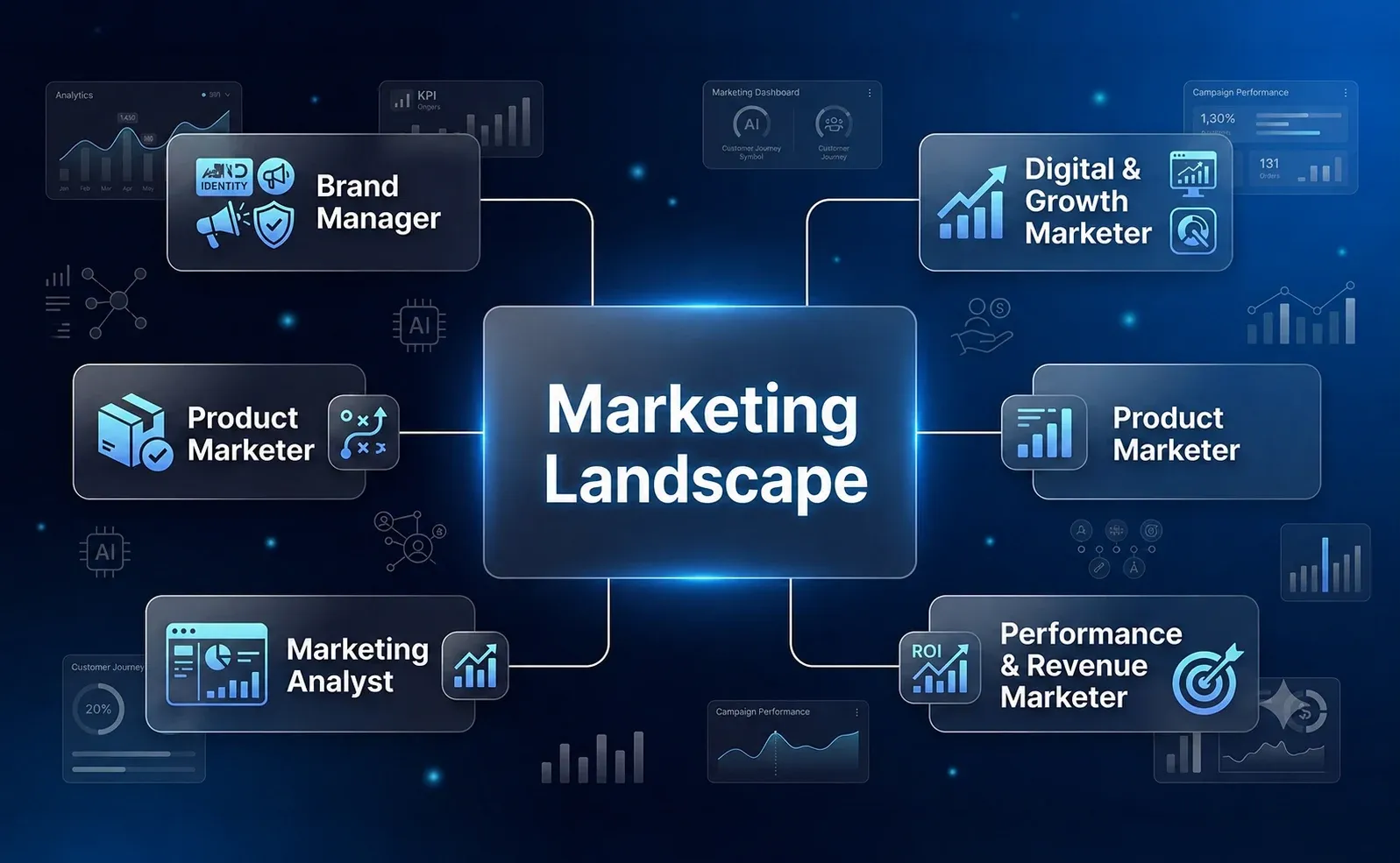
Before building toward something, you must understand that the professional frameworks you gain through a marketing-focused MBA can take you years to develop independently through natural progression in your career alone.
It is because marketing isn't a single career but a cluster of specialized roles, with each requiring a different mix of creativity, data, and business acumen. Here's a clear map of the most in-demand roles for fresh graduates in India:
- Brand Manager: A brand manager is responsible for shaping a product's perception. It involves brand positioning, campaign strategy, and consumer perception predominantly in FMCG, consumer tech, and lifestyle brands. In India, companies like HUL, Nestlé, P&G, and Tata Consumer actively hire for these roles. It's the right fit for those who combine creative thinking with commercial judgment.
- Digital and Growth Marketers: These professionals manage customer growth and retention using a variety of tactics, including performance marketing, paid acquisition, funnel optimization, and CRM. Startups, SaaS firms, and e-commerce platforms are the primary hirers in this space.
- Product Marketer: They look after product positioning, go-to-market strategy, and competitive messaging, working in tandem with product and sales teams. They are the direct link between what a company produces and why it is relevant to potential users. The role is widely sought after in tech and SaaS companies.
- Marketing Analyst: They are responsible for transforming data into business decisions. Analysts run campaign analysis, A/B testing, and experimentation and translate customer behavior into insight. As data underpins every marketing function, this role has become critical across all team sizes.
- Performance and Revenue Marketers: In this role, marketing is closely tied to revenue instead of just the brand. It combines sales and marketing, covers category management and profit and loss (P&L) exposure, and works alongside the founder.
Mapping these paths out helps you stop treating marketing as one broad destination and start making specific choices.
Matching Your Strengths to the Right Path
Not every marketing role suits every person, and trying to keep all options open rarely impresses hiring managers. They can tell when a candidate hasn't thought it through. The smarter approach is to look at what you naturally gravitate toward and match it to a role type:
- If consumer psychology, brand building, and campaign optimization excite you, brand management is a natural fit.
- If you enjoy testing ideas, tracking metrics, and seeing measurable results, performance or growth marketing aligns with your strengths.
- If you're comfortable in both creative and analytical mindsets and enjoy working across teams, product marketing is worth exploring.
- If you prefer finding patterns in data and influencing decisions based on evidence, marketing analytics is the clearest path forward.
The kind of company you target also determines how much you learn early on. For fresh graduates, FMCG companies provide structured brand management tracks and clear career frameworks. Startups and e-commerce firms expose you to digital and growth roles faster and often with greater ownership than larger companies. After you have identified your direction, the next step is to determine which skills you must actively develop to reach it.
The Skills That Actually Get You Hired
Regardless of the career path you choose, certain skills and capabilities come up consistently in marketing hiring across India. These aren't supplementary skills that you can go without. They're baseline expectations from day one.
- Data literacy is the most underrated skill on this list. You don't need to be a data scientist, but you do need to be comfortable with numbers, campaign metrics, and Excel. SQL and platforms like Google Analytics or Mixpanel are increasingly expected even at the entry level.
- Digital channel knowledge means understanding how search, social, paid, and email marketing work and how each connects to broader business goals. Even brand managers are now expected to have a working understanding of digital performance measurements.
- Comfort AI marketing tools are quickly becoming a baseline expectation. The use of AI in marketing reshapes how fast marketers can operate, and employers want graduates who are already familiar with these tools.
- Communication and storytelling remain non-negotiable across all roles. Whether you're pitching a strategy or positioning a product internally, marketing is ultimately about making something relevant to an audience.
- Portfolios of real project work distinguish those who studied marketing from those who have practiced it. Applied briefs and live campaigns demonstrate judgment under real conditions, which is precisely what competitive firms probe for in interviews.
Building these skills in a structured, practical environment is where the right educational foundation makes a real difference.
Why the Right Program Makes a Difference
The type of postgraduate marketing program you choose significantly shapes how quickly you become industry-ready. Not all marketing education is built the same way, and this gap becomes visible during interviews when it matters most.
In traditional MBA programs in India, marketing is part of a broader general management curriculum. While foundational, they often fail to provide the specialized training and skill application required by modern marketing roles. When you are competing against candidates with hands-on experience in growth experiments, live campaigns, and brand strategy projects, this becomes a major disadvantage.
The right program will stand out in a few specific ways. Look for the following when evaluating your options:
- Industry-aligned curriculum that teaches and reflects what employers actually hire for, not just theoretical frameworks
- Live project experience working on real business problems with actual brands, not just simulated case studies
- Digital and AI-first training so you graduate comfortable with the tools modern marketing teams rely on
- Sector exposure across FMCG, e-commerce, and tech, so you can make an informed choice about where to begin
Programs like Altera Institute's PGP in Applied Marketing are built around this kind of applied, industry-led learning. The curriculum is designed and taught by industry experts, and students work on live projects with real brands throughout the program, which means they graduate with both the skills and the portfolio to back up their job applications.
Industries to Target as a Fresh Graduate
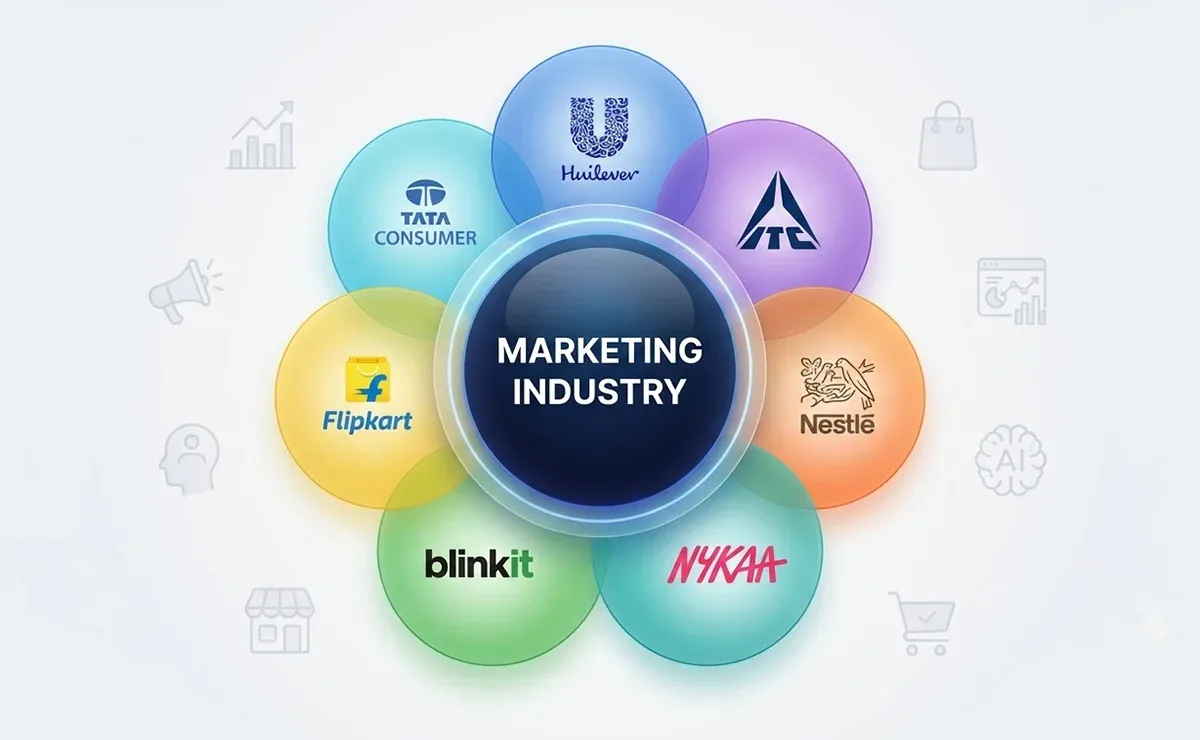
Where you start matters a lot. Not all industries offer the same depth of learning in the early years of your career, and a strategic first move gives you a head start that compounds over time.
- For fresh marketing graduates, FMCG remains one of the best entry points. Companies like HUL, Nestlé, ITC, and Tata Consumer offer structured brand management programs with clear career paths. It is easy to transfer the discipline you build in this environment to other industries later on.
- Brands such as Nykaa, Mamaearth, Blinkit, and Flipkart are excellent entry points for digital and growth roles. It's a fast-paced environment where real ownership emerges early, and performance data is exposed early.
- Those interested in product marketing and analytics should consider SaaS and tech companies. The work is cross-functional, decisions are data-driven, and the learning curve is steep, which makes it valuable early on in one's career.
Choosing your first industry with intention, rather than taking the first offer that arrives, gives you a foundation that's hard to replicate later.
Summing Up
The scope of marketing in India has never been wider. Fresh graduates today have more career options, more industries to enter, and more tools to work with than any previous generation of marketers. But that breadth is only valuable when you approach it with intent.
Know the landscape, choose a path that fits your strengths, build practical skills that employers actively look for, and invest in a targeted education pathway that prepares you for how marketing works today, not how it was taught a decade ago. When you do that, you'll position yourself to seize the most in-demand opportunities in this field and build an industry-ready marketing career.