Does a 1-year MBA Help Improve Job Prospects and Salary?


For decades, the MBA has been represented as a benchmark for career advancement. Professionals in India and globally regarded it as the most structured route to higher-paying positions, increased responsibility, and leadership opportunities. However, significant changes in the professional landscape have altered both these assumptions and educational programs intended to address them.
Today’s top jobs in digital marketing, growth strategy, eCommerce, product management, and business analytics value speed, specialization, and practical skills more than how long your degree took to complete. India’s digital economy is now the third largest in the world and is expected to grow almost twice as fast as the rest of the economy, accounting for nearly one-fifth of national income by 2029-30.
This shift has led to rapid growth in one-year MBA and PGP programs worldwide. Schools like INSEAD, Oxford Saïd, ISB, and newer industry-focused institutes have changed their programs to offer quicker results with less time away from work. But for most professionals, the real question still remains: does a one-year MBA lead to better jobs and higher salaries, and can it match the returns of a traditional two-year program?
Why One-Year MBA Programs Are Gaining Ground
The main argument of a one-year MBA is that it provides efficiency, and it’s more than just about saving time. Each year spent studying full-time means missing out on salary, work experience, and career progress. A one-year program reduces that loss by half. In fast-changing fields, returning to work a year sooner can make a big difference over time.
The structural advantages of the accelerated format are increasingly getting hard to argue with:
- Lower opportunity cost: Missing out on salaries is a real cost factor for any MBA. A one-year program significantly reduces this expense.
- Faster return to work: Graduates get back to the job market sooner and can use their new skills, while others in two-year programs are still studying.
- Focused, practical curriculum: One-year programs usually center on fast-growing fields like digital marketing, e-commerce, product strategy, and analytics, instead of broad management theory.
- Practitioner-led learning: Many fast-track programs invite operators, founders, and senior industry professionals to teach. These are people who solve real business problems every day.
In India, ISB’s PGP changed how employers saw shorter management programs. Now, schools like SPJIMR and Great Lakes, as well as new industry-focused programs, follow the same idea: intensive, targeted learning can prepare students for jobs just as well as longer courses. Altera Institute’s 15-month PGP in Applied Marketing is based on this approach, with a curriculum created and taught by experts from FMCG, eCommerce, and consulting for digital-first careers.
Does a One-Year MBA Actually Improve Salary Prospects?

This is what most students want to know, and the honest answer is yes: a one-year MBA can improve salary prospects, but how much it helps depends on the program, the field, and how well the curriculum aligns with employers' needs. In India, the results depend more on the field and the B-school than on the program’s length.
To judge salary outcomes fairly, candidates should look beyond headline numbers and consider the full range:
- Median salary: It is the middle value of all reported salaries when arranged in ascending or descending order. The median salary is considered a better indicator than the average (mean) salary because it is not distorted by extreme outliers, such as a few students receiving exceptionally high international packages.
- Top percentile averages: Looking at what the top 25% of graduates earn shows the highest earning potential.
- Role quality and seniority: The quality of jobs and their future growth potential are just as important to graduates as salary.
- Hiring sectors: If the companies hiring from the program are growing, shrinking, or staying the same, it affects long-term salary growth.
- Break-even timeline: The time it takes to recoup the program's cost after graduation is the clearest way to measure ROI.
There is no difference in credibility between an MBA and a PGP, and the recruiters understand this quite well. They care more about the quality and relevance of the curriculum, industry exposure, and whether a candidate can contribute well to the role they are applying for. For those aiming for digital-first jobs, a focused PGP from a good school can lead to salaries that match or exceed those from longer, more costly programs.
How Do One-Year MBAs Influence Job Prospects Beyond Salary?
Salary is important, but it’s just one part of what a good one-year MBA can offer. For many, the bigger benefit is often entry into a new career path—the chance to work in new sectors, roles, and networks that might be closed off without a management degree.
Today’s job market for digital-first roles is changing old hiring rules. In areas like growth marketing, product management, eCommerce strategy, and business analytics, career paths are more flexible than in traditional companies. Employers want people who can read data, create go-to-market plans, run growth tests, and use AI tools. A curriculum focused on these skills prepares you better for these jobs than a general management program.
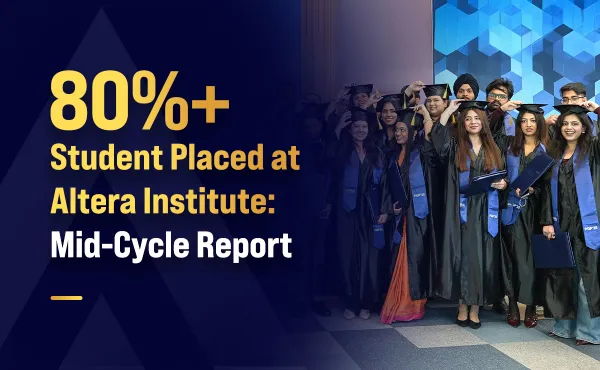
Programs that include real company projects, industry experts as teachers, and AI-focused courses help students build real-world experience, not just a degree. This makes a difference when applying for jobs. Altera Institute’s graduates have joined companies like Blinkit, Flipkart, Amazon, Godrej, Mamaearth, WPP, Himalaya, and Purplle in marketing, growth, eCommerce, and product roles. The institute also works closely with over 40 companies in FMCG, eCommerce, D2C, media, and consumer tech—many of which use Altera’s programs to train their own staff, showing these partnerships are more than just for placements.
Who teaches the program also affects job prospects. When former CMOs, analytics heads, and eCommerce leaders serve as instructors, students gain real-world insights and access to networks that can help them even before they graduate.
Who Should Consider a One-Year MBA?

Knowing when a 1-year MBA is most valuable for you to pursue is key to making the right decision. What matters most is how well the program aligns with your goals and how quickly you want to achieve them.
A one-year MBA is likely the stronger option if:
- You know exactly which field you want to work in, such as marketing, eCommerce, product, growth, or analytics.
- You’re aiming for jobs in digital-first industries where proven skills and results matter more than how long your program lasted.
- You’re concerned about the cost of missing work and want to get back to your career as soon as possible.
- You’re early in your career and want to develop specialized skills before broader business habits set in.
Programs like Altera Institute’s PGP in Applied Marketing are ideal for people who already know they want to work in digital-first business roles and want to build those skills early, instead of waiting until after a longer, broader program.
Conclusion
So, does a one-year MBA help you get better jobs and higher pay? For most professionals who know what they want, the answer is yes—but it’s important to remember that the specific program matters more than the format. A one-year MBA from the right school, in a field with strong hiring demand, can give you a faster return on investment, better career options, and salaries that compete with longer programs.
The Indian job market is changing in ways that favor one-year programs. Digital marketing jobs are expected to grow by 10% by 2026. AI is changing how businesses work at every level. There are more products and analytics roles as companies invest in digital tools. Employers in these fields want people who can get things done, understand digital tools, and have the specific knowledge that comes from focused learning—not just general management theory.
The salary numbers look good, and the return on investment for the right programs is clear. But the real long-term value of a one-year MBA isn’t just the first pay raise after graduation—it’s the career opportunities it opens up over the next five years. What matters most is the curriculum's relevance, the quality of the teachers, and the strength of the school’s industry connections.
If you’re aiming for roles in marketing, eCommerce, growth, or product, a focused, practitioner-led one-year program is worth serious thought. It’s not a shortcut but a smart investment in the job market that already values the skills these programs teach.