Courses in Marketing vs. Advertising: Which Specialization Matches Today's Industry?
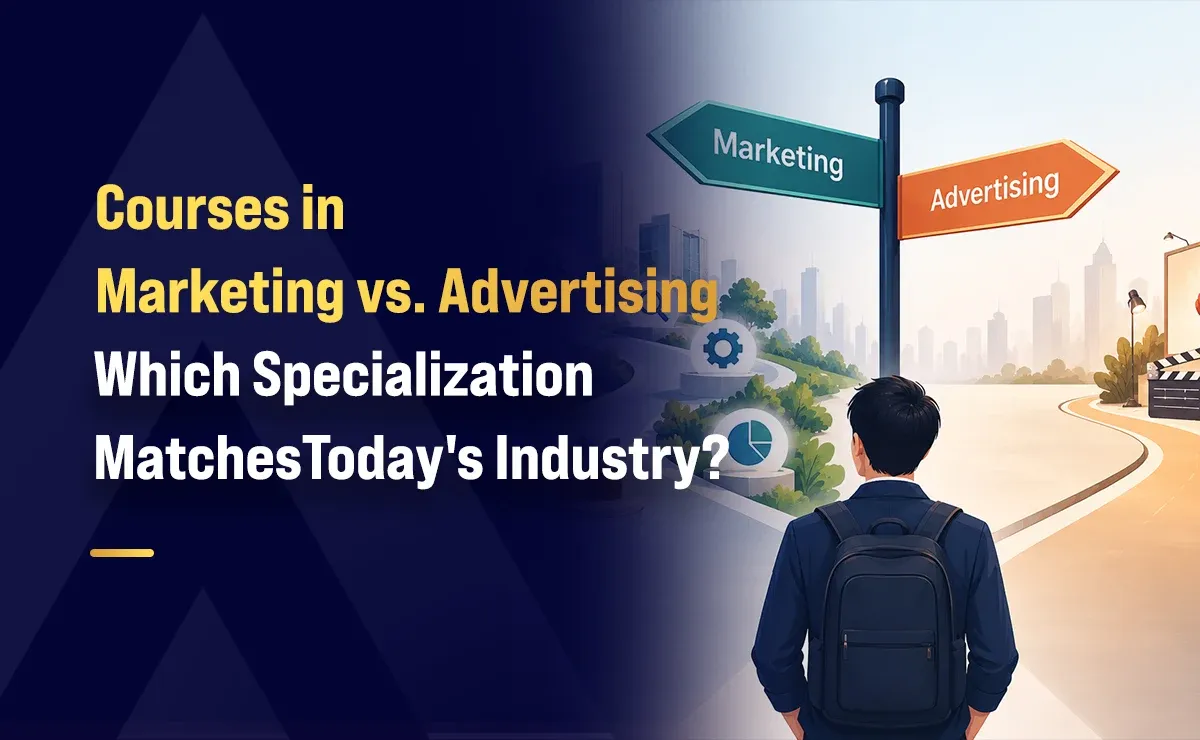
Every admissions season, MBA aspirants face the same dilemma: specialize in marketing or in advertising? The confusion is understandable. For decades, "advertising" was shorthand for most marketing, such as the TV spot, the print ad, and the jingle everyone hummed. That era is over.
Today, marketing has grown into something far broader: research, pricing, product, retention, data, and brand strategy, with advertising sitting as just one function inside it. That’s why modern institutes like Altera Institute design marketing education around today's industry rather than yesterday's agency structure.
Marketing vs. Advertising: What's the Difference?
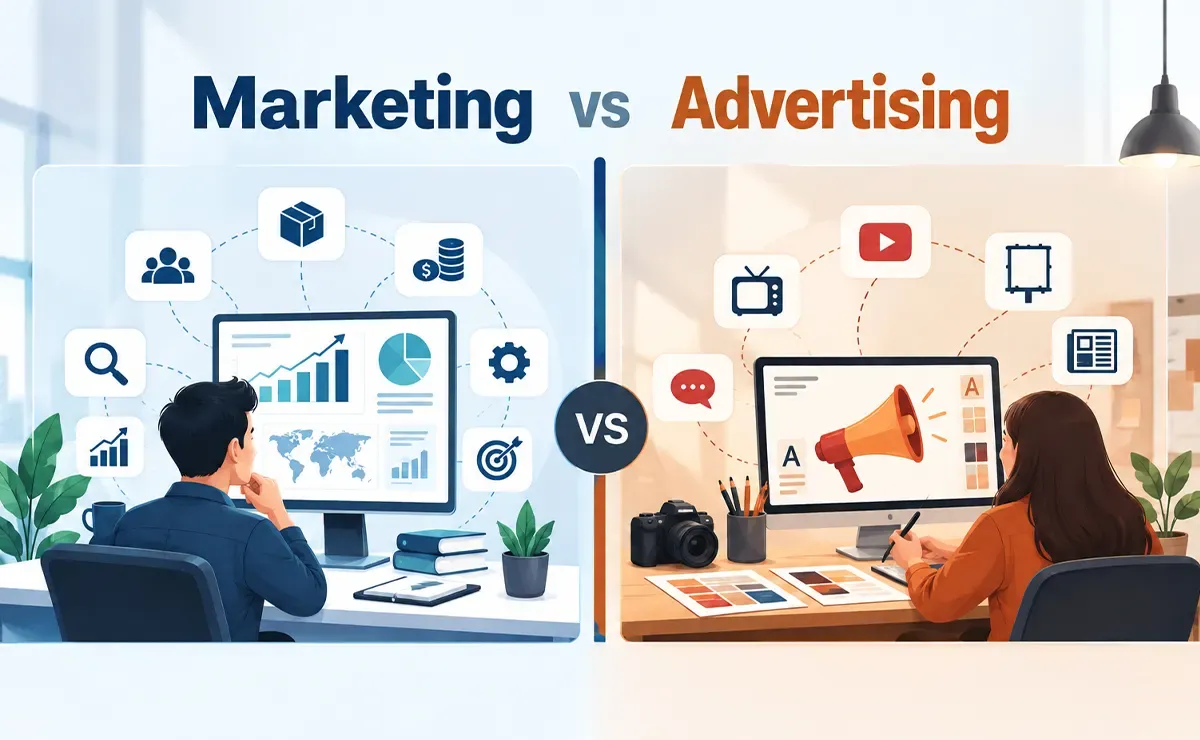
Advertising is paid communication that tells consumers a product exists and why they should care, like a festive-season television spot or a search ad. It is one visible slice of a much larger discipline.
On the other hand, marketing is the entire system that moves a product from idea to paying, returning customer. It includes research into what people actually want, product positioning, pricing strategy, distribution, customer acquisition, retention, branding, and CRM to sustain relationships after the first sale. Advertising sits within this system as just a communication layer. It communicates decisions that marketing has already made elsewhere.
Put simply, advertising is a communication tool that marketing uses. A brand manager at Coca-Cola, for instance, doesn't just approve adverts; they decide flavour variants, price points, regional distribution, and loyalty programmes, and advertising is only one lever they pull.
This is why marketing graduates are trained across a wider decision-making surface, while advertising specialists go deep into one part of that surface: communication.
How Marketing Has Changed Over the Last 25 Years
1) 1995–2005: The Traditional Advertising Era
Marketing budgets were dominated by media buying, with television, radio, newspapers, and outdoor hoardings absorbing most spend. The most sought-after roles were copywriter, art director, and account executive. These were all built around a single skill: creating and placing advertisements.
2) 2005–2015: Digital Marketing Emerges
Google, SEO, social media, email, and content marketing opened entirely new channels, and marketing automation began replacing manual campaign management. Advertising remained important, but it stopped being the only route to a customer.
3) 2015–Today: Marketing Becomes a Business Growth Function
With the rapid digitization of businesses worldwide, marketing has evolved far beyond advertising. Digital marketers have become a non-negotiable part of modern marketing teams as companies increasingly rely on data, technology, and customer insights to drive growth. Digital-first marketing overtook television in India and now commands 44% of total ad spend, growing 20% year-on-year to roughly ₹49,000 crore in FY2025.
This shows up directly in hiring. Companies now hire for growth marketing, product marketing, revenue marketing, CRM, performance marketing, lifecycle marketing, customer success, and marketing analytics roles, while advertising has become one specialized function within a broader marketing ecosystem.
Swiggy, for example, operates a dedicated Central Growth Marketing team managing performance campaigns across platforms. Also, companies such as Razorpay, PhonePe, Freshworks, and Meesho regularly recruit for growth, product marketing, lifecycle, and CRM roles alongside brand and communications positions.
Marketing today is more holistic, focusing on building customer relationships across multiple touchpoints, shaping brand perception and even driving sustainable business outcomes. This shift is one reason institutes like Altera Institute structure learning around broader business functions rather than only traditional advertising disciplines.
What Do MBA Marketing Programs Usually Teach?
Most MBA marketing curricula remain anchored in these subjects, and rightly so, because consumer behavior and marketing management stay foundational.
However, many universities dedicate an entire subject to advertising alone, while the domains driving today’s hiring receive little coverage. CRM, product marketing, lifecycle marketing, marketing analytics, experimentation, AI, and customer data platforms are increasingly where the jobs are. Yet they often appear as a single elective, if at all, leaving graduates fluent in campaign theory but under-prepared for how modern marketing teams actually operate.
Best Marketing MBA Colleges
Top MBA Colleges for Marketing Careers
Figures are indicative, drawn from recently published placement reports, and may vary by batch.
Top MBAs with Marketing Specialization
Figures are indicative, drawn from recently published placement reports, and may vary by batch.
How Altera Institute's Applied Marketing Curriculum Reflects Today's Industry
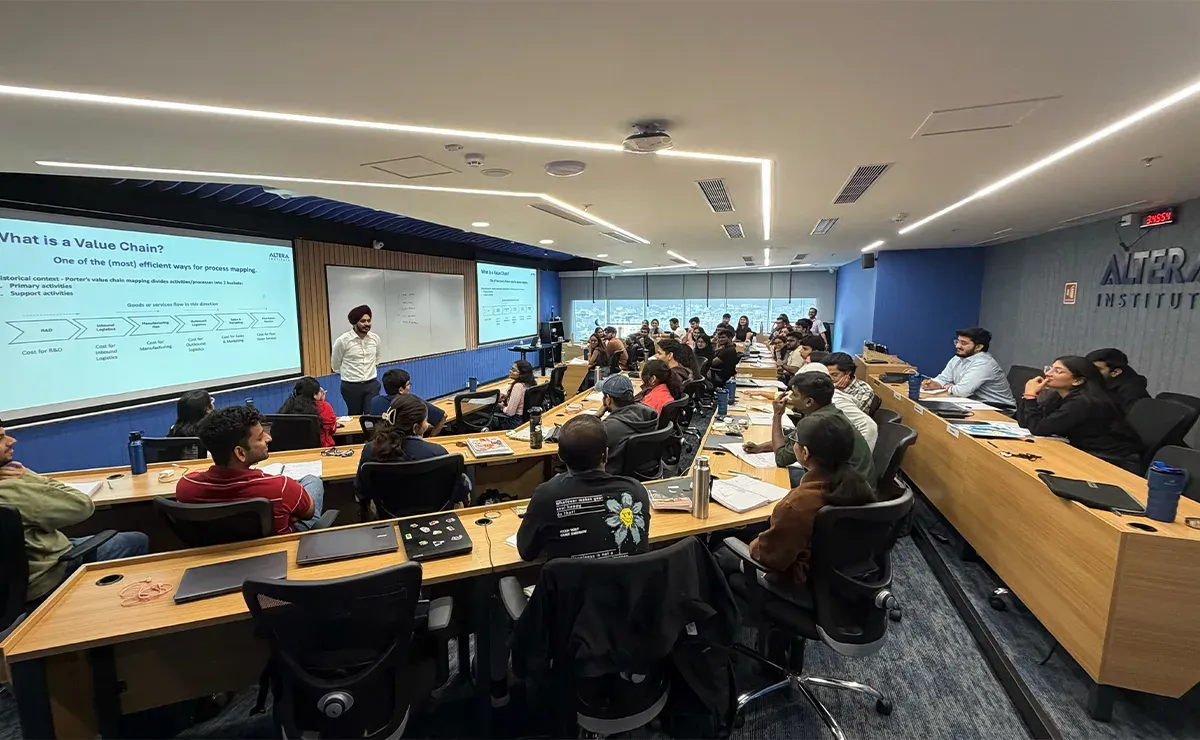
Instead of organizing education around advertising, media planning, and campaigns, Altera Institute’s PGP in Applied Marketing curriculum is structured around growth, brand, consumer research, AI, CRM, analytics, product marketing, and core business thinking. The curriculum focuses on applied learning through experiential modules and live projects, helping students build the skills needed to solve real-world marketing challenges.
Taught by industry mentors and integrating AI tools into marketing workflows, the curriculum goes beyond case studies by providing hands-on experience with real companies and portfolio-building opportunities. This approach helps graduates develop a broad business perspective, which makes them adaptable professionals rather than being limited to specific roles. Students build transferable skills across strategy, customer insights, analytics, technology, operations, and decision-making, preparing them for diverse career opportunities.
The program's industry relevance is reflected in hiring outcomes, with recruiters from Flipkart, JioMart, Amazon, Britannia, Nestle, and others hiring graduates across strategy, marketing, operations, product, and general management roles.
Altera Institute also reports its placement outcomes under the IPRS audit framework, a reporting standard used by only the top 0.1% of Indian business schools like IIM Ahmedabad.
Should You Choose an MBA in Marketing or Advertising?
If long-term flexibility and broader business exposure matter to you, marketing tends to offer the wider runway, simply because advertising now sits inside it as one specialized track rather than the whole field.
Also, for most students, marketing offers broader career flexibility, precisely because advertising is now one part of it rather than the whole. Programs such as Altera Institute's Applied PGP in Marketing curriculum are built around this reality, preparing graduates for brand management, growth marketing, product management, and revenue roles rather than a single agency function.
Frequently Asked Questions (FAQ)
Q1. Is advertising becoming obsolete?
Ans: No, but its scope has narrowed to one specialized function within a much larger marketing system.
Q2. Can I work in advertising after an MBA in marketing?
Ans: Yes. Marketing graduates can move into advertising, brand, growth, product, or analytics roles, since the specialization covers all of these areas.
Q3. Why are companies hiring more growth marketers than advertising managers?
Ans: Because growth roles combine acquisition, retention, and analytics, as these are the responsibilities that directly influence revenue, not just brand visibility.
Q4. Is performance marketing replacing traditional advertising?
Ans: It's supplementing it. Budgets are shifting toward measurable, digital-first channels, but traditional advertising still plays a brand-building role.
Q5. Which MBA specialization has better long-term career growth?
Ans: Marketing generally offers broader flexibility, opening pathways into product, growth, analytics, and leadership roles beyond communication alone.
Q6. Does AI reduce the importance of advertising professionals?
Ans: AI is changing the job rather than removing it. AI now assists with content and targeting, shifting human focus toward strategy and judgement.
Q7. What marketing skills are employers looking for in India today?
Ans: Analytics, CRM, performance marketing, and AI-assisted marketing tools are among the fastest-growing skill demands, alongside core brand and consumer research capabilities.