Can You List the Top 10 MBA Colleges in India That Help with Career Growth?


India has over 5,500 B-schools, so if you are still evaluating MBA programs by rankings and salary figures alone, you are looking at only half the picture. Today, in order to evaluate a program accurately, you must ask yourself, “Which specific programs will help me grow into the professional I want to become?”
Placement occurs at the end of your MBA journey, and the results depend on your performance during the entire course. Career growth, on the contrary, is what adds up daily, even before you think about pursuing an MBA. It depends on your own career clarity, the faculty you learn from, the peers you interact with, how relevant the course content is to your career, and whether it teaches you to think in a crisis or just to remember frameworks.
The ten colleges mentioned in this article have consistently created the conditions for meaningful career growth across consulting, finance, FMCG, technology, and international business for decades. Here is what earns each of them that distinction and how to identify the one built for your specific career path.
Career Growth vs. Good Placement: Why They Are Not the Same Thing
Every good institute in India claims 100% placement. But their headline figures tell you almost nothing about the quality of roles graduates got into, making it incredibly difficult to judge what their careers would actually look like in the long run.
Moreover, the figures they often highlight mask the reality of the packages that are actually received by students. Most placement reports in India are self-audited without any external supervision and often fail to meet the transparency standards students deserve.
Placement is an immediate outcome; career growth is an ongoing process
Two graduates from different B-schools, both placed at top companies, will diverge significantly within five years, depending on the quality of their roles, the growth environment of their firms, and the access to mentorship and skill-building that their MBA degrees provided.
In any given MBA program, the following four aspects consistently result in tangible outcomes:
- Curriculum Depth: Graduates from programs that integrate live projects, expert-led mentoring, and practical pedagogy are better equipped to navigate industrial changes. Students graduate with job-ready skills and do not require extensive on-the-job training.
- Industry Relevance: A program that is industry-relevant addresses the realities of today's job market. To help students target and break into high-growth careers, they equip them with the latest tools, knowledge, skills, and competencies most relevant today.
- Peer Cohort Quality: When classmates bring work experience and demonstrate achievement into the classroom, the quality of learning outcomes improves the entire cohort. Peer learning at this level accelerates analytical thinking and communication skills and builds professional relationships that last well beyond graduation.
- Elite recruiter relationships: What distinguishes top programs is not just the names of companies that visit campus but also the fact that they return year after year and expand their offers. That behavior is the strongest external signal of a program performing well in preparing its students.
Understanding these four drivers is how you move from comparing salary tables to choosing a program genuinely built for you.
Top 10 MBA Colleges in India That Help with Career Growth
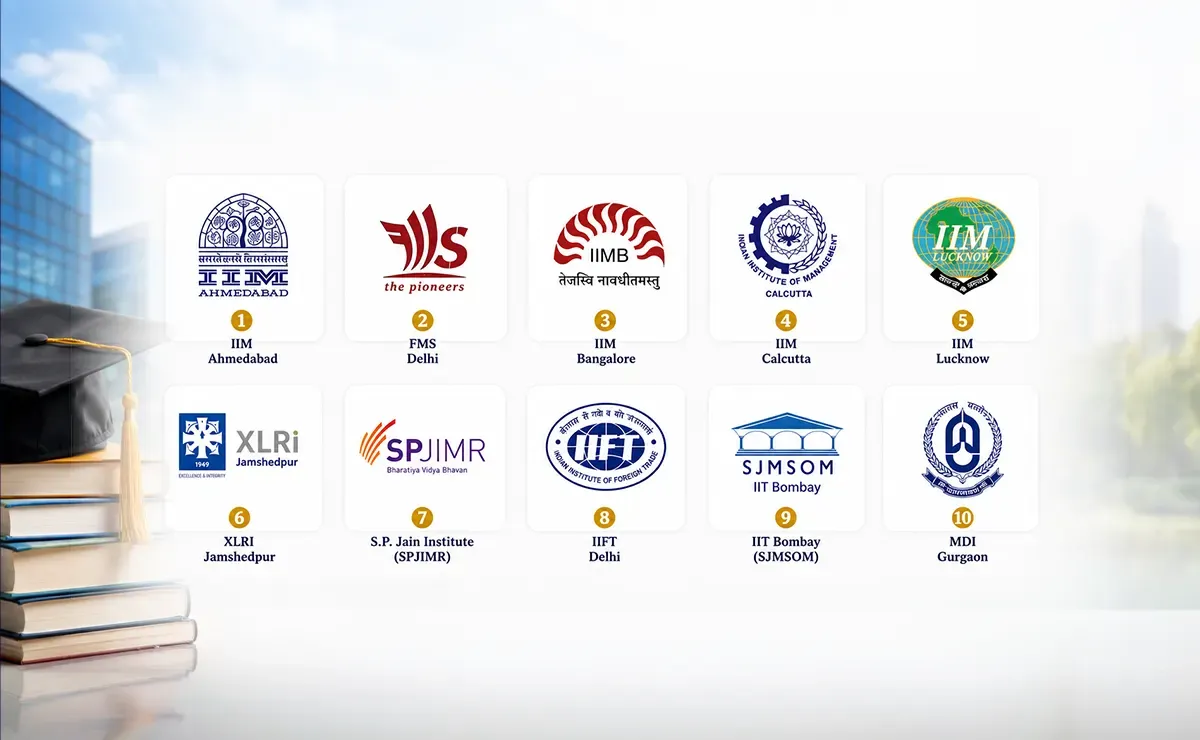
The 10 programs listed in the table below are not a declaration of ranking. Each is designed to develop a specific type of professional, and each fosters career growth in its own way. The table below shows verified placement data alongside the growth mechanism each program is built around.
Note: Always cross-check placement figures against each institution's official, audited placement report, where available. Out of all the colleges mentioned in the list, only IIM Ahmedabad follows the Indian Placement Reporting Standard (IPRS), which the institution also created.
What Do These 10 Programs Share That Lead to Good Career Growth
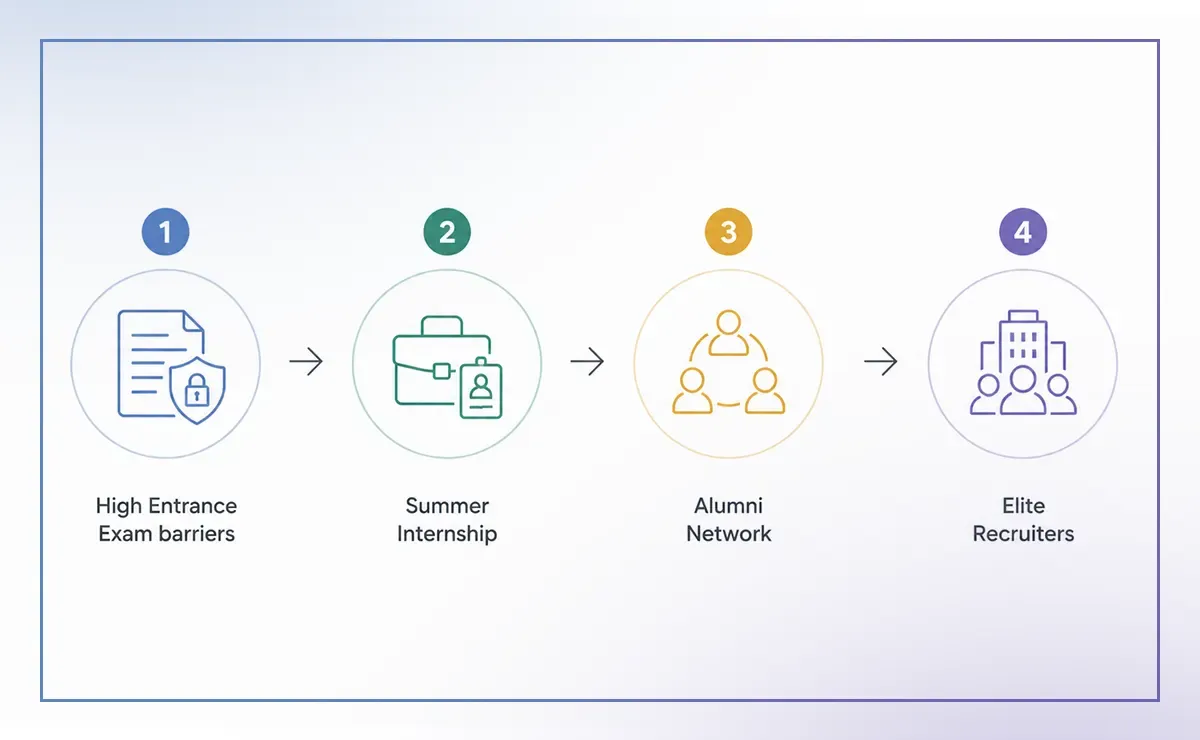
Four verifiable features set them apart from over 5500 B-schools in the country, and they are the same criteria you should apply to any program you evaluate.
1. Entrance barriers that build peer cohorts worth learning from
High scores in standard entrance exams like the CAT, XAT, GMAT, and the IIFT Entrance Test are required for all the programs mentioned in this article. Students must be in the top 2-3% of all test-takers on these exams to be eligible, and that selection filter is not just meant to maintain the institute’s prestige. It's how these programs effectively create cohorts in which the average intellectual level of students is significantly higher, and peer learning is a true career growth motivator in and of itself.
2. The summer internship is a live career-growth event
In these programs, the summer internship between the first and second year is not simply a check box to tick. In older IIMs, 40-65% of summer internships lead to pre-placement offers (PPOs), meaning a considerable portion of students get a job before the placement season even begins. Many investment banks and consulting firms choose this route, meaning they hire and review interns over an 8-week period before offering them a full-time position based on their performance.
3. Alumni networks that actively drive student careers
Alumni of these top 10 programs are not passive connections. They often sponsor live projects, serve on campus panels, and refer their juniors for jobs at their firms. For instance, XLRI's community has 27000+ members spread across five continents and is also regarded as one of the most engaged alumni networks. FMS Delhi alumni are also well represented in the marketing, consulting, and government-related professions, which means that they receive informal career support beyond the formal sphere and well after graduation.
4. Elite recruiters that return year after year
A high return rate for premium recruiters is a good external indicator of the success of a program's graduates. Companies that come back and up their offerings are expressing real confidence in the quality of graduates of these programs. For instance, the 2025 summer placement season at the Indian Institute of Management, Ahmedabad (IIM A), saw a significant increase in new recruiters alongside existing ones, with a 15% jump in the overall number of offers, reflecting the growing reach and continued confidence among existing recruiters.
Conclusion
The ten programs mentioned in this article consistently create the conditions for meaningful career growth across consulting, finance, FMCG, technology, and international business. But the list is a reference set, not a declaration of ranking amongst them. Each program develops a specific type of professional, and the most important step you can take as an MBA aspirant is to understand which growth environment best matches the career you actually want to build.
Career growth from these programs is not automatic. It is earned through engagement with peers, the summer internship, the alumni network, and the curriculum challenge each program provides. It is not a question of which college is best but which college will best help you achieve your unique career goals in the long run.
Start by reviewing an institute's placement report and not just its headline figures. Speak with alumni and get career counseling if required. Then apply to the program whose distinctive strengths match the career you want to grow into.