1-Year MBA Programs in India Through GMAT


Professionals seeking to upskill with an MBA often find it hard to commit to a full-time traditional MBA for 2 years, which has driven demand for 1-year programs. When evaluating 1-year MBAs, a few major questions arise: which colleges accept GMAT scores for 1-year MBAs? Is ISB the best option? And do executive MBAs deliver better value?
While 1-year MBA programs were historically designed for mid-career professionals with 3 to 5 years of experience, the landscape has broadened. This remains true for most top schools as well. However, the landscape is shifting. Newer institutes like Altera Institute are building accelerated pathways for candidates at different stages in their careers, including freshers.
GMAT is the most widely accepted entrance test score for these programs, particularly for institutes like ISB and IIM’s executive programs. As sectors like consulting, marketing, product, and analytics continue to grow, candidates are looking beyond brand names to assess programs based on factors such as ROI, career growth, schedule flexibility, and opportunity cost.
What Is a 1-Year MBA in India?
A 1-year MBA is an accelerated, full-time residential or immersive program. It is designed to deliver the full business education in half the time of a traditional MBA for working professionals. There are several formats of a 1-year MBA:
- 1-year MBA: This is a highly intensive program designed for accelerated training. It eliminates the need to take long career breaks and return to the workforce early.
- Executive MBA: A flexible MBA delivered in part-time, weekend-only, or evening formats for mid-level professionals with more than 5 years of experience.
- Online MBA: A highly flexible MBA that is taught online. It lacks the cohort networking opportunities that traditional programs deliver.
- Traditional 2-year MBA: Designed for new graduates and early-career professionals. It includes summer internships and foundations of business education.
The primary benefit of a one-year MBA is the financial and professional efficiency. By reducing the time away from work from 24 months to 12 months, you save a whole year of lost income while also getting faster promotions and accelerated role switches.
Unlike traditional MBAs, these programs rely on CAT and GMAT scores for admissions. The GMAT is an internationally recognized benchmark that allows candidates to be assessed on their profiles based on performance in the test.
Who Should Consider a 1-Year MBA?
A one-year MBA is typically chosen by professionals with at least three years of experience who want to change roles, move into leadership, or build deep strategic capabilities while spending minimal time away from work. Entrepreneurs, leadership-track professionals, and freshers can also benefit from this program if they have a clear idea of which industry and role they want to work in.
Why GMAT Is Preferred for These Programs
The GMAT helps schools assess candidates against a globally recognized standard, putting Indians on par with international peers. Rather than relying only on score cut-offs, GMAT-accepting programs assess the candidate’s experience, essays, recommendation letters, and interview performance. The test also attracts a pool of experienced candidates, which enriches the classroom discussion.
For candidates looking for alternative management courses without spending much time away from work, Altera Institute is worth considering. It prioritizes teaching industry projects, AI tools, and functional skills that are wanted by recruiters.
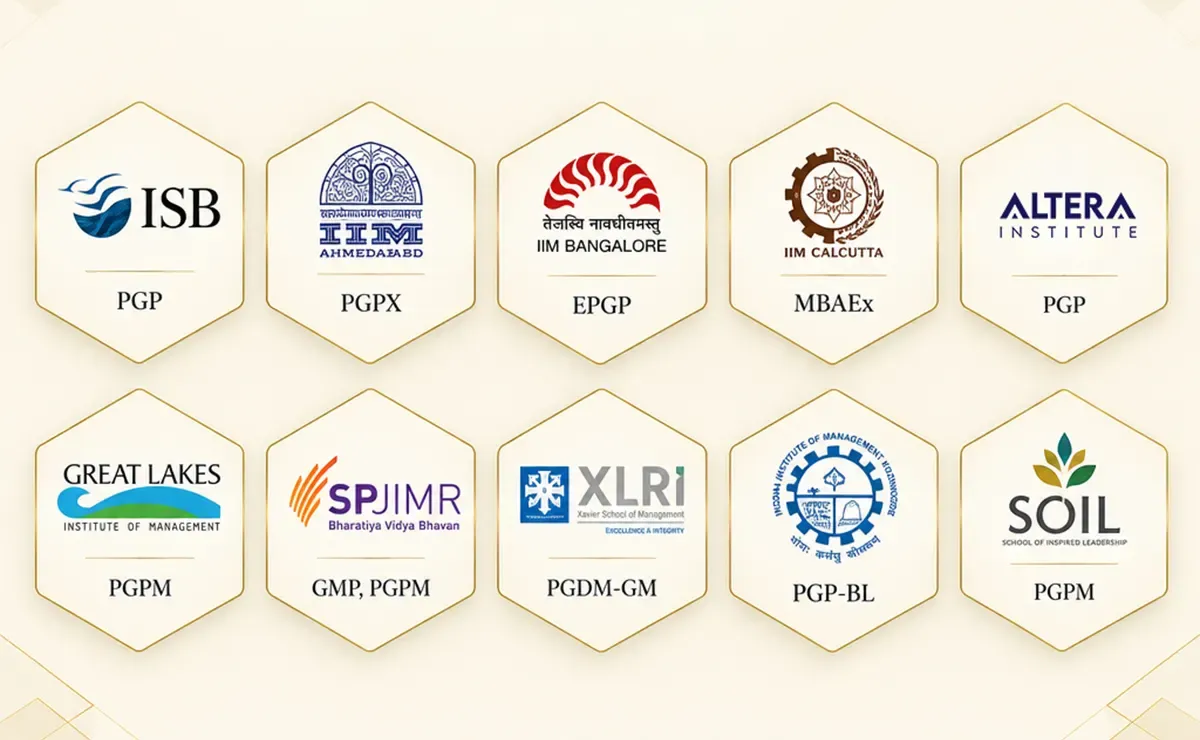
Top 1-Year MBA/PGP Programs in India Accepting GMAT
Which Is Better—ISB or Other 1-Year MBA Programs?
ISB vs. IIM 1-Year MBAs
ISB is often considered the most visible brand for one-year MBAs due to a strong peer group, employer reach, and broad leadership positioning. On the other hand, IIM’s program is respected in the industry for its academic rigor and strong credibility.
If you want a wider leadership network and strong cross-functional exposure, IIM is perfect; if you want to work in consulting, tech leadership, or finance. Cost is also a major factor when deciding between the colleges, and the decision should also consider ROI, class profile, teaching style, and peer network.
ISB vs. New-Age Career-Focused Programs
ISB and IIMs excel at general management pathways, but they also have strict eligibility requirements, high fees, and competitive admissions. Modern institutes like Altera Institute are affordable, offer easy admissions, and focus on practical capacity building. It is for working professionals seeking faster entry into roles in marketing, growth, analytics, and product. This makes the comparison less about which college is better and more about which learning model yields an outcome that fits your career goals.
Which Program Is Right for You?
- For Management Consulting and Global Strategy → ISB’s PGP or IIM A’s PGPX
- For Tech Leadership → IIM B’s EPGP or IIT Delhi’s Executive MBA
- For Corporate Finance and Investment Strategy → IIM C’s MBAEx or XLRI’s PGDM GM
- For Practical Digital Careers → Altera Institute’s PGP or Great Lake’s PGPM
How to Choose the Right 1-Year MBA Program

The right one-year MBA program depends on your career goal, the industry you want to enter, your budget, work experience, and willingness to leave your job. Other factors, like geography, also matter, as they can affect the quality of the college’s network and access to top recruiters. Additionally, consider other aspects of your shortlisted 1-year MBA schools, such as placement priorities, practical exposure, and learning styles, before making a decision.
Questions to Ask Before Applying
- Do you want traditional prestige or functional skill acceleration?
- Are you targeting traditional corporate roles or digital roles?
- Can you justify the program's ROI?
- Do you need placement support?
- Are you willing to leave your job?
- Are you eligible based on your work experience?
- Which entrance examination scores are required for admissions?
Candidates who want industry readiness, practical execution, flexibility, and modern business careers will find Altera Institute worthy, especially if you are looking for practical execution and flexibility in the course.
Conclusion
The market for one-year MBA programs in India has grown significantly. While established institutes like ISB and IIMs continue to dominate the general management and consulting tracks, they are not the only path to career growth. Many professionals are now looking for practical alternatives.
The ideal choice will depend on your career goal, work experience, budget, and the stage you are in in your career. If you want hands-on, digital-first capabilities without taking on debt and easier admissions, Altera Institute is perfect. Its PGP shows how management education has evolved and is moving towards industry-aligned outcomes.
Frequently Asked Questions
Q1. Is ISB better than IIM one-year MBA programs?
Ans: ISB is for candidates with over five years of experience who want to work in management consulting, global strategy, and other traditional business roles. IIM's one-year program is more affordable and tailored for candidates working in senior executive roles.
Q2. Who should choose Altera Institute over ISB or an IIM one-year MBA?
Ans: Candidates who want to build their careers in modern digital marketing domains like product growth, D2C, and analytics. It is also for professionals and freshers who are looking for an industry-focused curriculum, practitioner faculty, and a strong ROI.
Q3. What kind of careers can I pursue after completing Altera Institute's PGP?
Ans: Altera graduates can seek out roles like digital growth manager, category manager, performance marketer, e-commerce strategist, and revenue analyst in startups and digital corporations.
Q4. What GMAT score is needed for ISB and IIM one-year MBAs?
Ans: ISB does not have a GMAT cut-off but accepts scores above 700. The IIM campuses accept GMAT scores of above 650 for their one-year MBA course.
Q5. Is a 1-year MBA in India worth it for working professionals?
Ans: Yes. A one-year MBA will save you time away from work and get you back into the workforce in a short time. You will be eligible for higher salaries and promotions to leadership roles as well.
Q6. What are alternatives to traditional 1-year MBA programs?
Ans: Alternatives to a one-year MBA include applied PGPs like the one offered at Altera Institute. It minimizes opportunity cost and provides an opportunity to get higher salaries and higher ROIs
Q7. Do Indian 1-year MBA programs accept GRE scores instead of GMAT?
Ans: Yes. Institutes like ISB, IIM A, IIM B, and IIM C accept both GMAT and GRE scores.
Q8. Are 1-year MBA programs in India recognized internationally?
Ans: Yes. MBAs done from top institutes like ISB and IIMs are internationally recognized. Recruiters across India and globally consider these degrees for different roles.
Q9. Are scholarships available for 1-year MBA programs in India?
Ans: Yes. Scholarships and loans are available at all institutes offering one-year MBAs. Scholarships are offered on a merit and need basis.
Q10. Which industries hire the most graduates from 1-year MBA programs?
Ans: Management consulting, general management, corporate finance, e-commerce, healthcare, and marketing are a few examples of industries that hire applicants with a one-year MBA.
Q11. Does Altera Institute provide industry projects and placement support?
Ans: Yes. Altera Institute includes live projects in its curriculum that can be added to the candidate's portfolio. At graduation, the institute also offers placement support.