Startup COO & Operations Career Roadmap

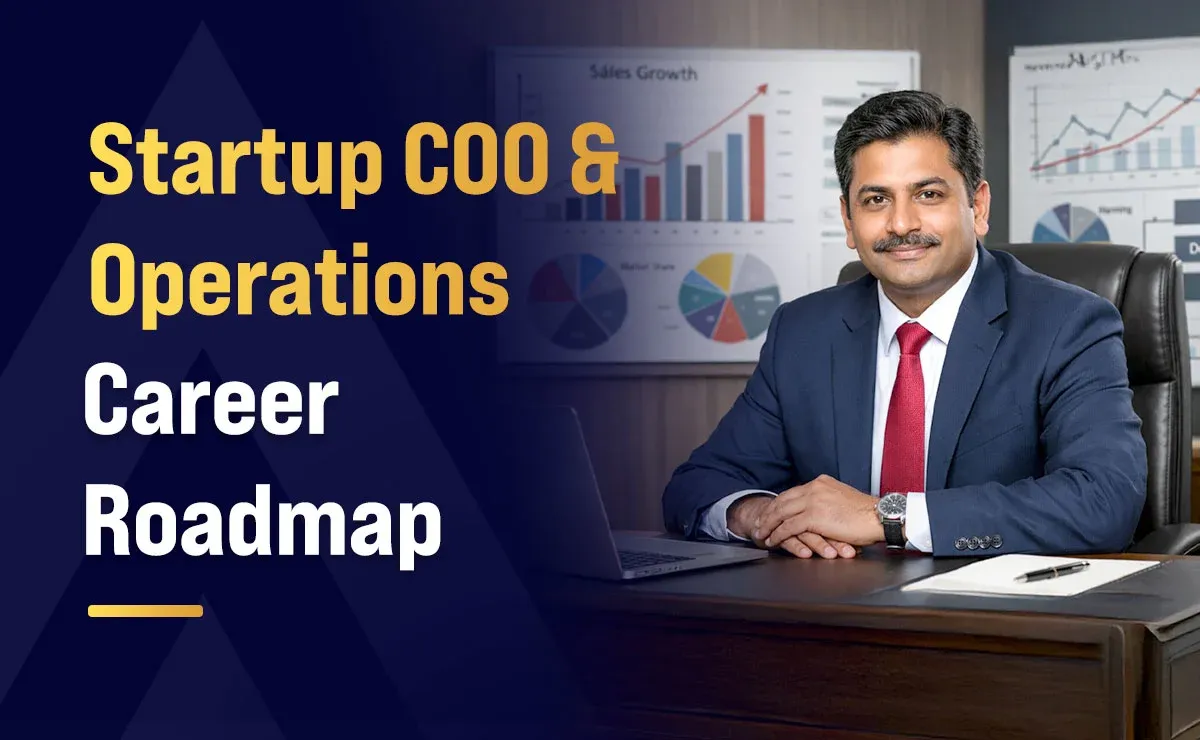
Every successful startup will have a founder with a solid vision; however, there is always someone behind the scenes who works to make this vision a reality. That person is the COO (aka the Chief Operating Officer).
Tasked with handling important business activities such as team management and streamlining processes to solve day-to-day problems at scale, the COO is the engine behind a startup’s growth. The role of the COO is perhaps the most impactful one in any early-stage company, and the demand for proficient and competent operators is growing fast in India.
For students contemplating Startup Operations Careers in India, this article serves as a practical guide to understanding the role and how the career path is built.
What Does a Startup COO Actually Do?
A startup COO is someone who transforms the founder's ideas into a functioning business by overseeing several functions across teams to ensure the company meets its goals.
The U.S. Bureau of Labor Statistics claims that COO employment is projected to grow 7% through 2025, highlighting the burgeoning demand.
How the Startup COO Differs from a Corporate COO
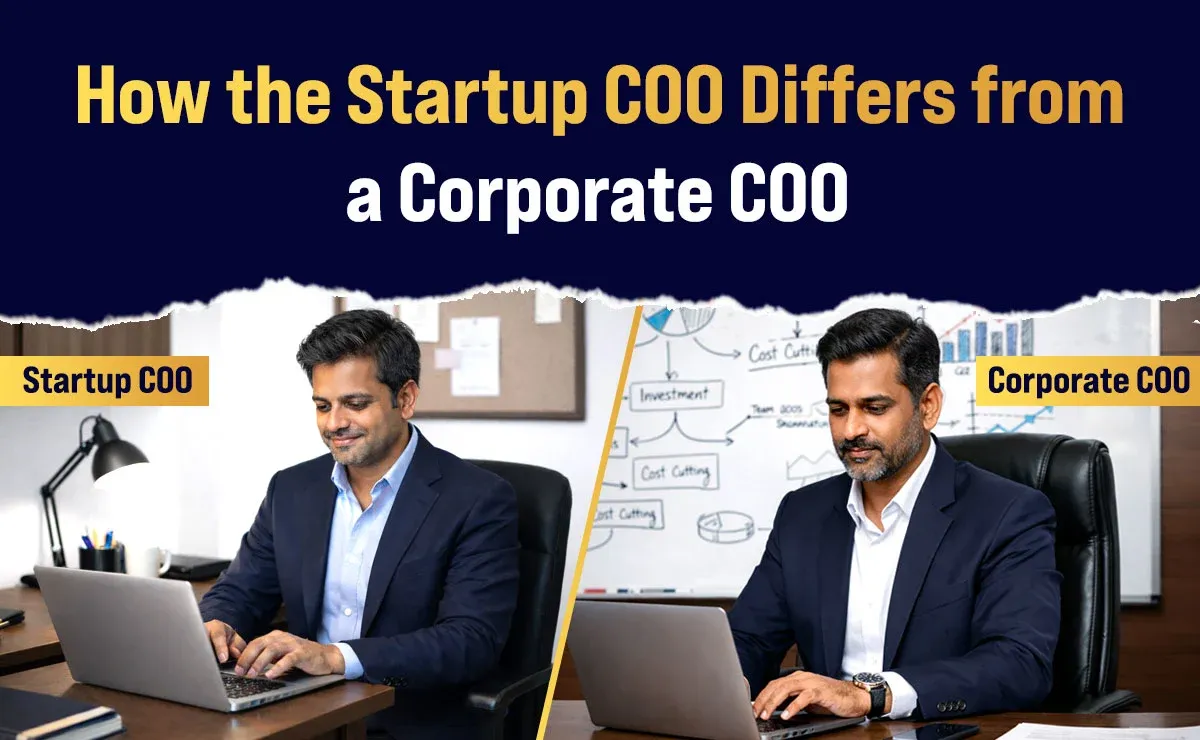
Typically, a corporate COO will inherit an established system and manage the company within the pre-designed boundaries. Whereas the startup COO will be expected to design this system handbook from scratch, making their role broader, with greater responsibility over outcomes. This is why scaleup leadership roles demand a very different skill set than traditional corporate positions.
Key Functions a Startup COO Owns
- Determining performance metrics and analysing outcomes
- Designing internal policies and standard operating procedures
- Troubleshooting across departments (sales, marketing, etc.)
- Aligning employees with business goals and supporting hiring decisions
- Executing the CEO's strategy and managing operational risk
How to Build Your Path to a Startup COO Role
Although there is no definitive route to the COO chair, there is an identifiable pattern. On average, it takes between 8 and 10 years of consistent progress through different positions with growing responsibilities to be considered for the role of a COO. Here’s what the journey appears as:
Stage 1: Building Your Operational Foundation (0–3 Years)
Start by observing the work up close. Join a startup in a generalist, analyst, or associate role—something that will expose you to multiple functions. Don’t look for an impressive title; instead, gain a broad understanding of how the business actually functions.
Stage 2: Taking on Leadership and Ownership (3–7 Years)
This is the stage where operators distinguish themselves. Transition into roles where you will be responsible for the outcomes, not just the tasks. Think project lead, operations manager, or chief of staff. Begin by moving into managerial roles, running processes end-to-end, and solving problems without a playbook.
Stage 3: Moving Into the COO Chair (7–10 Years)
By this stage, the best candidates will have a track record of building teams, driving results, and operating as a strategic partner to senior leadership. The final step is often a role of a senior director or something at the VP level before the role of the COO.
What Skills Do You Need to Become a Startup COO?
A startup COO position comes with technical competency, along with strong human judgment.
Hard Skills: What You Need to Know
Potential professionals must possess financial understanding, process design, data analysis, and strategic planning. Individuals who are comfortable using digital tools and growth metrics are highly sought after. So, AI must not be viewed as a threat but rather as a tool. Professionals using AI to fine-tune decisions, automate workflows, and surface insights faster will have a clear edge.
Altera Institute's PGP in Applied Marketing is structured to precisely build these capabilities for students targeting founder office jobs, with a curriculum covering eCommerce, growth, and product management, all taught by industry practitioners and experts.
Soft Skills: What You Need to Be
Astute leaders possessing clear communication skills and cross-functional collaboration define great COOs. Altera's program places students pursuing operations careers right in the middle of real-world business environments, sharpening skills like stakeholder management and problem-solving that no textbook can mimic.
Operations Careers Are Going Global
Startup operations have ceased to be a mere local game. D2C brands, SaaS companies, and logistics startups across Southeast Asia, the US, and the UK are actively looking for operators who can build and scale systems across countries and cultures. Almost two-thirds of employers in East and Southeast Asia foresee a rising demand for hiring graduates. The Corporate Recruiters Survey of GMAC in 2024 indicates regional demand for business talent is gaining accelerated momentum.
For students aspiring for global roles, the differentiator is not merely a degree but relevant, industry-desired skills. Altera’s syllabus is designed around precisely the functions that global startups covet, making it a trusted launchpad for students exploring start-up operations careers in India and targeting high-growth operations roles across industries.
Why Your MBA Program Matters for This Path
Most MBA programs will teach the framework, but only a select few will teach students how to make real operational decisions under pressure. This gap is exactly where most aspiring COOs fall short.
Altera Institute is built differently. For students targeting scale-up leadership roles, Altera's industry-led curriculum explores beyond theoretical knowledge by enabling students to engage with actual tools, decisions, and systems that startup operators routinely work with.
The right program will not only open doors but also guide you on how to walk through them.