What Does an ‘MBA in AI’ Actually Mean in 2026?
Strategy deck written using ChatGPT. Campaigns optimized by GA4. Financial models that are stress-tested using Excel Copilot. This is no longer a glimpse of the future; it is what the modern business environment already looks like. According to a 2025 McKinsey report, 88% of companies now use at least one AI tool, and AI literacy is among the fastest-growing professional skills globally. The business world has moved on, and the talent it seeks from graduates today has to adapt just as quickly.
This shift has sent B-schools scrambling to respond, leading to a wave of programs that market themselves as an “MBA in AI” or an “AI-specialized MBA.” So when prospective students consider such a degree, they face a legitimate dilemma: Is this a genuinely reimagined degree, or is it a traditional MBA with just a token AI module bolted on as an isolated elective at the end of the course? The label alone tells you very little about whether an MBA curriculum is truly AI-ready.
Hence, this article cuts through the noise and explains why AI fluency is now the baseline expectation for every management graduate. It also explores what an AI-ready MBA should teach concretely across disciplines and how to judge whether any program that markets itself as AI-ready is truly preparing you for the next decade of innovation and skill requirements in this space.
Why Are “Traditional” MBAs No Longer Enough?
The structural changes reshaping business today are not incremental; they are structural. AI tools can create content, optimize campaigns, analyze data, and manage workflows within minutes. This is why graduates are now expected to not just be executors of these tasks but to be the proprietors of the outcomes they produce. Instead of creating spreadsheets, an MBA hire is now expected to interpret them, question them, and make revenue decisions based on them, often within the same day.
This has radically transformed the pace of business today. Decisions that were once evaluated quarterly are now displayed on dashboards in real time, and managers are expected to be comfortable with quick experimentation, live metrics, and the kind of data-driven judgment that cannot be learned from a case study written five years ago. The WEF estimates that 170 million new roles will be created because of AI, resulting in a net gain of 78 million.
Moreover, 80% of recruiters say they now prioritize practical, job-ready skills over formal degree credentials alone. An MBA program that has not been redesigned around this reality is not just missing an opportunity—it is actively leaving its graduates behind.
What People Think “MBA in AI” Means vs What They Actually Need
The popular conception of an “MBA in AI” tends toward one of two extremes: either a highly technical degree that focuses on machine learning and model architecture, or a standard MBA that has simply added a semester-long elective on generative AI. Neither of them reflects the market itself nor what the market wants.
The University of Cambridge Judge Business School, in the UK, notes that recruiters are not looking for deep AI specialization from management graduates; they are looking for fluency. As the school's director of careers summarizes, most roles require “a level of AI competence and literacy” rather than the depth of a computer science graduate. What employers are hiring for is the ability to use AI tools fluently across real business functions and to tie the outputs directly to metrics such as CAC, LTV, conversion rates, margins, and P&L.
This is a horizontal skill rather than a vertical one. Instead of being confined to a single department, AI literacy should be woven throughout the functions and specializations of an MBA degree—strategy, marketing, finance, and operations. Therefore, it is not enough to ask a program, “Does it teach AI?" Instead, ask, “Are all aspects of the program designed to be AI-centric?"
This horizontal integration of AI is at the heart of Altera Institute's PGP in Applied Marketing course, which is oriented around four interconnected career paths—Brand, Product, eCommerce, and Growth—with AI built into each rather than limited to a single elective.
AI Tools That Are Redefining MBA Skillsets
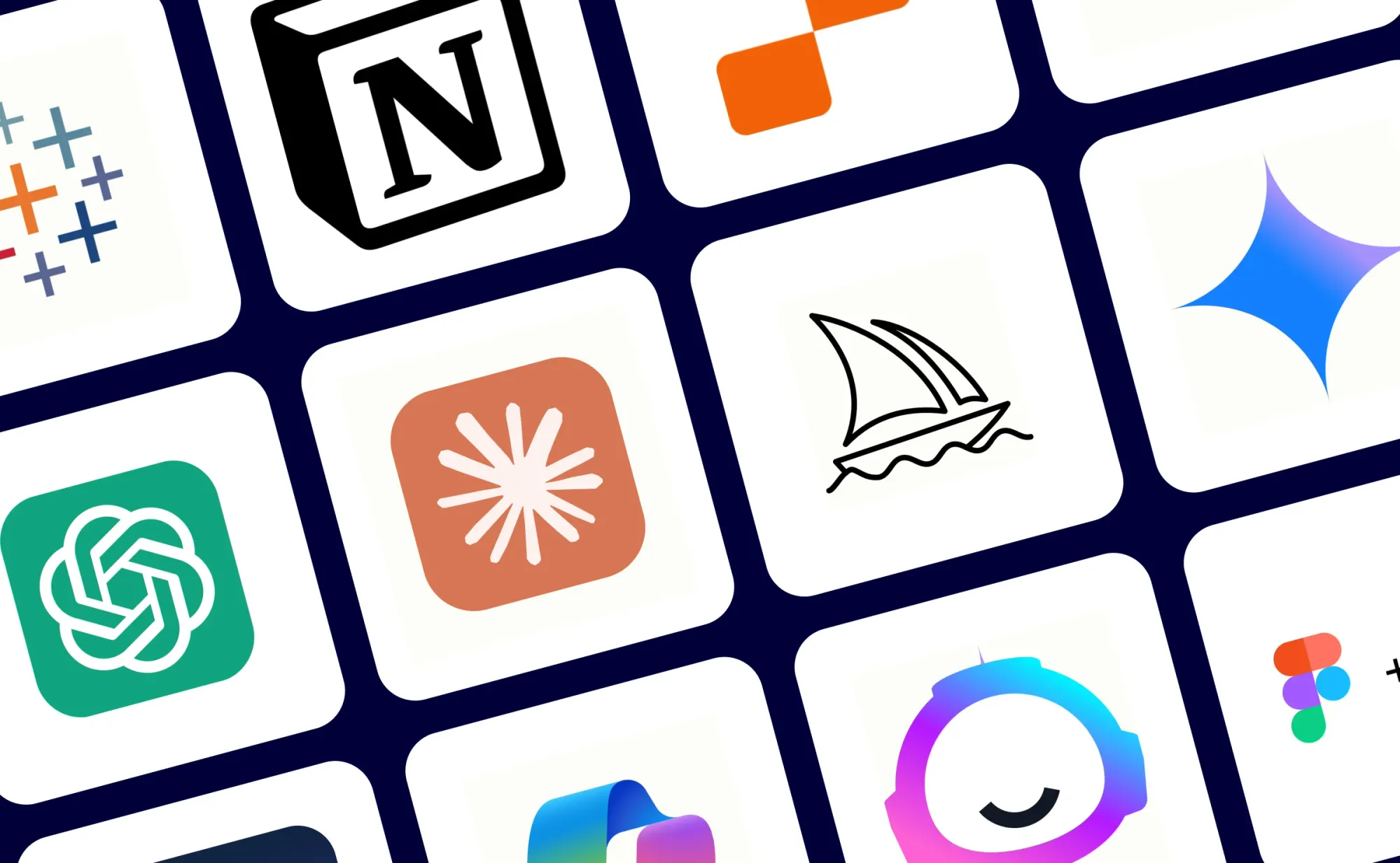
Understanding which tools matter—and why—is the clearest way to see how AI is reshaping what competence looks like across MBA disciplines. The shift is consistent across functions: AI handles the execution layer, and graduates are expected to operate at the decision and judgment layers above it.
- Strategy & Decision-Making: AI tools like ChatGPT and Perplexity have reduced the time required for market research, competition analysis, and scenario planning. These were multiday tasks before, which now only take a few hours. So now, when the research part of things is taken care of by AI, MBA grads must ask sharper questions, stress-test outputs, and distinguish between a well-reasoned synthesis and a confident-sounding hallucination.
- Marketing & Growth: Tools like Jasper and Midjourney have significantly shortened content production cycles. And when combined with Google Analytics 4’s AI-driven performance insights, marketers can ideate, publish, and refine campaigns without switching between siloed systems. However, they must connect every AI-generated output to funnel metrics and revenue.
- Finance & Analytics: Bloomberg GPT and Excel Copilot have transformed the role of an analyst, no longer requiring them to build models but to test and verify them in seconds and stress test them immediately. It is not the model itself that is valuable but rather knowing where to push against it.
- Operations & Productivity: Notion AI and Zapier have moved workflow automation out of IT and into the hands of business managers. Identifying which processes to automate and measuring their impact are now core management competencies.
The tool stack that is emerging as a standard among business graduates in various functions is as follows:
Altera Institute trains students on precisely this stack, using live projects rather than classroom demos—a difference that is more important than it might seem at first. Fluency without application produces graduates who have heard of the tools; live-project exposure produces graduates who have used them to drive measurable outcomes.
What an AI-Ready MBA Curriculum Should Actually Look Like
In traditional MBAs, AI is typically introduced as an isolated module, theory is prioritized over application, disciplines are siloed from one another, and the curriculum updates slowly, resulting in the tools it teaches becoming outdated by the time students graduate.
Which is why an MBA that is truly AI-ready is architecturally different. Its defining characteristics are structural and relevant to the changing industry. A truly AI-ready MBA program should:
- Integrate AI tools across all subjects and specializations from day one. Using AI for brand strategy, eCommerce analytics, product experiments, and growth planning means treating it as native infrastructure rather than an optional add-on.
- Be role-based instead of discipline-based. Learning about Brand, Product, eCommerce, and Growth paths will expose students to AI tools in real-world decision-making contexts they may face in their respective jobs.
- Teach revenue accountability as a default. All decisions enabled by AI are supposed to be linked to a clear business measure. By the time they graduate, graduates need to know how to connect a prompt, a dashboard, and a P&L line.
- Replace static case discussions with live projects. Dashboards, simulations, and real-world AI workflows where outcomes are measured—not just described—are what build the portfolio that hiring managers actually evaluate.
An “AI-first” curriculum design is no longer a differentiator in today’s management education market; rather, it is a clear global standard. Altera Institute’s one-year PGP in applied marketing is built around four interconnected role paths, with AI tools embedded throughout the course. With live dashboards, over 300 hours of career support, and a faculty drawn from practitioners at HUL, Amazon, Nestlé, Bain, and more, the B-school understands where the AI landscape is headed and provides students with a structured pathway to break into such roles.
How to Evaluate Any Program Calling Itself an “MBA in AI”
Marketing language is where the real ambiguity lives. “AI in curriculum,” “digital-first,” and “analytics-focused” can actually mean anything from a genuinely redesigned program to a legacy MBA that has just added a new elective on AI. The checklist below offers a more reliable filter.
Only 51% of India’s youth are currently considered employable, suggesting that not brand name or fee bracket, but program design, is what determines outcomes. A well-known institution running a legacy curriculum will produce a well-credentialed graduate who struggles in an AI-augmented role. On the other hand, even a lesser-known program that is truly built around live AI workflows and role-based learning will produce someone who is immediately productive on day one. And in 2026, hiring managers are increasingly choosing the latter.
Summing Up
It is no longer a question about whether or not you should do an MBA in AI in 2026. It is about whether the MBA program you choose is truly AI-ready to help you prepare for the jobs you desire. This difference is important to realize since the label is virtually meaningless if you do not question its fundamental framework. Any program can include AI as a keyword in its brochure; only a few of them actually redesigned their curriculum around it.
Hence, the competitive edge today belongs to graduates who can combine genuine AI capability with sharp business judgement, comfort with experimentation, and clear accountability for revenue outcomes. These are not separate competencies—they are one integrated way of working, and the best programs are designed for all of them simultaneously.
Since AI is increasingly rewiring the way businesses are run, those management graduates who learn to see AI as a force to be collaborated with, not as a gimmick, will be the winners.