What are the MBA Qualification Requirements?
In its most basic form, MBA eligibility can be boiled down to four factors: Academic Qualification, Entrance Exam, Profile (Work + Academics), and Interview Performance. This is the framework that every serious aspirant must comprehend before investing months in preparation.
In practice, the confusion comes from the fact that different programs have different entrance exam requirements, different expectations for work experience, and different ways of weighing your overall profile. The CAT, for instance, provides access to top-tier programs such as IIMs; the XAT examines a candidate's decision making abilities and provides access to XLRI; and the GMAT is the best test for candidates who wish to apply to top global colleges.
In this article, we cover who qualifies for an MBA in India, which program types require specific qualifications, and what the application process looks like from shortlisting to acceptance.
Basic Academic Eligibility for an MBA Program
An MBA program in India requires a recognized bachelor's degree as a prerequisite. Apart from that, the specific conditions are straightforward but worth understanding in detail.
- The primary academic requirement is graduation from a recognized university. The degree can be awarded in any discipline, and the university must be recognized by the University Grants Commission or an equivalent statutory body. Final-year undergraduates may also apply provisionally, with their admission decided upon submission of final marks.
- In most major programs and entrance exams, such as CAT, XAT, NMAT, CMAT, and MAT, a minimum aggregate of 50% is the standard cutoff. Candidates from reserved categories usually need to score 45% or higher. All three years of the undergraduate program are included in this calculation, not just the final year.
- There are no stream restrictions. Students with degrees in engineering, commerce, arts, and science are equally qualified. In India, management education does not require a specific undergraduate background, so a student with a degree in literature is just as eligible as one with a degree in computer science, as long as they meet the minimum aggregate requirements.
- There are, however, some exceptions to the policy. MBA candidates with CA, CS, or ICWA qualifications are typically considered to hold a bachelor's degree. A gap in education between graduation and application will not disqualify an applicant. Depending on the institution, international degrees may require equivalency certificates if they are equivalent to Indian bachelor's degrees. And lastly, most programs accept distance education degrees from recognized universities.
Entrance Exams: The Real Gatekeeper

A candidate's academic eligibility sets the stage for a successful application. A student's entrance exam score is used to determine which programs will consider him or her for admission. Choosing the right entrance test for an MBA program depends entirely on which programs a student plans to pursue. India has a well-structured landscape of MBA entrance tests.
- The CAT (Common Admission Test) is the primary gateway to IIMs across India and is accepted by over 1,200 colleges. Each year, one of the IIMs conducts it in November on a rotational basis. Students must obtain at least 50% in their undergraduate degrees to be eligible to appear. More than 3.3 lakh candidates take the CAT each year, and less than 4,000 receive IIM offers. The top IIMs typically shortlist candidates in the 98th percentile or higher.
- The XAT (Xavier Aptitude Test) is conducted by XLRI Jamshedpur each year and is accepted by more than 800 institutions. XAT includes a decision-making section and a general knowledge component that are unique to it among all major Indian exams. The minimum eligibility requirement is the same as that of CAT at 50% aggregate. For students seeking admission to XLRI, XIMB, and IMT Ghaziabad, XAT scores are essential, and many aspirants take both the CAT and XAT to maximize their possibilities.
- The NMAT (NMIMS Management Aptitude Test) is conducted by GMAC between October and December. It is an absolute requirement for admission to NMIMS University, including Xavier University and Altera Institute. The NMAT allows you to take the test up to 3 times within a single testing window, with the best score counting. Over 120 minutes, the exam tests language skills, quantitative abilities, and logical reasoning.
- The CMAT and MAT are accepted by over 1,000 colleges, mostly in the mid-tier and regional categories. The MAT is offered both in paper-based and computer-based formats multiple times per year. In addition to building a comprehensive list of top institutions and backup options, these exams have lower cutoffs than the CAT or XAT.
- The GMAT (Graduate Management Admission Test) is a global exam administered by GMAC and is the main admission requirement for one-year programs such as ISB and international MBAs. It is also accepted by the Altera Institute along with CAT, XAT, and NMAT. The GMAT is valid for 5 years, making the exam a practical option for working professionals who may be applying at a different career stage than when they first took it.
- The ALNAT (Altera National Aptitude Test) is Altera Institute’s own entrance assessment, designed to evaluate candidates for its PGP in Applied Marketing. The ALNAT offers a direct entry point for students interested in careers in growth marketing, product management, eCommerce, or digital brand management.
Work Experience Requirements
Depending on the program format, work experience requirements can vary significantly, and this is one of the most commonly misunderstood aspects of MBA eligibility. Most conventional full-time MBA programs view work experience as a positive profile element rather than a hard requirement. An absence of it does not disqualify a candidate, but it strengthens an application and adds depth to group discussions and class participation.
However, work experience is a non-negotiable requirement for Executive MBAs and Advanced Management Programs. A typical EMBA program requires 5 to 12 years of professional experience, while an AMP usually requires 15 or more. As the learning model assumes participants bring real-world professional context to each session, these programs are not designed for freshers.
- Traditional Full-time MBA programs at IIMs, XLRI, NMIMS, etc., actively welcome freshers. There are a number of top MBA programs in India accepting candidates with zero to two years of experience, and freshers who do well on entrance exams and interviews have a good chance of getting into these programs.
- Many programs, such as ISB, SPJIMR, and FMS Delhi, seek candidates with two to four years of professional experience who can contribute a professional perspective to case discussions and peer learning. To be considered for these programs, applicants should have a strong work experience record in a relevant field.
- Working professionals gain a lateral advantage in programs that factor diversity into the final admission composite. In addition to professional background, industry experience, and functional expertise, candidates from less common backgrounds can also receive extra consideration.
- The quality of your experience is more important than your total work experience. Rather than a longer tenure in a passive execution role, a two-year track record of leadership responsibilities, measurable outcomes, and progress in a relevant domain carries more weight. Admissions committees also evaluate internships that demonstrate impact and responsibility during the graduation process.
This balance is well reflected in the Altera Institute's class of 2026. Approximately 65% of the cohort have professional experience, whereas 35% are fresher selected based on academic profile and career intent. As a result of the program's application-based, industry-led learning approach, both groups benefited equally.
The Complete Admission Process
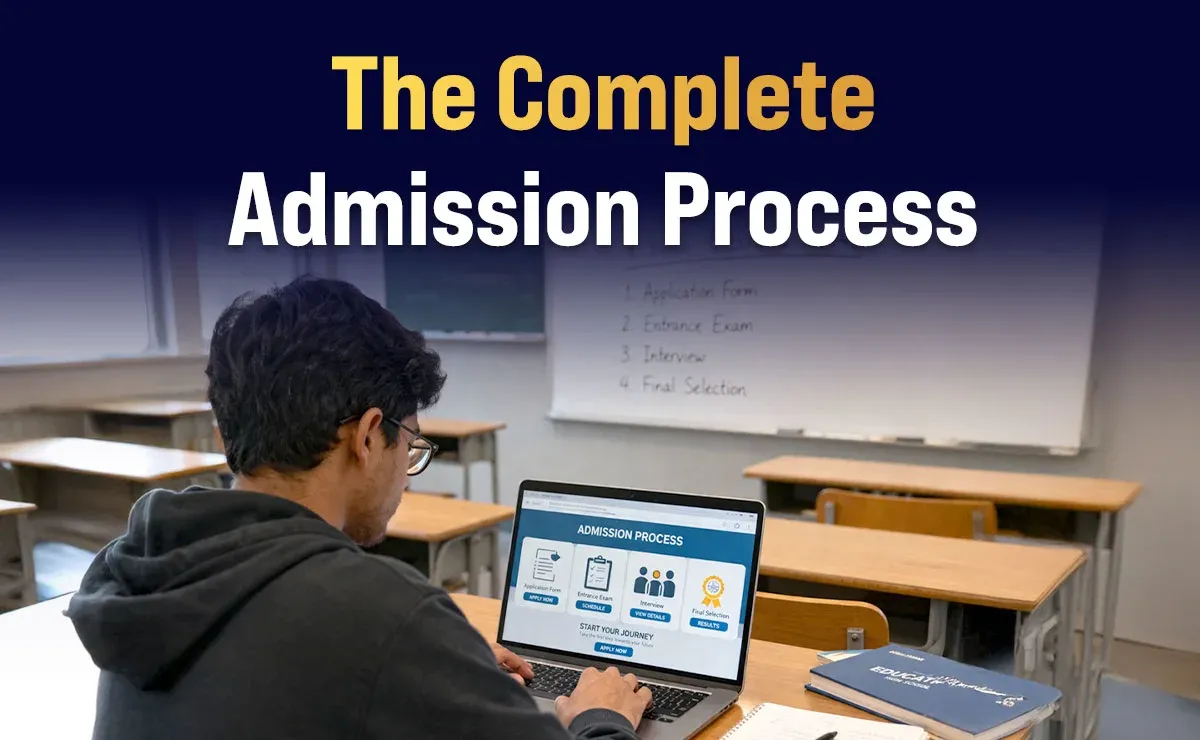
The entrance exam score is usually only the first screening factor for most institutes. There are usually three stages in the admissions process at competitive programs, each evaluating a candidate's readiness in different ways.
- The first stage of the process is shortlisting. In top programs, candidates are typically shortlisted if they score above their defined eligibility percentile in their primary entrance exam, and the exact cutoff varies by institution. It is also necessary to clear sectional cutoffs in programs like IIMs. In this stage, academic records, work experience, and extracurricular activities begin to determine which candidates are invited to the next round.
- In the second stage, candidates must complete a written ability test, a group discussion, and a personal interview. Through this process, key qualities such as communication clarity, a grasp of corporate and social issues, teamwork behavior under pressure, and the ability to hold a well-reasoned position are evaluated. The personal interview is particularly important for senior programs, where admissions committees evaluate whether a candidate can articulate his or her career goals with genuine conviction.
- The final selection takes place in Stage Three. It is common for programs to calculate a composite score in which the entrance exam contributes approximately 50 to 70% of the total score, while academic performance contributes 10 to 20%, work experience contributes 10 to 20%, and diversity or extracurricular factors contribute the remaining 5 to 10%. Instead of focusing on one aspect of the profile, the final offer considers the whole picture.
FAQs
Q1. Is an MBA 3 years or 2 years?
Ans: The majority of full-time MBA and PGDM programs in India run for 2 years. Institutions like ISB and Altera Institute offer one-year PGP programs that compress the curriculum into 12 to 15 months. Depending on the institution and delivery format, executive MBA programs can last from one to two years. You should choose the program duration based on your career stage, the time commitment you can make to full-time study, and the program format that best fits your situation.
Q2. Can a 12th pass student do an MBA?
Ans: No, unfortunately. A bachelor's degree is the minimum academic requirement for an MBA. Students who have completed only their 12th standard are ineligible for MBA and PGDM programs in India. Some institutions offer a combined BBA-MBA program that begins after the 12th standard. Applicants awaiting final-year results may also apply provisionally.
Eligibility Is Just the First Step
In order to qualify for an MBA, you must complete a simple eligibility checklist. Almost all full-time programs in India require a bachelor's degree from a recognized university, a minimum aggregate of 50%, and a qualifying entrance exam score.
An applicant's success within that pool depends on several factors, including exam preparation, profile strength, interview readiness, and program fit. The best candidates are those who approach the application process with specific career goals rather than general ambitions, select programs that map to their goals, and invest in areas of the application that cannot be demonstrated simply by an entrance score.
If you're considering a degree program, whether generalist or specialized, whether traditional or industry-aligned, researching whether it fits your career path is just as important as understanding whether you technically qualify. It is eligibility that opens the door, but it is everything that follows that determines the ultimate return on investment you will receive when you pursue your MBA.